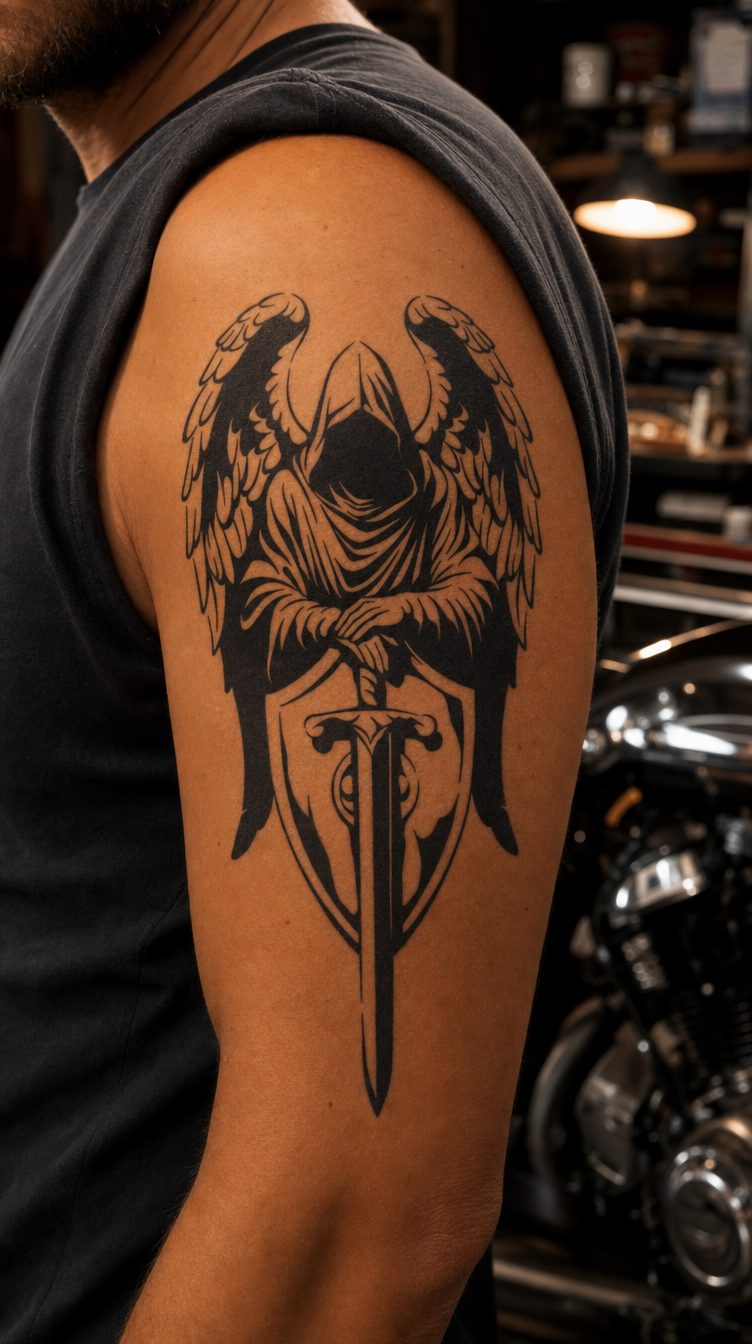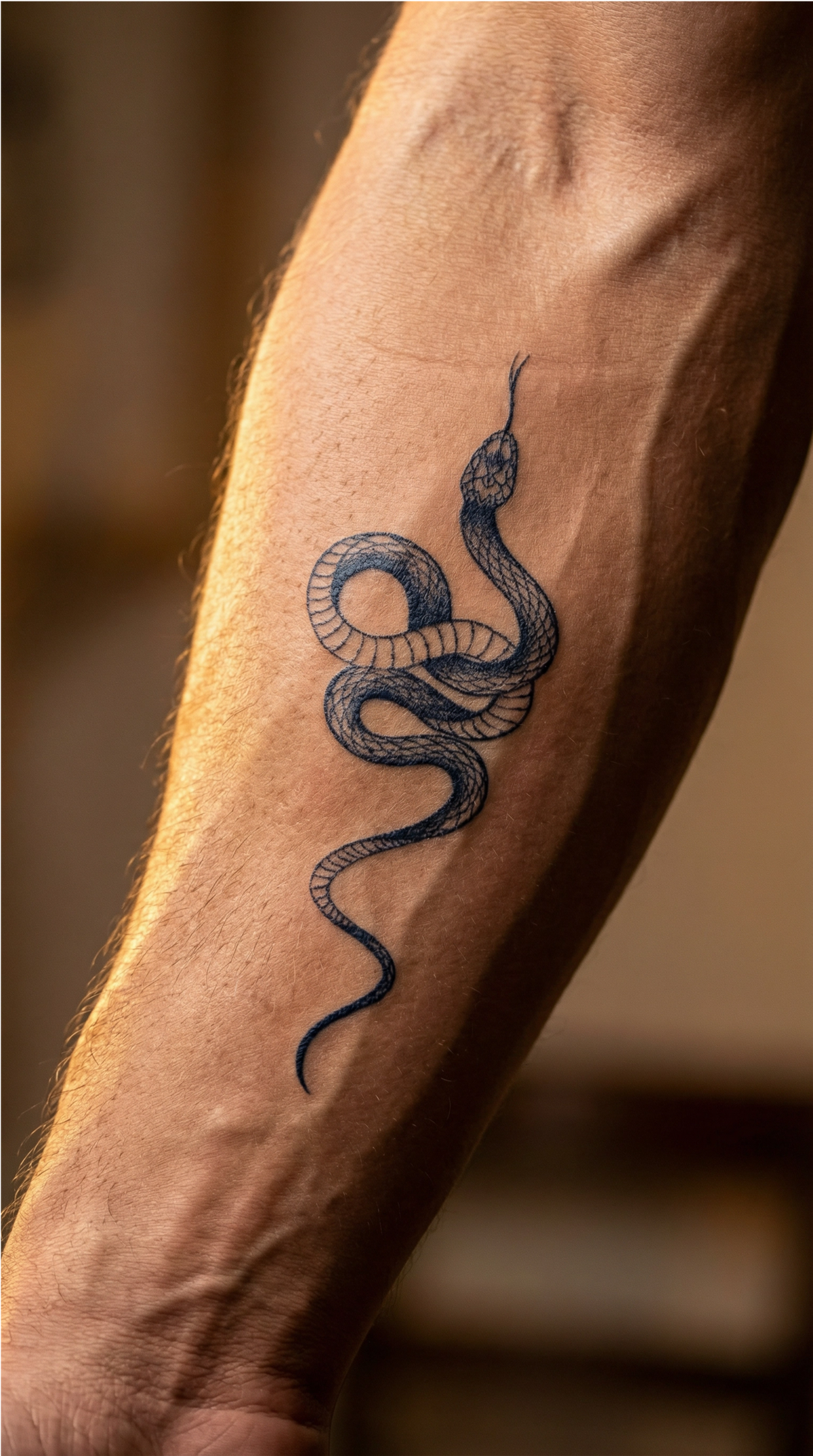


If you’ve spent the last hour scrolling through Instagram or TikTok and seen dozens of different tattoo designs, the question “what’s popular right now?” has a simpler answer than it might seem: in 2026, four directions dominate industry conversations — fine lines and minimalism, detailed micro-realism, mythological and ornamental symbols, and the return of nostalgic motifs from the 2000s, reinterpreted with modern techniques. None of them replaces the classic styles; they complement them, and the choice is still, first and foremost, about what the design means to the person wearing it.
- Fine line and minimalism — small, discreet designs suited to the collarbone, wrist, or ankle.
- Micro-realism — portraits, animals, or objects rendered in great detail over a small area.
- Mythological and ornamental — deities, legendary creatures, and architectural or geometric motifs.
- Nostalgic revival — butterflies, floral motifs, and imagery from the '90s and 2000s, reinterpreted with a contemporary execution.
What do we mean by a “trend” in a field as personal as tattoos?
A tattoo trend isn’t a fixed formula to copy exactly, but a stylistic direction you can adapt to your own preferences. When a style gains visibility — as is happening now with fine lines, micro-realism, or mythological symbols — it means more tattoo artists and clients are exploring it, not that every design has to be identical to what you see online. The difference between following a trend and choosing something with personal meaning usually comes down to the reason behind it: the same fine lines might represent a flower chosen for its beauty or a symbol connected to a particular memory. For a broader look at all the styles out there, not just those gaining popularity now, the guide to tattoo styles, explained step by step covers each direction individually.
Fine lines and minimalist style remain the go-to choice
Very fine needles, usually between 1 and 3 RL, allow for delicate designs — botanical motifs, small portraits, or text — that keep a discreet look and fit easily in visible areas such as the collarbone or wrist (source: Tattoo Trends 2026: Symbolism, Styles, and Most Popular Directions). Unlike other passing trends, minimalist style is described by the industry more as a long-term detail of personal identity than as a passing impulse (source: Tattoos and Piercings in Urban Style), while classic styles with bold lines, such as American traditional, are also seeing renewed appreciation (source: 2026 Tattoo Trends). For anyone who wants to understand the technique and variations of this style in detail, the article dedicated to fine-line tattoos explains the differences between fine-line variations.
A specific example: minimalist motifs with subtle symbolism
A set like the one pictured below shows how this style works in practice: nine small motifs — cherubs, butterflies, angel numbers, and unalome symbols — designed to convey a discreet message, not to form a large composition. For anyone who wants to try the minimalist direction without immediately committing to a single symbol, a temporary design like this shows how several small motifs look together on the skin before choosing just one for a semi-permanent or permanent version.

Micro-realism: lots of detail over a small area
Alongside fine lines, micro-realism is one of the directions increasingly in demand in 2026 (source: Tattoo Trends 2026: 25 Best Styles & Ideas Guide). As a style, it retains the level of detail found in a realistic tattoo — portraits, animals, or objects rendered with shading and texture — but compresses it into a much smaller area, just a few centimeters across. This compression calls for extra care when choosing a design: a drawing that works well at a large size can become illegible when reduced to a few centimeters because fine details are lost if they aren’t designed specifically for the smaller scale. That’s why the size is decided together with the tattoo artist, based on how many elements need to remain clear, not just on how much space the chosen area of the body offers.
Mythological and ornamental symbols are gaining ground
Deities, legendary creatures, and archangelic figures reinterpreted in illustrative compositions are among the directions increasingly in demand this year (source: Tattoo Trends 2026: What's Hot and What's Not). At the same time, ornamental style — architectural motifs, lace, and geometry that follow the curves of the body — is developing as a direction in its own right, focusing more on composition than on a single central image (source: The Top 5 Tattoo and Piercing Trends For 2026). The two directions often come together in the same compositions because they both answer the same need: a symbol with personal meaning, not just a decorative design chosen at random. If this theme interests you, the article about fantasy and mythology tattoos explores the symbols and stories behind them, while the guide to ornamental style explains how these architectural compositions are created.
A specific example: a composition inspired by Greek mythology
A composition bringing together a goddess, an owl, and a geometric spiral shows how the two directions can come together in one design: the mythological figure provides the central meaning, while the ornamental elements around it complete the composition without making it feel busy. It’s the kind of design worth seeing on your skin at its actual size first, before deciding whether you want an equally expansive permanent version.

The return of nostalgic aesthetics and classic motifs
Images from the '90s and 2000s — butterflies, tribal flames, Y2K motifs — are reappearing, reinterpreted with modern techniques and proportions rather than copied exactly from that era (source: Popular Tattoo Styles 2026). Along the same lines, classic floral motifs are evolving into more elaborate compositions that combine delicate botanical elements with a stronger artistic interpretation, almost like a botanical illustration rather than just a simple flower outline (source: Tattoo Trends 2026: What's Hot and What's Not). Here, nostalgia serves as a starting point, not a limit: the motif remains recognizable, but the technique and composition are of the moment.
A design with two butterflies rising along fine lines of smoke perfectly illustrates this direction: the silhouette is familiar, but the fine-line execution and asymmetrical composition set it apart from the classic version of the motif.

What changes (and what doesn’t) between men's and women's preferences
Most of the directions discussed so far — fine-line, micro-realism, and mythological symbols — are worn by men and women alike; the real difference isn’t in the style chosen, but in placement and size. A man and a woman might choose the same mythological motif, but he might place it on his forearm in a large composition, while she might choose a much smaller version on her collarbone. If you’re wondering what suits you, start with what you like and the area you want to cover, not with gender labels automatically applied to a style.
How to try a trend before wearing it on your skin for a long time
A temporary or semi-permanent design shows you how a design looks on your skin — its size and placement, and how it looks alongside the other lines of your body — but it remains a visual test: it doesn’t reproduce the pain, healing process, allergy risk, or exact appearance the same motif would have as a permanent tattoo, because the ink and application technique differ between tattoo types. That’s exactly why it’s useful as an intermediate step: you can visually compare several directions — a minimalist design, a mythological one, one with butterflies — on the same area of your body before choosing just one. The reasons to try a design before getting a permanent version are explained in more detail in an article dedicated to this very step.
If you want to see how these directions translate into actual designs, the collection of new designs brings together recent options in several styles, useful as a starting point for comparison.
Whichever direction appeals to you most, the step that really helps you decide is seeing the design on your own skin, not just in a photo. A temporary or semi-permanent test gives you exactly that information, without committing you to a long-term choice.