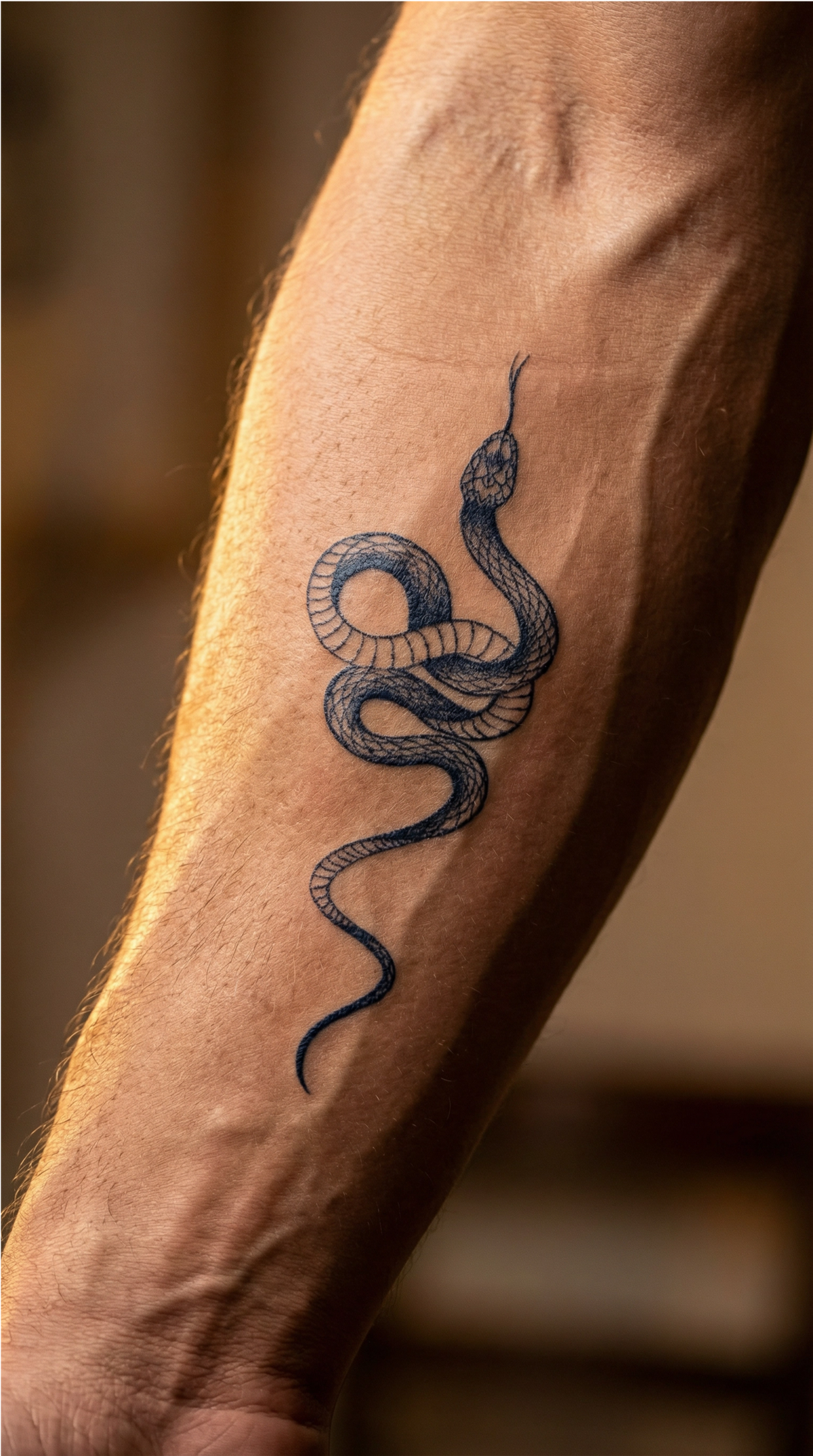


A “Vlad the Impaler” tattoo does not actually mean a portrait of the ruler, because we do not have a reliable contemporary image of his face. In popular symbolism, the idea of a “Vlad the Impaler tattoo” almost always translates into two visual elements: the dragon, linked to the Order of the Dragon, of which his family was a part, and the sword, as a general sign of a ruler who personally led his army into battle. Separate from these historically verifiable symbols, his name was borrowed almost without connection by Bram Stoker’s novel Dracula, which created the vampire character known today around the world. The article below goes through what is known for certain about Vlad the Impaler, where the two symbols come from, and where history ends and fiction begins.
- The dragon comes from the Order of the Dragon, a chivalric brotherhood of which Vlad the Impaler’s father was a member, not from any supernatural legend.
- The sword is not an object documented as having belonged to Vlad the Impaler, but a general symbol used for any medieval warrior-ruler.
- Impaler is a nickname linked to the execution method of impalement, which is documented, and has nothing to do with vampirism.
- Dracula in Bram Stoker’s novel is a fictional character who borrowed the name, not Vlad the Impaler’s biography.
Who Vlad the Impaler was historically
Vlad III, better known as Vlad the Impaler, was ruler (voivode) of Wallachia during three separate periods: October–November 1448, August 1456–July 1462, and June 1475–December 1476 or January 1477. Three separate reigns mean, in the terms of the era, three occasions when he managed to impose or reclaim his throne in a region under constant pressure from the Ottoman Empire and rival interests in Transylvania and Hungary.
He was the son of Vlad II, nicknamed “Dracul,” who had himself ruled Wallachia before him. This direct lineage explains why the name “Dracula,” which his son would go on to bear, is not an invented title but a patronymic that was common at the time. Vlad III died in battle near Snagov, at the end of 1476 or the beginning of 1477; archaeological excavations at Snagov Monastery in 1931–1932 did not confirm his remains with certainty, so the exact location of his grave remains, strictly speaking, unresolved.
Where the dragon comes from: the Order of the Dragon and the name “Dracula”
The Order of the Dragon was a Christian chivalric society founded on December 12, 1408, by Sigismund of Luxembourg and his wife, Barbara von Cilli, with the stated aim of defending Christendom against Ottoman expansion and protecting the Hungarian monarchy. Vlad II, Vlad the Impaler’s father, was admitted to the order around 1431 in Nuremberg by Sigismund himself, and it was from the dragon that formed the order’s emblem that he received the nickname “Dracul.”
“Dracula” is therefore a patronymic: it means “son of Dracul,” that is, “son of the dragon,” and this is the name by which Vlad III was also known. The connection between the name borne by the ruler and an entire mythology of vampires had no basis at this point in history; it appeared only several centuries later, through a British novel.
What the Order’s emblem represented
The emblem of the Order of the Dragon depicted a dragon coiled into a circle, its tail wrapped around its neck, with a red cross of Saint George running across its back, on a white background. Saint George was the patron saint of the order, and the cross on the dragon’s back carried a clear Christian significance: a dragon defeated or tamed by faith, not a decorative fantasy symbol. Anyone who wants a temporary tattoo inspired by this symbol can recognize the same visual logic in the broader symbolism of fantasy and mythology designs, where the dragon appears frequently, but with origins and meanings different from those associated with Vlad the Impaler, as well as in designs featuring crosses and other religious symbols, which are useful for anyone who wants to better understand the faith component of the original emblem.
Why the sword appears alongside the dragon in symbolism associated with Vlad the Impaler
The sword is the usual visual symbol for a voivode who personally led his army into battle, not a specific historical object documented as having belonged to Vlad the Impaler. His three reigns took place in a context of constant military campaigns against Ottoman expansion, and the sword primarily represents this role as an armed defender of the country, not a biographical detail verifiable from chronicles. If you want a symbol with a closer historical connection to Vlad the Impaler, the dragon remains the better-documented choice; the sword works more as a visual convention for a “medieval warrior-ruler” in general, which we also recognize in other historical or protective figures.
This distinction is worth remembering because popular symbolism tends to confuse the sword with the stake, the execution method that actually gave him his nickname. The two have nothing to do with each other: the sword speaks to his role as a fighter and ruler, while the stake belongs to the chapter on punishments and his reputation as a harsh ruler, discussed separately below.

The design above uses the sword as a general attribute of protection and authority, exactly the visual register discussed here, without claiming any direct connection to the ruler. For anyone looking for another protector figure built around the sword, with its own symbolism that is well documented in religious sources, the article about the Archangel Michael tattoo covers this topic separately and in detail.
Where the nickname Impaler comes from and what the sources really say
The nickname “Impaler” comes from impalement, the execution method he used frequently, both against military enemies and against those convicted of crimes in his own country. The name appears in a Wallachian chronicle from 1550, and Ottoman sources called him “Kazıklı Bey,” meaning “lord of the stakes.” His reputation as an extremely harsh ruler, including as a deterrent tactic against the Ottoman army, is well documented and distinct from the vampire legend, which has no historical basis.
This part of Vlad the Impaler’s biography is treated here strictly as fact, without explicit details, because the purpose of the article is to explain where the name and reputation come from, not to glorify historical violence. For tattoo symbolism, this chapter explains why the name “Impaler” circulates separately from the dragon and the sword: it is a nickname linked to a method and a reputation, not a visual symbol someone would choose for a design.
Historical Vlad the Impaler versus Dracula in fiction
Bram Stoker’s novel Dracula, published in 1897, created the vampire character who became synonymous with the name Dracula in popular culture. Stoker’s working notes for the novel contain minimal references to Vlad III, and researchers consider that the author borrowed the name and a few fragments about the region’s history rather than the ruler’s actual biography. In other words, Stoker borrowed a name with a strong resonance, not Vlad the Impaler’s life story.
Supernatural elements such as vampirism or immortality belong exclusively to Stoker’s fiction and later Eastern European folklore, not to Vlad the Impaler’s documented life. A design inspired by the dragon or the sword, in the sense discussed in this article, therefore remains linked to the Order of the Dragon and the role of a warrior-ruler, not to the vampire character in films and novels. Anyone specifically looking for vampire or fictional Dracula symbolism is actually looking for a different subject from the one covered here.
How to choose a temporary dragon or sword tattoo inspired by this symbolism
The first practical step is to decide what you actually want the design to convey: a connection to Romanian historical heritage through the dragon linked to the Order of the Dragon, or the more general idea of a warrior-defender through the sword. As you saw above, the two symbols have different origins and different historical significance, and it is useful to choose with that in mind, not just for the visual appeal.
A temporary design shows you how the design and placement look on your own skin, which is especially useful for a symbol with such a specific story. Testing it on your skin does not predict the pain, healing, allergy risk, or final appearance of a permanent version of the same design; it only helps you compare the size, angle, and location before deciding what to do next. For the practical steps involved in this decision, the guide to choosing the right design and placement for your first tattoo goes into details that we do not repeat here.
If you want to compare several options before choosing just one, you can browse the designs in the Temporary Dragon Tattoos collection or the Temporary Sword Tattoos collection, keeping in mind the historical distinction explained above: the dragon for a more direct connection to Vlad the Impaler and the Order of the Dragon, and the sword for the more general image of the medieval warrior-ruler.