

A women's sleeve tattoo is designed to wrap around the arm rather than sit as an isolated design viewed from the front. Depending on how much of the arm it covers, it can be a full sleeve, a half sleeve or an armband—a thinner version resembling skin jewelry. The difference is not just a matter of size: a design created to wrap around the limb follows a particular design logic, with line weight and repeated elements planned from the outset so the design joins up neatly at the back of the arm. This guide breaks down these formats, explains why their construction differs from a flat design, and offers ideas for floral, geometric or lettering designs suited to each option.
- Full sleeve, half sleeve (upper or lower) and armband refer to three different areas, from the entire arm to a narrow band at the wrist.
- A design created to wrap around the arm repeats a regular element and maintains consistent line weight throughout, so it joins up without a visible break at the back of the arm.
- Placement depends mainly on how visible you want the tattoo to be day to day, from a discreet shoulder to a wrist that is visible on every occasion.
Full sleeve, half sleeve or armband: what’s the difference?
Arm tattoo terminology is often confusing, even though each term refers to a specific area. A tattoo sleeve is generally divided into three categories according to how much of the arm it covers: the full sleeve, which runs from the shoulder to the wrist; the half sleeve, which covers the lower or upper half of the arm; and the quarter sleeve, which covers a quarter of the arm (source: Black Hat Tattoo). For a women's sleeve tattoo, these categories are most often paired with designs that are finer and more detailed than a classic men's sleeve, but the construction logic remains the same.
Full sleeve and half sleeve
A full sleeve wraps around the arm from the shoulder to the wrist and covers a large area with a consistent design throughout. A half sleeve, on the other hand, is limited to either the upper half (shoulder to elbow) or the lower half (elbow to wrist) of the arm: a sleeve can therefore cover the entire arm or just half of it, depending on the person's choice (source: La Tatoueuse). This choice depends less on the size of the design than on how much skin you want to dedicate to it. For sizes and placements across the entire arm and forearm beyond just sleeve tattoos, the complete guide to temporary arm and forearm tattoos covers a broader range.
The armband or thin sleeve
An armband, sometimes called a thin sleeve, is a narrow band that wraps around the wrist or forearm in a single or double line, resembling skin jewelry rather than a sleeve in the traditional sense. Single-line bands that wrap around the arm are a popular choice for a first tattoo or to layer with other pieces later, and their execution requires keeping the design consistent all the way around (source: Alien's Tattoo). This format is also described as easy to wear every day and is often chosen as a first tattoo, with designs ranging from fine lines to floral or geometric motifs (source: Le Coin de Joëlle).
Why a sleeve design is not a flat design
A tattoo designed for an arm viewed from the front has different constraints from a design intended to wrap around the limb. A design created for this format makes use of the arm's cylindrical shape, allowing the pattern to continue naturally all the way around rather than stopping at the sides (source: Skin Design Tattoos). In practical terms, this means three things. First, the design must join up with itself at the back of the arm without a visible break or misalignment, which requires planning it around the full circumference from the design stage, not just across the part visible from the front. Next, repeating the same element—a leaf, a line or a symbol—creates a regular rhythm that works visually all the way around the limb, rather than an image designed for a single viewing angle. Finally, line weight must remain consistent throughout: a fine line designed for a narrow armband often becomes difficult to read when extended over a wider half sleeve, while a thick line on a slender wrist can overwhelm the details. That is why many tattoo artists follow the natural contours of the bicep or forearm, so the design follows the shape of the arm rather than working against it.
Where to place your sleeve tattoo, depending on the effect you want
Placement depends mainly on how visible you want the tattoo to be day to day, rather than on the size of the design itself. A high half sleeve, between the shoulder and elbow, stays discreet under a long sleeve and is only revealed by short sleeves, making it a good fit for anyone who prefers to keep the design for certain occasions. A low half sleeve, from the elbow to the wrist, or a quarter sleeve on the forearm remains visible day to day, including with long sleeves rolled up, so you need to be comfortable with a design that is seen regularly. A thin wrist armband is the most discreet of the three options: it slips easily under a watch or another bracelet and is easy to coordinate with or add another design to later, without requiring an overall plan from the outset.
What design ideas work for a women's sleeve tattoo?
The choice of design depends largely on the format. A fine line works well as an armband, while a wider half sleeve allows for denser compositions. A fine, elongated animal design, such as a stylized snake, illustrates this approach well: its naturally narrow shape follows the curve of the arm without needing to enlarge the design beyond what its silhouette allows.

Floral designs
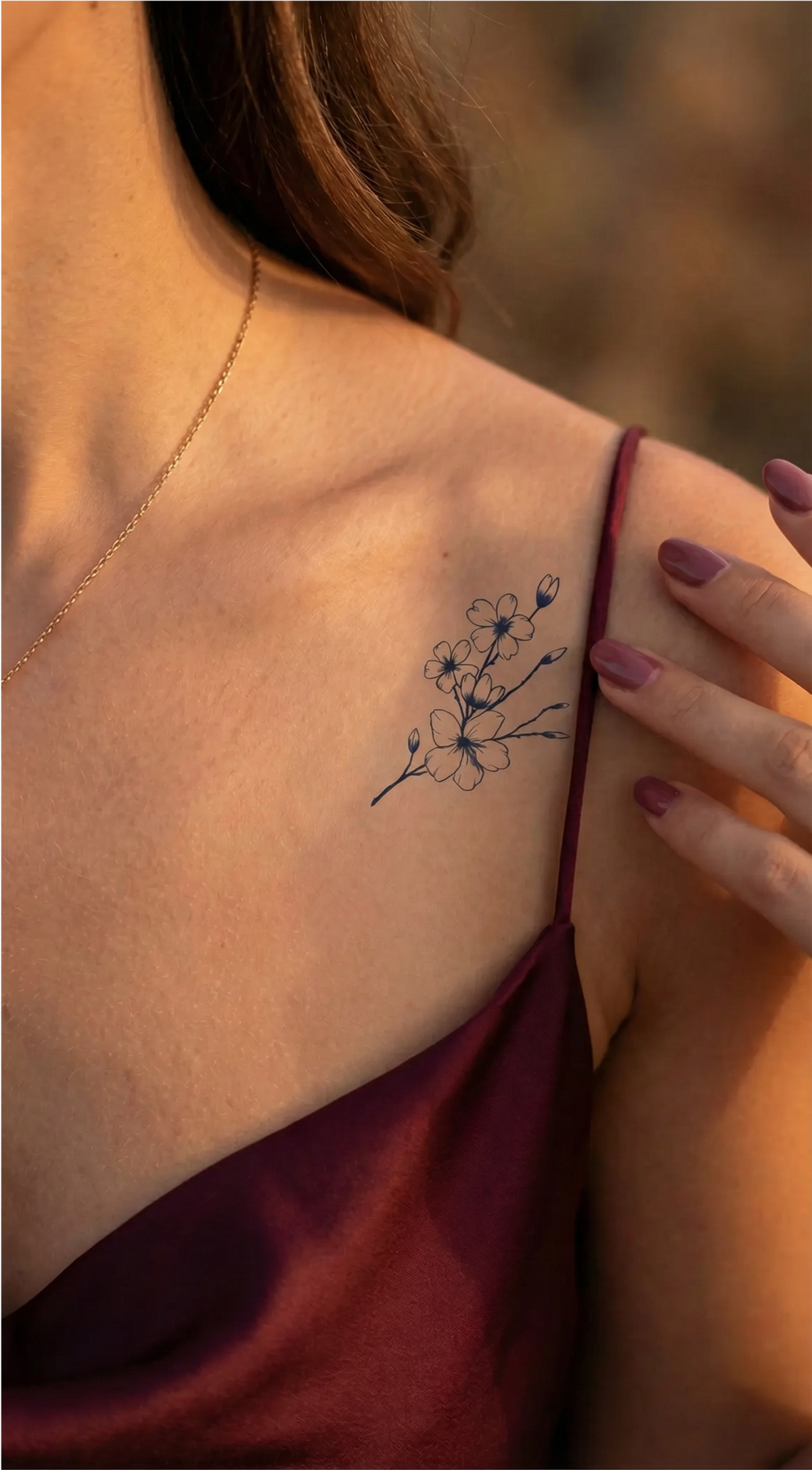
Continuous floral compositions—a bouquet, foliage or the same flower repeated—are among the most popular designs for this format and come in a range of sizes and styles, from very fine to denser (source: La Tatoueuse). A fine bouquet works just as well on a half sleeve as on a narrower armband, as long as the density of the flowers is adjusted to the available width. To explore floral compositions further, this guide to flower tattoos covers the most common styles and meanings, and the collection of floral designs gives an overview of the temporary options available.

Geometric and symbolic designs
Geometric or symbolic designs with interlocking lines work well when repeated regularly around the arm, making them a fitting choice for a half sleeve or a quarter sleeve on the forearm. A vertical composition with repeated lines, for example, can follow the axis of the arm naturally without needing to be redrawn for each section. This article on geometric tattoos offers other design ideas and their most common meanings.

Lettering and quotes
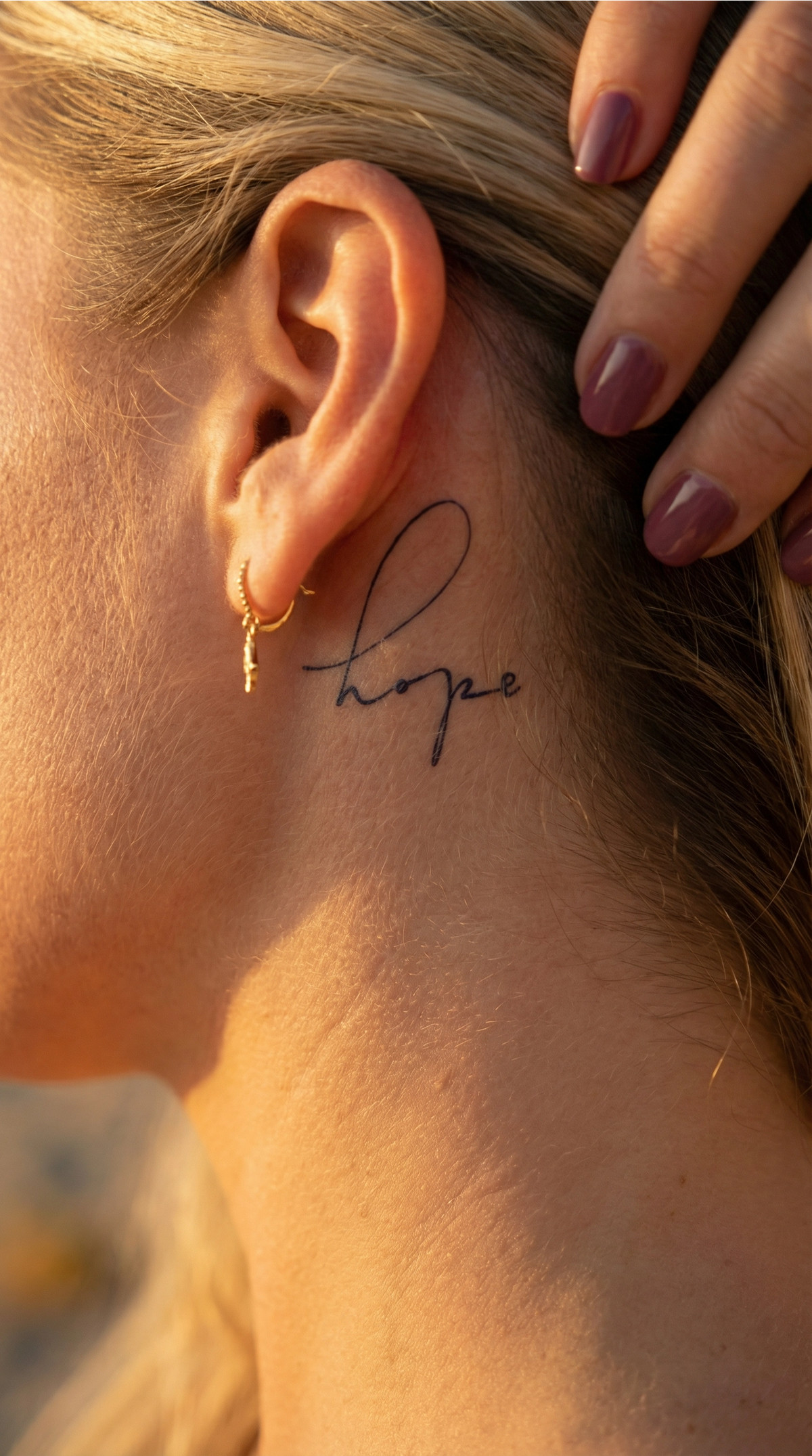
A word or short quote can also run along the length of the arm, as long as the lettering remains legible throughout the sleeve: the finer the font, the better it holds up when extended over a large area without losing legibility. This guide to quote and word tattoos offers ideas for short phrases that retain their meaning when arranged in a band around the arm.
Try your sleeve tattoo before making it permanent
Applying a temporary sleeve tattoo to your arm lets you judge the line weight and alignment of the design once it actually wraps around the limb—something a flat sketch cannot show. It is also an opportunity to compare several widths or design families—fine-line, half sleeve, floral or geometric—before settling on a final choice, and to see how each option looks on your own arm shape. The collection of temporary arm tattoos brings together the formats discussed in this article, from a thin armband to a wider half sleeve.
A temporary or semi-permanent tattoo is still a test of the design, size and placement. It does not let you anticipate pain, healing, a potential allergic reaction or the exact appearance of a permanent tattoo, which depend on factors specific to each person's skin and each technique. This article explains in more detail the value of testing a design before making it permanent, precisely because it focuses on the design and not these other aspects.
Being specific about what you are looking for—a full sleeve, a high or low half sleeve, or a simple armband—already helps guide the discussion with a tattoo artist and choose a design whose construction suits the format. Once you have established that starting point, a temporary trial gives you a concrete idea of how it looks around the arm before you commit to anything further.