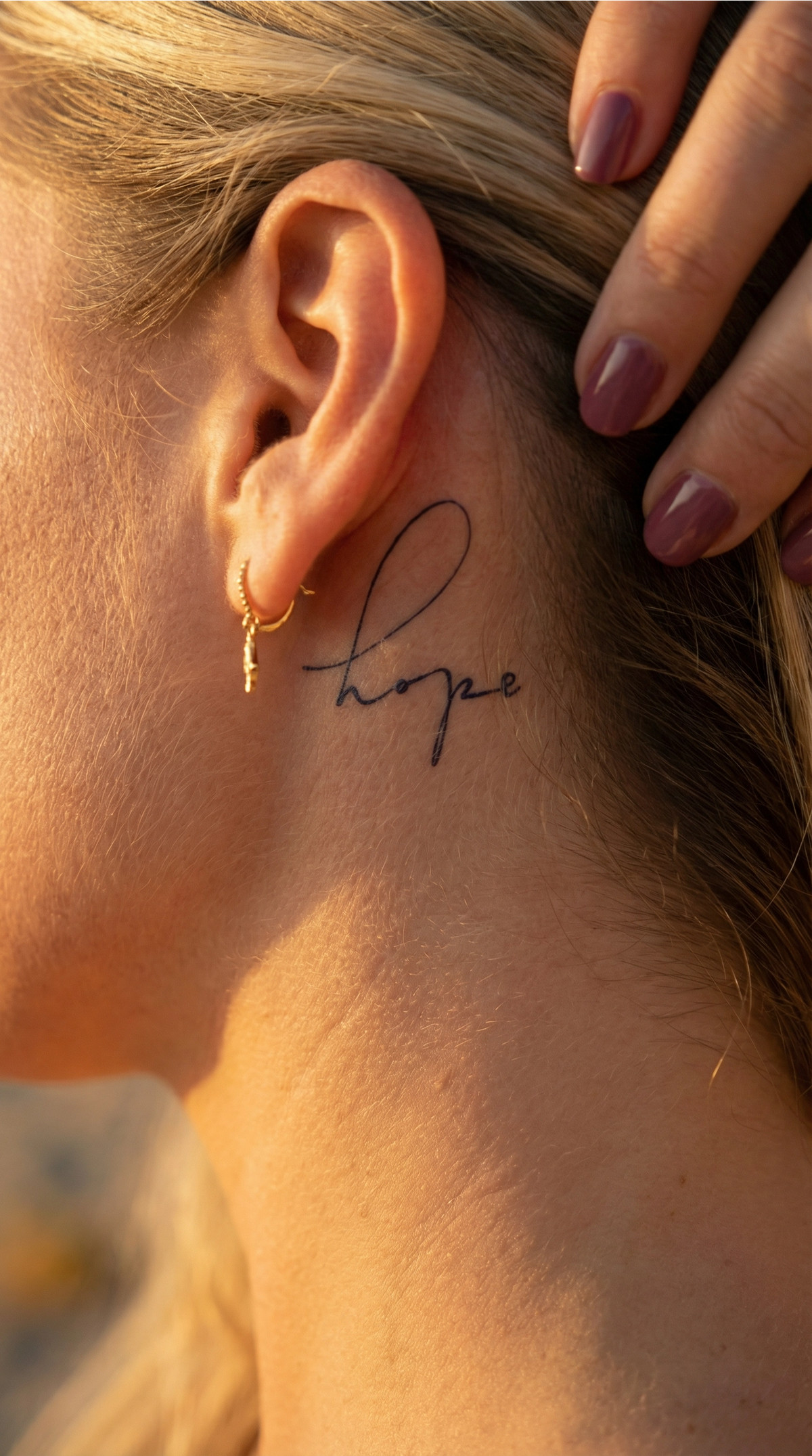


When looking for tattoo ideas for women, many images start to look alike quickly: floral vines, delicate lettering, geometric shapes, sometimes subtle, sometimes eye-catching. The difference rarely lies in the motif itself, but in the technique used to create it. If you first identify the style behind an image—fine lines, ornamental patterns, lettering, a small symbol, or a narrative illustration—you can narrow down much more precisely what really suits your taste, rather than scrolling through endless galleries.
- Fine line: thin, even lines for a subtle, sketch-like look.
- Floral: botanical motifs, usually done in fine line, for a romantic expression.
- Ornamental: symmetrical, decorative patterns for anyone who likes structure and repetition.
- Lettering: from simple typography to calligraphy, with the word at the center.
- Symbolic/Minimalist: a single small symbol with a clear meaning.
- Illustrative: a drawing technique with shading for greater narrative depth.
Fine lines for a subtle, personal look
Fine line tattoos use thin, even lines, often created with a round liner needle, leaving noticeably more skin visible between individual elements than bolder styles do (source: Fine Line Tattoo Style Guide). The result is more reminiscent of a pencil sketch than a classic, densely shaded tattoo, and this very restraint is what makes the style so versatile: it works equally well for small flowers, celestial bodies, animals, short words, and geometric shapes.
Who fine line is suited to
This style suits someone who wants a subtle first tattoo or is looking for an addition that feels understated rather than like a loud statement. Because the lines are so delicate, they stand out especially well on smooth, clearly visible areas: the forearm, collarbone, wrist, ankle, or the area behind the ear.
Floral motifs for a romantic expression
Botanical motifs—single blossoms, branches, or entire vines—are usually done in the fine line technique because thin lines capture the soft, natural character of a flower better than a bold outline. This style suits someone who connects the motif with something personal, such as a season or a memory, rather than choosing an abstract symbol.

If you’d like to explore more botanical designs, you’ll find a more extensive motif gallery in the article about flower tattoos.
Ornamental and mandala-like patterns for fans of symmetry
Ornamental tattoos consist of complex, symmetrical decorative patterns that are often inspired by jewelry, lace, or architectural details (source: Guide to Tattoo Styles: Find Your Design). If you prefer structure and repetition to a single figurative image, this style family offers a suitable direction. Because symmetry and detail only really stand out when there is enough space, many people choose a somewhat larger, visible area such as the wrist, forearm, or upper back. If you’d like to explore mandala-like patterns in more depth, you’ll find a more detailed overview in the article about mandala tattoos.
Lettering and quotes for a clear message
Lettering tattoos range from simple, clear typography to elaborate calligraphy; what usually matters most is not the graphic treatment but the meaning of a particular word, quote, or name (source: Guide to Tattoo Styles: Find Your Design). This style is especially fitting when the message is already decided and should be rendered in a legible rather than decorative way. Short word or phrase designs from the catalog show how compact a lettering tattoo can be without losing clarity. If you’d like to compare fonts and wording more closely, you’ll find more in the article about lettering and quote tattoos.
Symbolic mini tattoos for a quiet statement
Minimalist or symbolic tattoos rely on clean lines and very little detail: the entire motif is distilled into a single small symbol, such as an infinity symbol, a celestial shape, or a compass, which still carries a specific meaning (source: Guide to Tattoo Styles: Find Your Design). This is best suited to a quiet, compact statement that is preferred over a large or visually complex design. Precisely because it is so small, it also makes a good first candidate for a direct comparison with a more elaborate style later on.

Illustrative designs for more depth and storytelling
Illustrative tattoos combine a drawing-based, realistic technique with shading approaches such as stippling or dotwork, and usually aim for a narrative, almost storybook-like effect rather than a single icon (source: Fine Line Tattoo Style Guide). This is the right direction if you want greater visual depth and a larger, clearly visible motif. Because an illustrative design needs more space and detail to really work, it’s especially worthwhile to test the size and placement beforehand.
The right placement for each style
Fine line, symbolic, and lettering designs work well on smaller, smooth areas such as the wrist, ankle, behind the ear, or collarbone. Ornamental and illustrative designs, on the other hand, generally need a larger, more visible area so that their symmetry, shading, and detail can be read at all. For a detailed overview by body placement, with ideas for fine line and symbolic designs on the wrist, see the article about wrist tattoos. If you’re choosing together with a partner, the corresponding style guide for men offers a comparable overview for the other person.
Compare two styles in the same spot before you decide
Once two or three style families seem like a good fit, a direct comparison is more helpful than scrolling through more image galleries. The next step is to narrow the selection down to two favorites—for example, a floral fine line design and a small symbolic motif—and apply both as semi-permanent versions in the same spot. Because both designs share exactly the same space, the comparison is really about the style itself, not about different body placements.
With InkLabs, semi-permanent tattoos initially develop into a paler, bluish shade just after application, then darken over about 24 to 36 hours to a rich tone that comes close to a real tattoo; depending on the body area, friction, and care, they then last for up to about 15 days. Over this period, it’s worth noticing which design your gaze keeps returning to. That is the truly meaningful signal, not your first spontaneous reaction.
It’s important to remember: this comparison says something about the design and how it looks in that spot, not about pain, the healing process, allergy risk, or exactly how a permanent tattoo will look over the long term. The semi-permanent version is a test of the motif on your own skin, not a preview of getting it permanently tattooed. The article about your first tattoo explains why it’s generally worth testing a design before making it permanent.
For a closer look at the options, browse the complete Fine line collection: you can compare more floral and symbolic designs there before settling on the two favorites for a direct test.