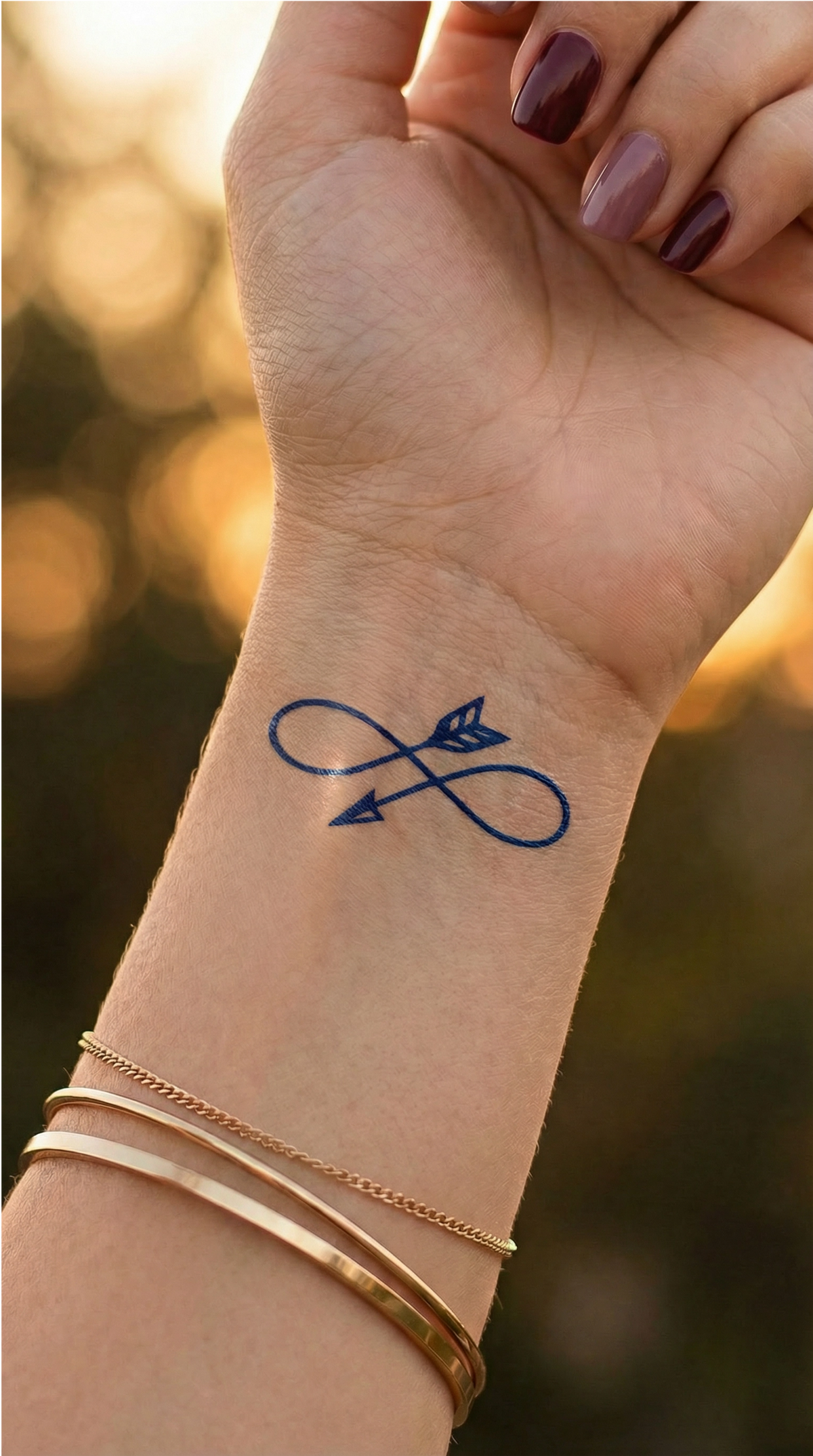


Even before thinking about the design, the choice of placement determines whether a tattoo will still look crisp in ten years or blur within a few years. Tattoo professionals and dermatology sources point to the same stable locations: the forearm, upper arm, calf, shoulder blade and back (away from the spine) keep lines legible the longest because the skin there moves little, experiences less friction and changes little in volume over time. By contrast, hands, fingers and feet age faster because of constant friction, while the ribs call for a design made for skin that is constantly moving and twisting.
- Three mechanisms explain why tattoos age differently depending on their placement: friction and skin renewal, cumulative sun exposure, and skin movement or stretching.
- Tattoo artists and specialized studios cite the forearm, upper arm, calf, shoulder blade and back (away from the spine) among the areas that move the least.
- Hands, fingers and feet regenerate faster because of everyday friction, which wears away fine lines first.
- A temporary or semi-permanent tattoo lets you assess the design and size on your own skin, but it never shows how that same placement will respond after years of sun exposure, friction and movement.
Why some tattoos stay crisp while others fade
Tattoo ink is deposited in the dermis, a layer deeper than the epidermis that is constantly renewing itself. The immune system responds there with macrophages, cells that gradually absorb pigment particles (source: Byrdie) — a mechanism documented by dermatologist Dendy Engelman, which explains why a tattoo always softens a little over time, wherever it is on the body. This continuous cell renewal adds to the gradual fading of lines over the years.
Three factors then determine how quickly this process becomes visible in a given area: friction, which speeds up local skin renewal and brings the pigment to the surface sooner; cumulative sun exposure, which directly degrades pigments; and skin movement or stretching, which can distort a design over time. The quality of the ink, the chosen color and how the tattoo was applied also matter, but this article focuses on placement.
The areas that age best: forearm, upper arm, calf
Tattoo artists who see clients return years later, along with studios specializing in tattoo removal, regularly cite the same locations as the most stable: the forearm, upper arm, shoulder blade, back away from the spine and calf (source: Ray Studios). What they have in common is relatively thick, stable skin that is not subject to much stretching and does not stay in constant contact with clothing or surfaces.
Forearm and upper arm: stable skin, sun exposure to manage
On the arm, the inner side is less exposed to the sun and friction, which generally helps it age better over time (source: Tattoo chez L'). The outer side retains detail well, but it is highly exposed to the sun and needs consistent protection to stay crisp. The elbow follows a different logic: fine lines thicken with the joint's repeated movement, making it a poor choice for a highly detailed design. The inside of the wrist also deserves special consideration because the skin is thin, the crease is constantly flexing, and ink tends to spread there faster over time (same source) — a point we explore in our article on the specific risks of tattoos on the inside of the wrist.
Calf, shoulder blade, back: the same principle of stability
Professionals who see which tattoos come back for touch-ups or removal place the calf in the same “stable” category as the forearm, upper arm and back: there is little change in volume in this area, and friction remains limited except when wearing tight boots or taking part in intensive sports.
The ribs: an elegant but demanding area over time
The ribs are appealing because of their natural line, but they are one of the areas where the skin moves the most: it shifts with every breath, every twist of the torso and every stretch (source: Studio Pixel). There is also almost constant friction from a T-shirt, a bra band or a bag strap. Weight changes can also stretch or loosen this skin more noticeably than on the forearm or calf, which can slightly distort a design over the years — an effect similar to what is seen in highly stretchable areas like the stomach, where age-related loss of elasticity can distort an old tattoo (source: Piction Health).
In this context, dense, highly detailed designs are the first to lose legibility on the ribs, while a well-spaced design that follows the body's natural curve stays crisp longer. For a fine, delicate style, it's also best to check how the line thickness holds up over time before choosing this area: our guide to the fine-line style explores this point.
High-friction areas: hands, fingers, feet
Hands and feet are subject to constant contact and pressure, and their skin regenerates faster than skin elsewhere on the body, bringing the pigment to the surface sooner (source: Byrdie). Fingers combine this rapid renewal with very little surface area for the ink to settle properly, which explains why fine details often disappear there first. Our article dedicated to finger tattoos explores this point area by area.
None of this makes these placements off-limits: it simply means they call for a thicker line, a simpler design and more regular moisturizing if you choose them anyway.
Sun exposure and ink color: two factors that matter everywhere
Whatever area you choose, two factors affect a tattoo's lifespan. Cumulative sun exposure gradually degrades the pigment, which explains why tattoos in areas often left uncovered lose their crispness faster without protection (source: Piction Health). Dark, saturated inks, especially black, withstand this degradation much better than pale or pastel shades because they absorb more light instead of letting it act on the pigment (source: Ray Studios).
Applying sunscreen every day to an exposed tattoo therefore matters almost as much as choosing the area itself: the two factors work together; they do not replace one another.
What a temporary tattoo can (and can't) show
A temporary or semi-permanent design applied to the area you're considering shows exactly what matters before making a final decision: how the design's size and composition look on that particular skin and body contour. One example is an illustrative design like Compass, whose bolder lines work well for a trial on a stable area such as the forearm or calf.

By contrast, a fine-line design like Infinite lets you check how a finer line looks on the same area before considering a permanent equivalent with a tattoo artist.

What such a trial cannot show, however, is how that specific placement will respond after years of sun exposure, friction and movement: a temporary or semi-permanent tattoo does not stay in the skin long enough for these mechanisms to take effect. It should therefore be understood as a trial of placement and size, never as a prediction of healing, pain, fading or the exact long-term appearance of a permanent tattoo. To explore why this trial is still useful before making a final decision, our article on the benefits of trying a tattoo before getting a permanent one explains the process, and our complete guide to your first tattoo covers other factors to consider, such as pain, budget and symbolism.
To compare several possible areas in real-life conditions, the collection of temporary tattoos by body area lets you try the same design in several placements before choosing where it will age best for you.
Ultimately, choosing an area that ages well comes down to looking at these three mechanisms in practical terms rather than relying on appearance alone: less friction, less cumulative sun exposure and less movement mean the design keeps its lines longer. The forearm, upper arm, calf, shoulder blade and back remain reliable choices for this, the ribs call for a design created for moving skin, and hands, fingers and feet come with faster aging from the outset.