

Anyone searching online for tattoo ideas for men is shown hundreds of images in seconds, and they are difficult to sort through because they are drawn in very different visual languages: fine lines beside dense Blackwork, lettering beside a clearly outlined symbol. So before choosing a single design, it’s worth first narrowing down the style that suits your taste. This guide introduces five style families, explains who each style typically suits and which placements it lends itself to, and shows at the end how to compare two favorites directly on the same forearm before committing to anything permanent.
- Fine Line uses thin, often needle-fine lines and very little shading, creating a subtle, pared-back image.
- Geometric designs are built around clear shapes and symmetry rather than realistic details.
- Ornamental and Blackwork combine pure black ink into a pattern rather than depicting a single image.
- Lettering makes a word, name or quote the design itself.
- Illustrative designs retain the visible hand of the artist and often carry a meaning of their own.
Why style comes before the design
Most searches for tattoo ideas return a colorful mix of styles under the same keyword because design and style are two separate decisions. A compass can be rendered as a hair-thin line, a geometric construction or an illustratively drawn symbol, and each version looks completely different on the skin. Once you know which visual language you generally like, your search for a specific design becomes more focused, because you automatically filter out designs that don’t suit your taste. The following five sections organize the most common tattoo ideas for men according to this very criterion.
Fine Line: simple, fine lines
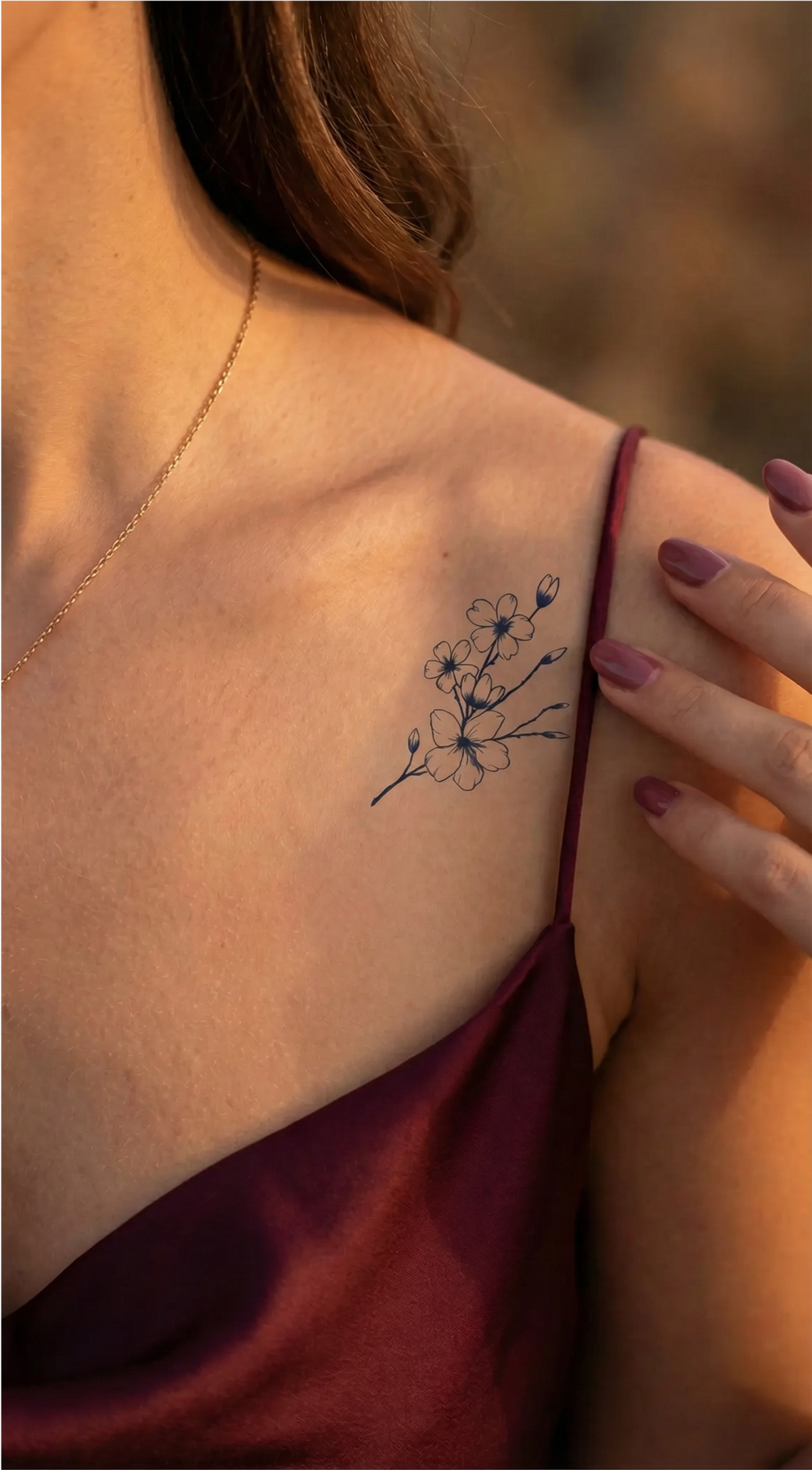
Fine Line tattoos use thin, often needle-fine lines and largely avoid shading, making them look lighter and more delicate than classic designs with bold outlines (source: Monolith Studio). The style suits men looking for a subtle design that feels understated rather than loud, and who don’t want to compromise on clean linework even with a small design. Small to medium-sized designs look best on the forearm, collarbone or ribs, where the fine lines have enough space to remain legible without blurring together.

If Fine Line is your favorite, take a look at our detailed article on Fine Line tattoo techniques and care, which explains needle technique and longevity in detail.
Geometric: structure and symmetry
Geometric tattoos avoid realistic shading and instead build their designs from clear lines, symmetry and recurring shapes (source: Monolith Studio). The style appeals to men who value order and precision and prefer a more minimalist, almost architectural look. Because the shapes can be scaled easily, Geometric works both as a small standalone design in the form of a single figure and as a larger, structured arrangement that brings several shapes together as a whole.

Learn more about the meanings of individual shapes in our article on geometric tattoo designs.
Ornamental and Blackwork: patterns instead of designs
Blackwork uses black ink exclusively and creates its effect through varying line weights, solid areas and deliberately exposed skin rather than color or gradients; mandala designs form a radially symmetrical subcategory, with a repeating pattern (source: iNKPPL Tattoo Magazine). Unlike Fine Line or Geometric, the focus here isn’t a single fine line or shape, but the density and repetition of the overall pattern. The style suits men looking for a bolder, more graphic look without gradients or fine shading techniques and who are prepared to plan for more skin area to accommodate a cohesive pattern.
Lettering: when a word says more than an image
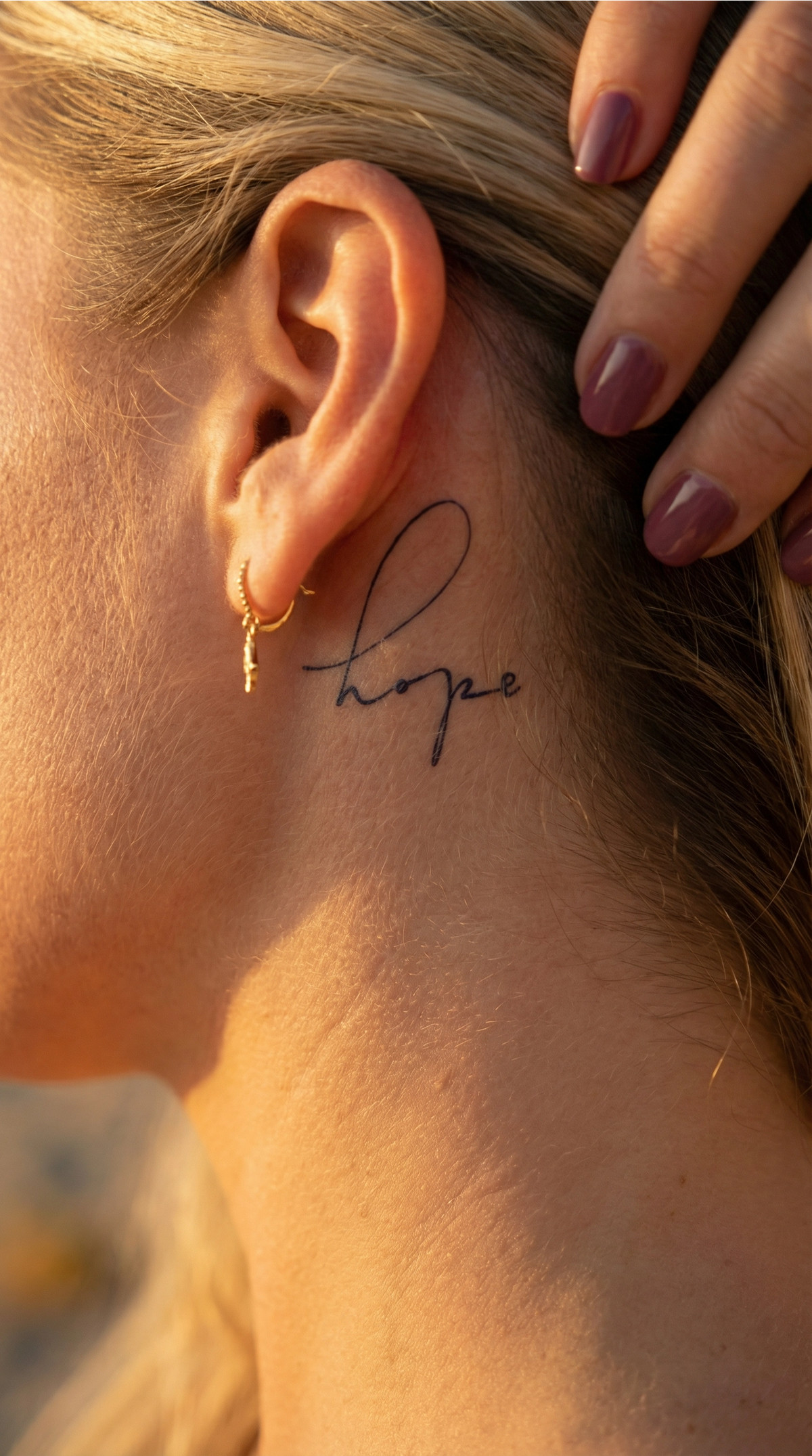
With lettering tattoos, the design itself is a word, a name, a date or a short quote rather than an image, with script, Blackletter and fine-line lettering among the most common options (source: Monolith Studio). Short words or single letters work well on smaller areas such as the collarbone or wrist, while longer sentences need more space and therefore work better on the forearm or ribs. If you’re more drawn to words than images, you’ll find suitable designs to try in our Words and Quotes collection.
Illustrative and symbolic: a design with meaning of its own
Illustrative tattoos retain the visible hand of the artist: clear outlines, cross-hatching or dotted textures take the place of the smooth, photorealistic shading used in other styles, making the artist’s own interpretation part of the design (source: Cangguinkclub). A compass, for example, looks like a drawn map when rendered illustratively and is often read as a symbol of guidance or a clear direction in life.

A second example is the Yin Yang symbol: in Taoist philosophy, the two halves represent inseparable, complementary opposites that depend on one another and form a balance only together, with neither side considered superior to the other (source: World History Encyclopedia). Anyone choosing this design should be aware of its origins and choose it respectfully, rather than seeing it as purely decorative. Illustrative and symbolic designs generally suit men who want the image itself to carry a particular personal meaning rather than simply look good.

Compare two styles side by side
Once you have two favorites from the sections above in mind, it’s worth comparing them not just on a screen, but on your own skin. Apply both designs to the same forearm at the same time and see how their size, linework and placement actually look in everyday life. This applies exclusively to design, size and placement: a temporary or semi-permanent design says nothing about how a permanent tattoo in the same spot hurts, heals or looks over the long term. Our article on why you should test a tattoo before getting it permanently inked explains exactly what such a test does and doesn’t show, while the article on how long a semi-permanent tattoo lasts describes how long such a design stays visible before it fades.
If you’re looking for a first geometric or finely drawn design to try, take a look at our Geometrically collection.
In the end, what matters less is which style is objectively the best and more which one suits your taste, how visible you want it to be in everyday life, and the body placement where you want to wear it. If you use the five families in this guide as a starting point and test two favorites side by side, you’ll be able to decide on a permanent design with a clearer idea of how it actually looks on your own skin.