

Choosing a forearm tattoo is less about the design itself than about how it fills this area: a central design, a vertical line, a band that wraps around the arm, a line of text, or several small pieces stacked together will each look different depending on the length between the wrist and elbow and the thickness of the arm. This guide explores these five layouts, shows how their size should follow the shape of the arm rather than a standard measurement, and explains how to compare two options directly on your skin before making any permanent decision.
- The outer forearm stays visible in everyday life, while the inner forearm is only really revealed when your sleeve is rolled up or your arm is bent.
- The distance between the wrist and elbow sets the limit for a vertical line, while the thickness of the arm determines how wide a design can be without looking cramped.
- Each layout—a central design, vertical line, band, line of text, or stacked pieces—suits a different purpose, from discretion to an overall effect.
- A temporary tattoo lets you compare two layouts on your own arm, but it tells you nothing about pain, healing, or exactly how permanent ink will look once applied.
What to know about your forearm before choosing a design
Before choosing a design, it’s worth looking at your forearm as a space with variable proportions rather than as a blank canvas. The outer forearm, the side that faces outward when your arm hangs by your side, is the most visible in everyday life—at a meeting, on a terrace, or with a short sleeve. The inner forearm, on the opposite side, is only revealed when your arm bends or you deliberately roll up your sleeve, making it a more discreet placement if you want to control who sees the design.
The distance between your wrist and elbow directly determines how far a vertical line or text can extend without encroaching on the joint, an area to avoid both for legibility and for the design’s long-term comfort. Arm thickness plays a different role: it determines how wide a design can be without looking compressed on a slim forearm, or, conversely, lost and too small on a wider arm. Taken together, these two measurements guide your choice of layout even before you choose a style or symbol.
The layouts that work best on the forearm
Five layout types cover most choices for a man’s forearm, each suited to a different purpose: discretion, a symbol that’s easy to read at a glance, an overall effect, or a collection of several small elements. For examples that have already been created, the gallery of six men’s forearm tattoo designs shows several of these types with specific designs.
A single central design
A single design placed in the center of the outer forearm works as a focal point: the eye stops on it without having to follow a line. This layout suits a drawing that needs space to unfold, such as an illustrative design with several elements.

The vertical line
A vertical line follows the arm’s natural axis, from the inner elbow toward the wrist, and remains legible even on a slim forearm because it doesn’t need width to stand out.

The band that wraps around the forearm
A band that wraps around the forearm depends mainly on the arm’s circumference at the chosen spot, rather than its height: it must join up without visible distortion on the inner forearm, where most people never see it directly.

A line of text or a name
A line of text follows the same logic as a vertical or horizontal line, with one additional constraint: the characters must remain legible from conversational distance, which limits the length of the chosen word or phrase on a forearm of average width.

Small stacked pieces
Several small designs spaced along the arm, rather than one large drawing, leave room to add another element later without reworking the whole composition, as long as you keep regular spacing between each piece to avoid a cluttered effect.

Adapt the design’s size to the shape of your arm
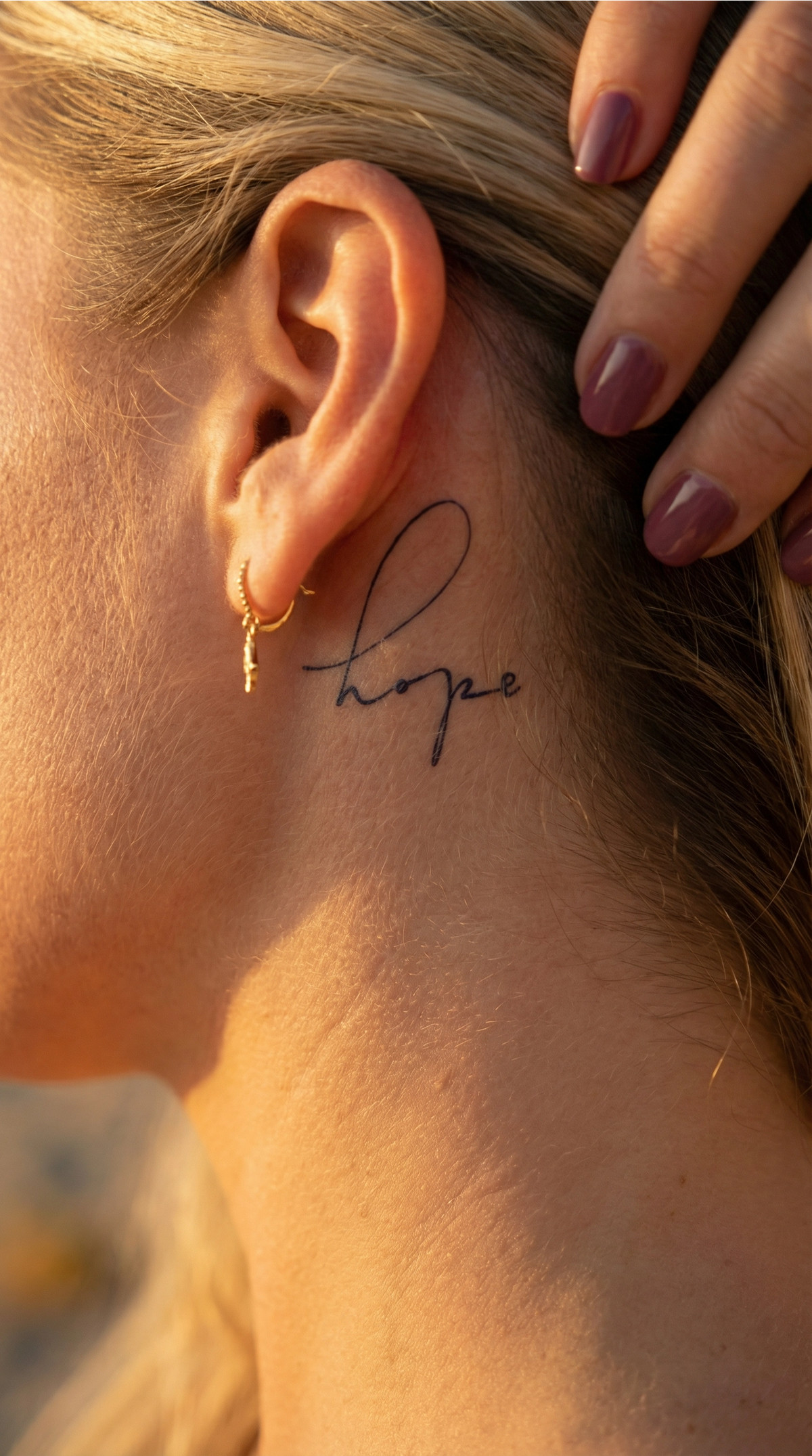
The actual dimensions of two InkLabs semi-permanent tattoo designs illustrate the difference between a compact layout and one that covers more area. The fine-line design shown above measures 5.5 x 5.5 cm, a size that works well for a discreet vertical line on a slim forearm (source: Infinite – InkLabs product page). By contrast, the design shown for the band layout covers 11 x 18 cm, an area better suited to a large central design or a band covering a good portion of the outer forearm (source: Divine Duality – InkLabs product page). This same page also lists areas to avoid for this type of design, such as the face, lips, neck, chest, intimate areas, irritated or damaged skin, an area with significant hair growth, a scar, a mole, or a stretch mark.
These two examples don’t set a universal rule for every design in the collection, but they offer a concrete reference point: a design created for a slim forearm generally fits within a few centimeters, while a design intended to fill the space needs a much larger area to remain legible without looking compressed. To compare sizes on other parts of the body, the guide to temporary tattoo sizes, from small designs to full body explains the same logic applied elsewhere.
Choose a style based on the effect you want
A design’s graphic style directly influences which layout will show it off best. Fine line, made up of thin strokes and little fill, suits vertical lines and small, discreet designs, since the line stays crisp even on a small area. Illustrative designs, with their details and shaded areas, work better as a single central design that needs space for each element to remain distinct. Minimalist style, reduced to a few essential shapes, suits stacked pieces: each small design stays simple, preventing the whole arm from looking visually overloaded once the pieces are combined.
Compare two layouts on the same forearm before deciding
The best way to choose between two layouts isn’t to compare photos, but to apply both options directly to your own forearm. For example, placing a central design on the outer forearm and a vertical line in the same area, side by side or a few days apart, quickly shows which one better suits the arm’s actual length and thickness—information no reference photo can provide with the same precision.
Application uses a water-transfer process: gently exfoliate the skin, remove the protective film, position the design with the adhesive side against the skin, press firmly, wet the back of the backing for about one minute, then slowly peel it away, corner by corner (source: How to apply a temporary tattoo – InkLabs). On the forearm in particular, a relatively flat surface and moderate friction help it last close to the stated wear time for each design (source: Temporary tattoos on the arm – InkLabs), giving you time to see how each layout follows your arm’s movements during a normal day and whether it stays visible with the sleeves you wear most often.
For placements higher up the arm, including the biceps or shoulder, the guide to temporary tattoos on the arm and forearm expands the discussion beyond the specific area covered here.
What a temporary trial shows—and what it doesn’t
A temporary tattoo gives you an accurate picture of how the chosen design looks in real life, including its placement and size, directly addressing the questions of layout and format discussed above. It also lets you judge how the design looks under different lighting and with different outfits, and whether you still want to wear it after having it on your skin for several days (source: First tattoo: how to choose the design and placement – InkLabs).
However, this trial tells you nothing about the pain of a permanent tattoo session, how healing will go, the risk of a skin reaction, or exactly how permanent ink will look once applied and then aged over several years. This limitation applies to all the layouts presented here, whether it’s a small, discreet design or a band covering a good portion of the arm. To explore this distinction further before making a final decision, the article on choosing your first tattoo explains the full reasoning behind this trial step.
Once a layout and approximate size seem to suit your forearm on paper, the temporary forearm tattoo collection brings together designs grouped by these same formats, including more full-coverage designs like Divine Duality, so you can apply the exact design and see how it looks on your own skin before making any permanent decision.