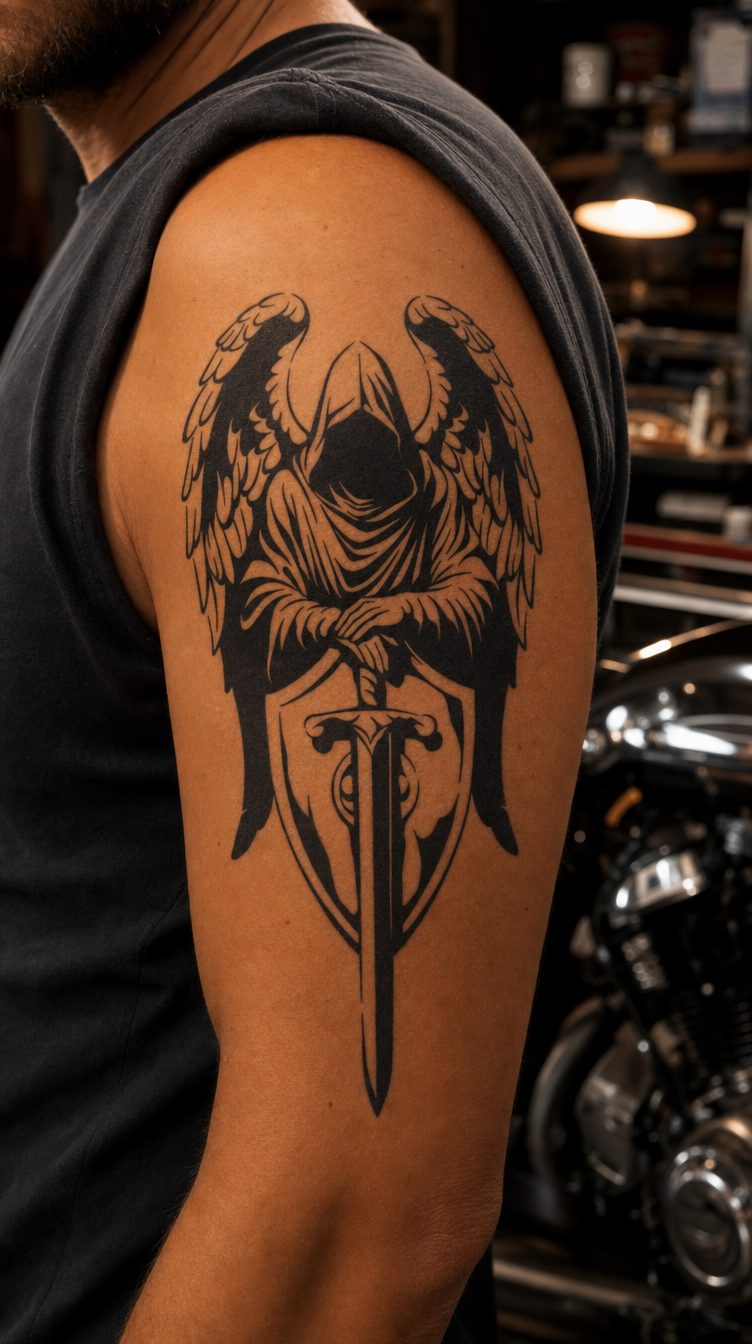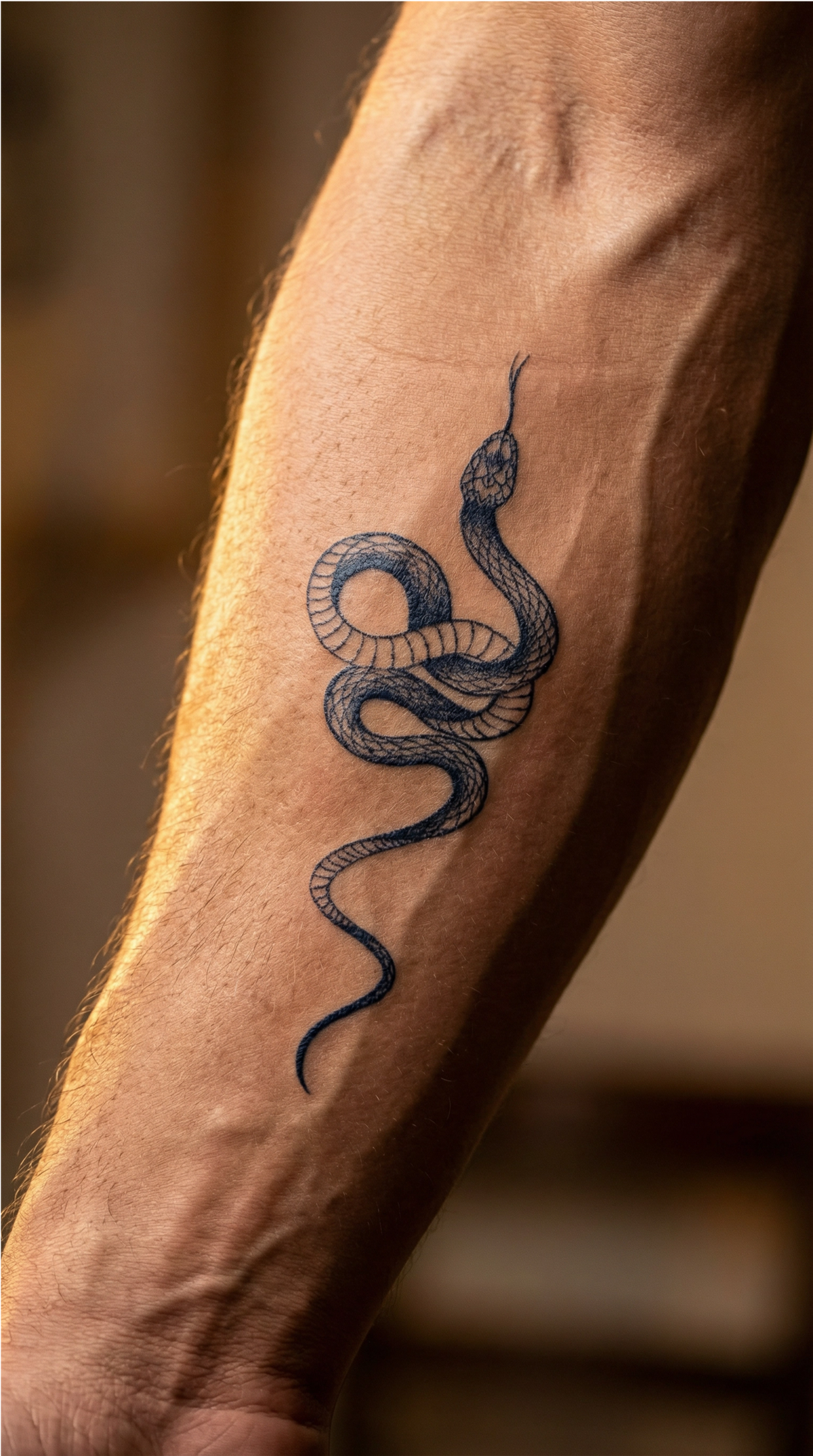


A Kalevala tattoo usually depicts one of the central characters or objects in Finland’s national epic: the Sampo, the sage Väinämöinen and his kantele, the Swan of Tuonela or Otso, the king of the forest. Sisu is also often associated with the same conversation, although it is not a character in the epic but its own independent national concept. Each symbol has its own story, and that story is what ultimately determines what the subject communicates—the same character can mean very different things depending on which part of the myth it comes from.
- The Sampo and why its original meaning remains an open question among scholars.
- Väinämöinen and the kantele, known as Finland’s national instrument.
- The Swan of Tuonela and Otso the bear, two very different moods from the same epic.
- Sisu, which does not come from the Kalevala but often goes hand in hand with the same themes.
The Sampo: the object the whole epic argues about
The Kalevala is a work compiled in the 19th century by Elias Lönnrot from Finnish, Karelian and Ingrian oral folk traditions. The expanded version, published in 1849, contains 22 795 verses in fifty poems and is considered Finland’s national epic (source: Kalevala, Wikipedia). Against this background, it is easier to understand why individual characters and objects carry so much meaning: they are not isolated images but parts of a long story passed down orally.
Kalevala Day on February 28
Kalevala Day is celebrated in Finland on February 28, and it is an official flag-flying day. It began as a commemoration of the day in 1835 when Lönnrot signed the preface to the first edition, and since 1978 the day has also been known as Finnish Culture Day (source: Kalevala Day, Wikipedia). For many, this is a natural time to get a Kalevala-themed tattoo, but the date is just one way to anchor the choice to something concrete—the symbol itself carries its meaning regardless of which day you choose it.
At the heart of the epic is the Sampo: a magical object forged by the smith Ilmarinen that grinds out flour, salt and gold endlessly. The Sampo can be thought of as Finland’s own version of a horn of plenty (source: Sampo, Wikipedia). Väinämöinen’s band and Louhi, the Mistress of Pohjola, fight over the Sampo, and at the end of the battle the object is broken and lost at sea during the escape. Scholars have not reached agreement on what the Sampo originally meant—suggestions include a mill, a world pillar and an iron kantele. It is worth treating this as an open question, not a solved riddle, when choosing the Sampo as a tattoo subject: ambiguity is part of the symbol’s nature, not a flaw in it.
Väinämöinen and the kantele he leaves behind
Väinämöinen is the Kalevala’s central hero: an ancient, wise singer and sage whose power rests on song and words rather than violence. He brings order to the land of Kalevala and serves as its steady central figure throughout the epic (source: Väinämöinen, Wikipedia). At the end of the epic, he leaves by boat as Christianity arrives in the land; this departure is generally interpreted as the end of the old world order, not a literal end for the character himself.
Väinämöinen is also associated with the kantele, which is known as Finland’s national instrument. According to the story, he makes the first kantele from the jawbone of a giant pike and the hair of Hiisi’s stallion, and after losing this instrument, he makes another from a birch tree and a maiden’s hair (source: Kantele, Wikipedia). The instrument’s two origin stories make the kantele a particularly interesting subject: it is not just an object, but a reminder that something valuable can be rebuilt after the first version is lost.
Why the kantele’s shape works as a simple line drawing
The kantele’s curved body and straight strings form a clear outline that remains legible even at a small size—this is a design observation, not a new claim about the instrument. That makes it especially suitable for areas such as the wrist, forearm or ankle, where a detailed design can easily become indistinct. For the same reason, it is worth thinking in advance about whether the design will look best horizontally or vertically on the part of the body where you plan to place it.
The Swan of Tuonela and Otso the bear
The Swan of Tuonela swims in the river that borders Tuonela, the afterlife in Finnish mythology. In Lemminkäinen’s story, the hero is tasked with shooting this swan, but he himself dies from a poisoned arrow before he can complete his task (source: The Swan of Tuonela, Wikipedia). This scene should be read specifically as part of Lemminkäinen’s own story, not as a general statement about swans or death in themselves—the swan carries meaning in this particular tale, not as a symbol in its own right.
Otso, or the bear, is another powerful character in the epic, but its story has a different tone from the swan’s. According to tradition, the bear’s real name was not spoken aloud because it was believed to bring bad luck in hunting; instead, people spoke of the bear using respectful names such as mesikämmen and kontio (source: Otso, Wikipedia). The bear is still considered the king of the forest, and it is officially Finland’s national animal.
Why the bear’s name was not spoken aloud
Euphemisms were not merely a matter of politeness, but part of a broader belief that a name has the power to call the person or thing it refers to. Saving the bear’s real name meant, in practice, always speaking of it through one of its qualities or a family relationship—mesikämmen refers to its paws, while kontio refers to its place among the inhabitants of the forest. As a tattoo subject, this background gives a bear motif a different weight from that of a simple image of a powerful animal: it is also about the respect shown to the animal at the level of naming.
Sisu: a word that stands on its own
Sisu describes perseverance, determination and endurance, qualities that Finns themselves feel have no direct equivalent in other languages. The word derives from sisus, meaning the innermost part or entrails (source: Sisu, Wikipedia). The concept became internationally known especially through reporting during the Winter War of 1939–1940, when foreign correspondents used this very word to describe the Finns’ perseverance.
Because sisu is a word and an idea rather than a depicted character, it works as a tattoo both as written text and combined with a simpler visual subject, such as a minimal line design—this is a design note, not a new claim about the concept itself. Unlike the Sampo or the kantele, sisu does not need a visual interpretation to work: many choose it precisely because the word itself carries the full meaning.
Try out a design before deciding on its size and placement
A temporary or semi-permanent tattoo design gives you the chance to see what your chosen subject looks like at a particular size and on a particular area of skin before making a permanent decision. This is specifically about trying out the design, size and placement—not predicting how a permanent tattoo will heal, fade or feel on the skin. If you are still unsure about placement or size, this guide to choosing a first tattoo design and placement explains how to choose your first design and placement thoughtfully.
You can also compare line thickness and proportions with designs from other fantasy and mythology themes, even if they do not depict characters from the Kalevala.
It is also worth considering what line style suits your chosen character’s own mood. The Sampo and Otso carry weighty, even dramatic meanings, so a bolder outline or filled area often works better for them than an extremely fine line drawing. The kantele and the Swan of Tuonela, on the other hand, are more delicate subjects by nature, so a thin, detailed line style brings out the sensitivity of their stories instead of getting lost in heavy shading. Sisu, in turn, most often works as lettering: the thickness and spacing of the letters should be chosen using the same logic as for an image-based subject—that is, according to whether the text looks best as a compact or more open composition on the chosen area of skin.


You can browse these and other designs with similar themes in the Fantasy and Mythology collection, where you can also request an individual Kalevala character as a custom design. If a ready-made design feels right and you want to try it at home, this guide to applying a temporary tattoo at home walks you through the application step by step, while this guide to choosing a suitable temporary tattoo design helps you compare different design options before choosing. If the Finnish epic is not the only mythology that interests you, this overview of fantasy and mythology tattoos introduces a wider range of other mythical subjects.
The Sampo, Väinämöinen and the kantele, the Swan of Tuonela, Otso and sisu carry very different moods from the same tradition: one tells of a disputed treasure, another of letting go and rebuilding, a third of the boundary between life and death, a fourth of respect, and a fifth of a word that needs no image. When you know what story your choice carries, it is easier to judge what kind of line drawing and what size will do it justice on the skin.