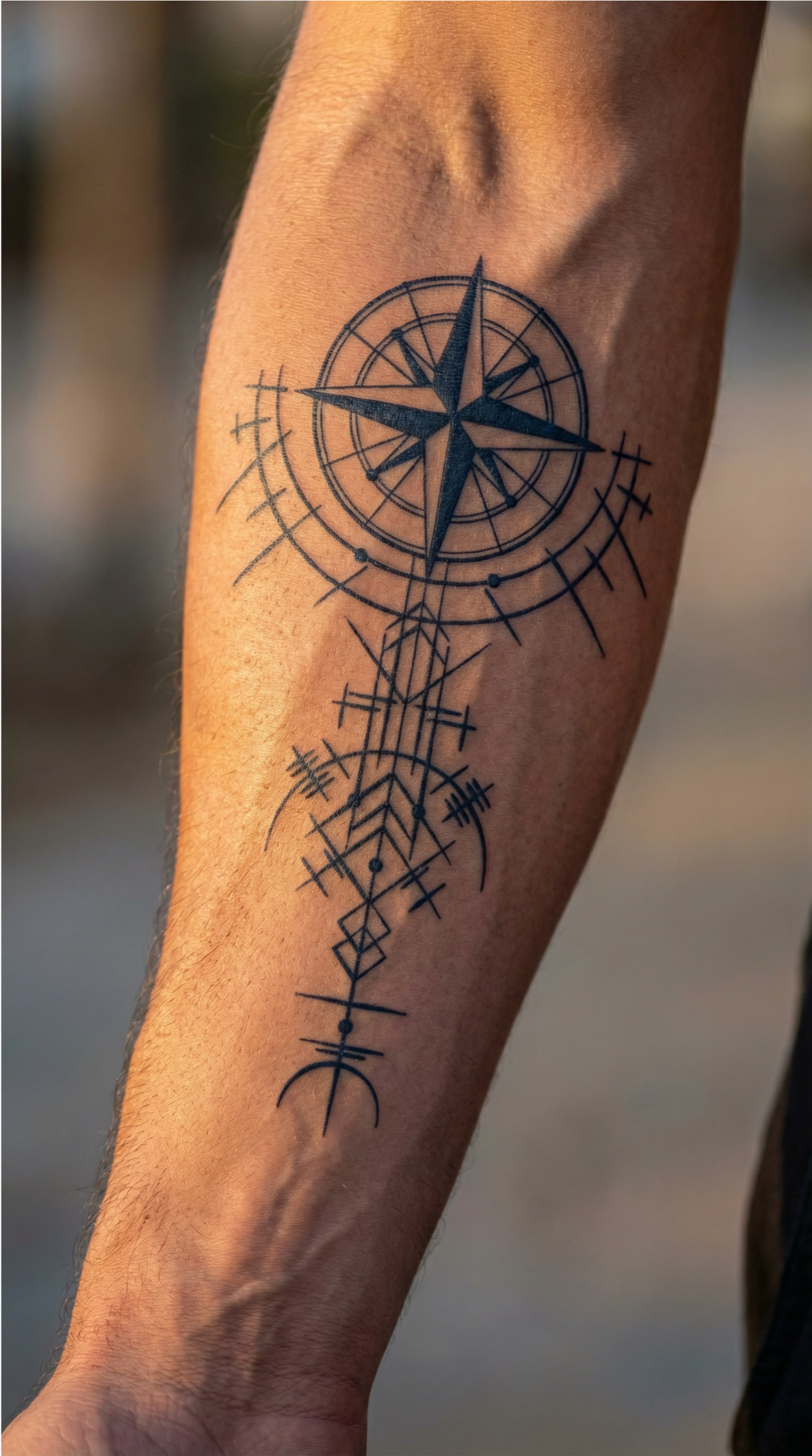


How long a tattoo takes depends first and foremost on the size of the design and the part of the body you choose to have it on. As a general guide, a typical session takes anywhere from less than an hour for a small design to a few hours for a medium-to-large design with lots of detail. Very large pieces, such as a full sleeve, aren’t done in a single visit but are split across several sessions over the course of a few calendar months, so the skin has time to heal between them. Below, you’ll find specific guidelines by size and body area, along with everything you need to know about consultations and booking, so you can plan realistically around a permanent tattoo—not just the exact time of the session.
- Small design, under approximately 5 cm: typically 15-45 minutes of actual needle work.
- Medium design, between 5 and 15 cm: typically 1-3 hours.
- Large design, over 15 cm: typically 4-8 hours, often split across several sessions.
- The break between sessions for a large piece is usually two to four weeks, which is how long it takes the skin to close and stabilize.
What actually happens during a tattoo session
The time spent with the needle on your skin is only part of the actual appointment, and that difference matters when you’re trying to block out the right amount of time in your calendar. Before the tattooing begins, the artist reviews the design with you, applies the stencil to the chosen area and often repositions it several times until the size, angle and symmetry look exactly as you imagined. Only once you’re both happy with the stencil’s placement does the actual tattooing begin, and it may stop and start a few times along the way, depending on how much you need a short break.
At the end, there are a few minutes for cleaning the area, applying an initial dressing and explaining the aftercare instructions—a step that shouldn’t be rushed if you want your skin to heal well and the color or linework to stay clearly defined. For this reason, an appointment estimated to involve 45 minutes of tattooing usually means blocking out almost an hour in your calendar, not having exactly 45 minutes free afterward. If you have other plans that day, it’s safer to leave an extra 15-20 minutes, especially for a first appointment with a new artist, when discussing the design and your expectations takes a little longer than at a return visit for touch-ups or to continue an existing piece.
How size and body area affect the duration
Size remains the easiest factor to estimate before booking because it can be measured simply in centimeters. A small design, under approximately 5 cm, usually takes 15-45 minutes of actual work; a medium one, between 5 and 15 cm, takes 1-3 hours; and a large design, over 15 cm, typically needs 4-8 hours, often split across several sessions rather than done in one (source: How Long Do Tattoos Take? Time by Size and Placement – OCD Ink Studio). If you’re still deciding between a discreet option and a more substantial one for your first tattoo, the guide to choosing the right design and placement for your first tattoo can help you narrow down your options before discussing timing with the artist.
Body area matters just as much as size, and sometimes even more. Flat, stable areas such as the outer forearm or thigh are generally quicker to work on because the skin stays taut and the artist can maintain a steady pace without frequent interruptions. The ribs, spine, hands and other areas where the skin moves with your breathing, or where sensitivity calls for more frequent breaks, take more time for a design of the same size (source: How Long Do Tattoos Take? Time by Size and Placement – OCD Ink Studio). Detail density and color add time regardless of size: a small design with lots of fine shading or several layers of color can take longer to work on than a somewhat larger, simple outline, even if at first glance it seems like the “easy” piece in the appointment.
Multi-session pieces: why a sleeve doesn’t get finished in a week
Large-scale work, such as a full sleeve, is usually built over several sessions of 4-6 hours each, rather than in a single marathon visit. Even if the skin could physically withstand a longer single session, the artist prefers to divide the work into stages, so they can control the quality of the lines and shading as the piece progresses, and so you can have real breaks between large sections of work.
What the healing break is actually for
Between sessions, the skin needs time to close and stabilize before the artist can work over the same area again or even directly beside it; that’s why breaks are usually two to four weeks long (source: How Long Do Tattoos Take? Time by Size and Placement – OCD Ink Studio). The surface layer of the skin generally recovers by the second or third week, but the deeper layers can need another three to four months to heal completely, which is another reason artists prefer to leave time between sessions worked on the same area of the body (source: Tattoo Aftercare: Tips, Daily Routine, Products, and More – Healthline).
Multiply the number of sessions by the break between them, and you’ll see why a sleeve simply described as “four to six sessions” adds up to three to five months on the calendar, from the first appointment to the final touch-up. That’s why a piece like this can’t be completed during a week of vacation or on a single dedicated trip, no matter how much free time you have during that period: the limiting factor isn’t the artist’s time, but the time your own skin needs to recover between stages.
The consultation and booking: the part people forget to plan for
The time before the session itself matters just as much for overall planning, even though it’s easier to overlook than the hours spent in the chair. An initial inquiry and price estimate can often come on the same day or within 48 hours, but a custom design usually needs another 2-7 days for sketching and revisions, especially if you send clear references in your first message to the artist (source: How Long Do Tattoos Take? Time by Size and Placement – OCD Ink Studio). A full list of useful questions to ask at your consultation, from the artist’s style to preparing your skin before the session, is covered separately in the guide to what to ask at a tattoo consultation.
Sought-after artists and studios are often booked up weeks, sometimes even months, in advance, especially for custom designs or large pieces planned over several sessions. Leaving the consultation and design stage until the last minute is the most common reason an initially estimated timeline slips to a much later date than the client would have wanted. If you send your references early and decide on the size and body area well in advance, you shorten the design stage and keep the project on the schedule you actually want, instead of adapting to the first available slot you find in a rush.
The question of how much a tattoo costs usually comes up alongside the question of how long it takes, because both depend on the same factors: size, detail and placement. The specific answer is in the guide to the cost of a small tattoo, while what to prepare for the day of your appointment, from what to wear to what to bring with you, is explained in detail in the guide to tattoo session day.
Confirm the size and placement before booking your session
Since size and body area are two of the factors that most affect the length of a session, seeing the design at actual size, right on the spot you have in mind, gives you a much clearer picture before you discuss the working time with the artist. A temporary or semi-permanent design helps you do exactly that: it shows you how that size looks and feels in that particular spot during everyday activities for one to two weeks, so you can decide calmly rather than in a rush in front of the tattoo chair.
One important thing to remember: a design like this is a test of the design, size and placement, not a simulation of the pain, healing process or exact appearance of your skin after a permanent tattoo. Those aspects depend on a separate process specific to your skin and the artist’s technique.

Comparing two sizes side by side helps you get an even better sense of the difference before choosing. A small fine-line design, like the one above, feels like a quick piece, suited to a short first session, while a larger design, such as an illustrative compass worn on the arm or thigh, makes the difference in scale easy to see—a difference that translates directly into extra hours of work for the artist in the studio.

If you first want to understand the difference between a temporary and a semi-permanent design, start with the guide to what semi-permanent tattoos are; and the reasons to test a design before making it permanent are explained in detail in this guide to testing before getting a permanent tattoo. Once you have a realistic estimate of the session length and any healing breaks, choosing a design from the Your First Tattoo collection in the same size and placement you have in mind will help you arrive at the consultation with a much clearer plan than if you started with only a vague idea.