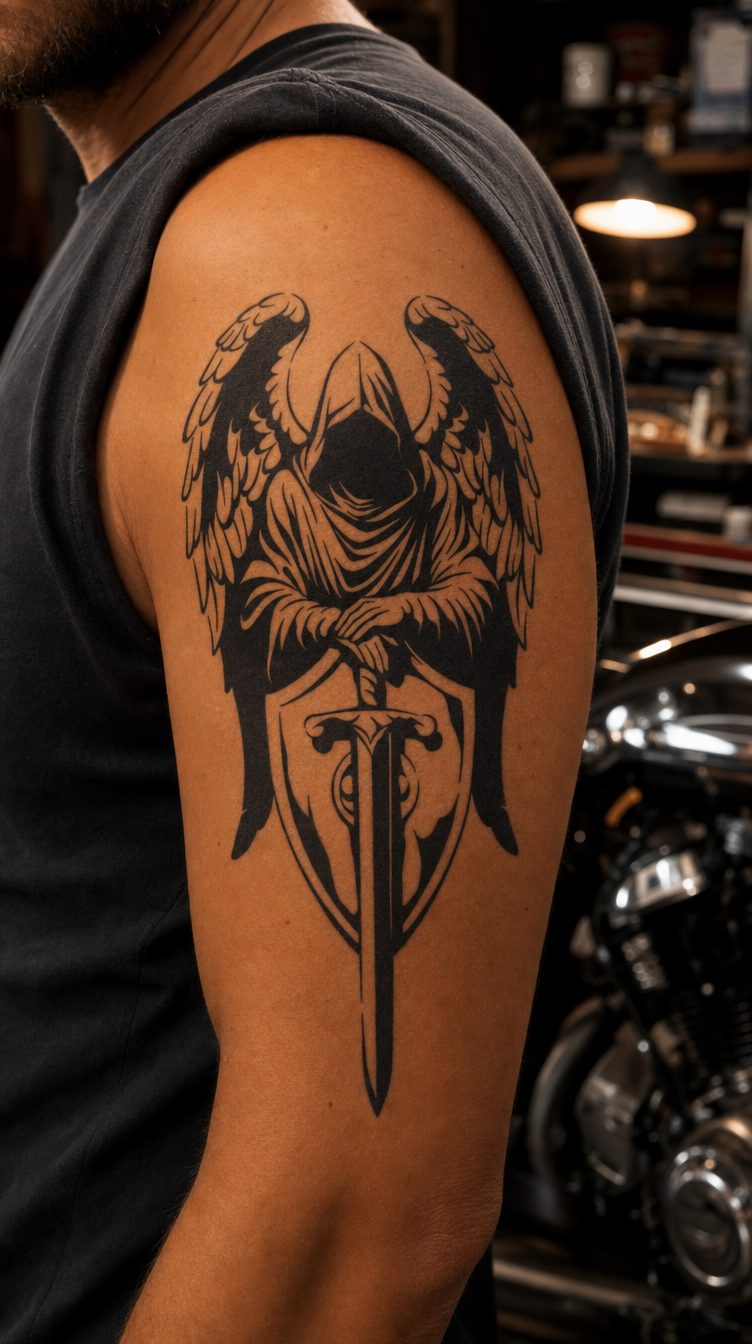


Most tattoos that turn out “ugly” aren’t a matter of bad luck, but the result of a specific decision made in a hurry or without checking: a misspelled letter in a text, a design compressed to a size that doesn’t give its details room to breathe, placement copied from someone else without taking your own body shape into account, or a design chosen on impulse straight from a catalogue. Each of these mistakes has a clear cause and an equally clear way to check for it, and the final section explains how a temporary version, applied at the actual size you’re considering, helps you confirm your decision before going to the tattoo artist.
- Writing and text remain the most frequently regretted type of tattoo, especially when they involve a language other than your own.
- At a small size, a detailed design loses its clarity over time, not its initial beauty.
- Placement copied exactly from someone else ignores the real differences between bodies.
- Designs chosen on impulse or straight from a catalogue carry the greatest risk of regret; a temporary version lets you check the size and placement before booking an appointment.
Why some tattoos turn out badly: what the data actually shows
The exact percentage of tattoos people regret varies quite a bit between studies, depending on the sample and the measurement method. A study of adults in the US found that around 18% of people with tattoos regret at least one, a figure the authors compare with a result of 24% from another survey cited in the same paper (source: Think Before You Ink). The difference shows that the percentage depends on who was surveyed and how the question was worded, not that the figures contradict each other. The same study links regret to decisions made under the influence of alcohol or other substances, peer pressure as the main reason for getting a tattoo, placement in highly visible areas such as the face, neck or hands, and complications after application, such as infection or persistent itching. By contrast, being older at the time of tattooing and getting a tattoo to commemorate someone or something are associated with lower regret.
A separate survey focused exclusively on tattoo regret details which types of designs are regretted most often: writing and text top the list at 32%, followed by flowers at 22% and hearts at 18% (source: Tattoo Regrets survey). The same survey shows that a decision made spontaneously, on the same day, is regretted by 37% of respondents, compared with 20% for a decision considered for a few days and a much lower percentage for those who waited months or years. Designs chosen straight from a tattoo artist’s catalogue, known in the industry as “flash,” have a similar regret rate of 37%, while designs copied from the internet have a rate of 23%; custom designs created specifically for the client are the least regretted of all the categories. These four categories—writing, proportions, placement, and impulsive or copied decisions—form the structure of the following sections, each with a practical check you can do before booking an appointment.
Spelling and translation mistakes, especially in other languages
Problems with written text almost always arise in the same context: the text is written in a language or alphabet different from the client’s or tattoo artist’s, without anyone who actually knows that language checking the final result. An automatic translator can convey the general meaning of a sentence, but often misses inflections, agreement or special characters that completely change a word. Two public examples, known from the press and specialist blogs, illustrate how this happens, rather than a measured statistic: a sentence in Italian was tattooed with one letter changed, turning “rimpianti” (regrets) into the meaningless word “rimipianti,” and the name of a well-known footballer’s wife was rendered as “Vihctoria” in a tattoo written in the Devanagari alphabet (source: The most permanent of translation mishaps). These cases are anecdotal—they don’t represent a statistically measured frequency—but they show exactly where the error occurs: when moving from one language to another without a second check by an actual speaker.
The practical check is simple and costs nothing: have the exact text written by someone who knows the language as a native or advanced speaker, rather than just automatically translated, and go through the draft letter by letter with the tattoo artist before application. The font also affects how clearly the text remains readable over time, especially at a small size, and the guide to choosing a font for text tattoos explains exactly which criteria matter for legibility.

Proportions and a size that doesn’t suit the level of detail
A detailed design—fine lines, small letters, generous negative space—needs physical room to stay clear. When the same drawing is compressed to a size much smaller than it was designed for, the lines overlap, the negative space disappears and small letters run into each other; the result becomes even less clear as the skin changes over time through aging, sun exposure or weight fluctuations (source: The Tattoo Mistake That Can Ruin a Great Design). The right size isn’t decided in isolation, but in relation to the body area and the space around the design; a design that looks balanced in a reference photo may look completely different on your own body, because the actual proportions of the arm, wrist or ribs vary from person to person.
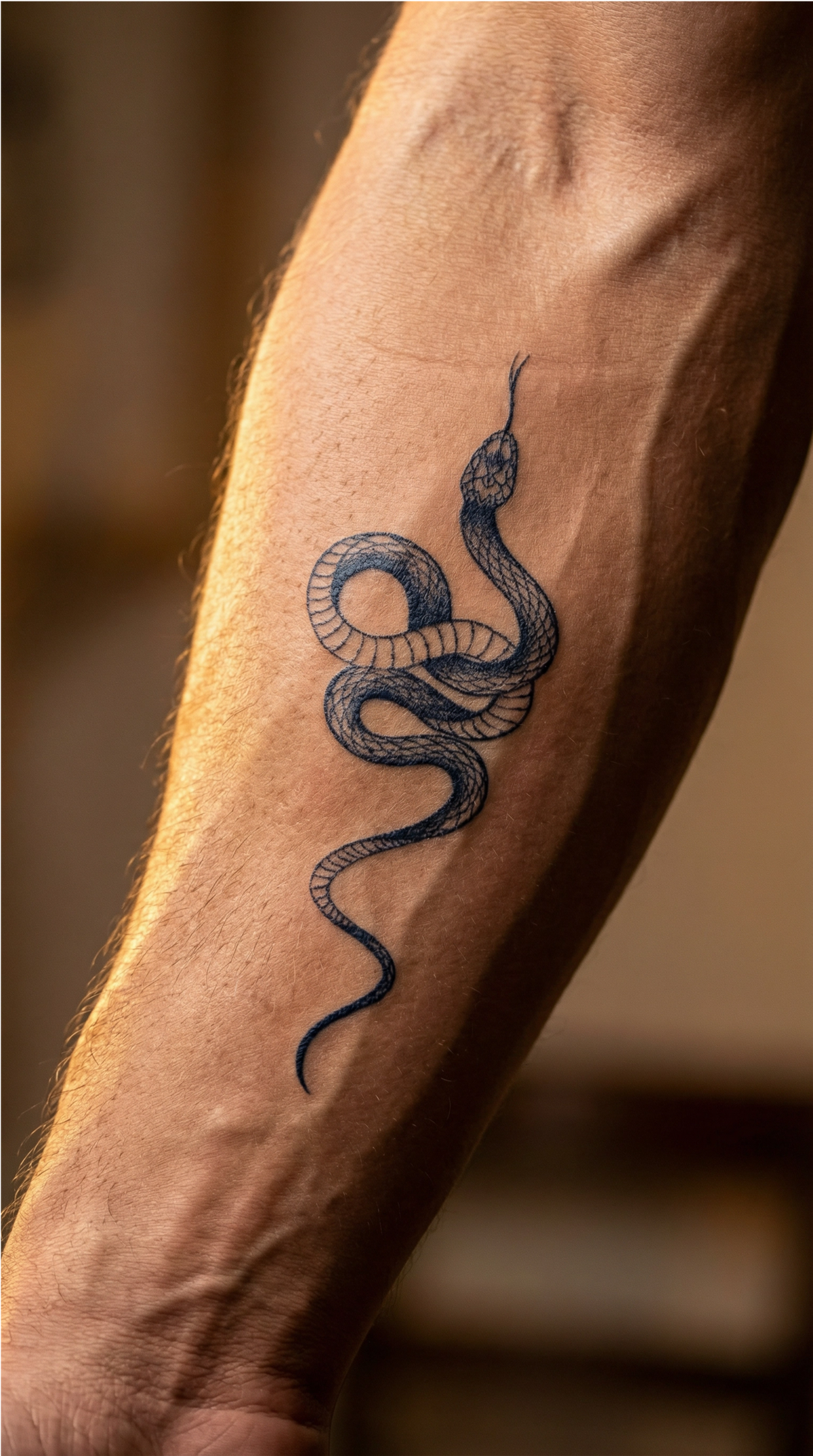
If the tattoo you have in mind falls into the “fine line” category—designs with delicate outlines and small details, like the one below—talk explicitly with the tattoo artist about the minimum size at which the lines will remain distinct over time; the guide to minimum size for details and text gives exact guidelines for this type of design.

Placement that doesn’t suit your anatomy
Copying the placement exactly from a photo found online ignores an essential detail: every body has its own shape, musculature and bone structure, and a design that flows naturally on someone else’s arm may look stretched or distorted on yours. A good tattoo artist adjusts the design’s lines to the actual curve of the chosen area, not just to its size on paper, and this discussion about how the design follows the skin’s natural lines deserves just as much time as choosing the design itself.
Why highly visible areas raise the stakes
Highly visible areas—the face, neck and hands—are associated in the study cited above with a riskier decision, because any mistake in proportion or execution is constantly noticeable in every social interaction and can’t be covered with clothing when needed. That doesn’t mean these areas are off-limits, but they do deserve extra consideration compared with an area you can choose to show only when you want to.
Clichés, copied designs and impulsive decisions
Designs chosen straight from a tattoo artist’s catalogue or copied exactly from the internet have, according to the survey cited above, a regret rate close to that of decisions made on the same day, without time to think. That doesn’t mean a simple design or an existing drawing is automatically a mistake—the real problem is an unconsidered choice, not the simplicity of the design itself. A classic design, chosen intentionally and adapted to your own body, is just as valid an option as a completely original design.
The practical solution is to give yourself time, even if only briefly, before confirming a design: a few days to think it over significantly reduce the regret rate, according to the same survey. If you like a design from a catalogue, ask the tattoo artist to adapt it to your own idea and the area of your body, rather than copying it exactly from someone else; the guide to choosing the right design goes into detail about this adaptation process.
How a temporary trial helps you avoid these mistakes
All the checks above—writing, proportions, placement and the decision itself—can be tested in practice before going to the tattoo artist, using a temporary design applied at the actual size you’re considering. On your own skin, not just on a screen, you can see directly whether the writing remains legible, whether the proportions suit the chosen area and how the design follows your body’s natural lines; then you can wear the design for a few days during your usual activities and see whether you still like the placement.
It’s a visual trial of the design, size and placement—not a prediction of pain, healing, allergy risk or exactly how a permanent tattoo will look. For a design with text, this extra time allows you to check the writing with someone who knows the language before going to the tattoo artist with a clear decision. The article on testing a design before making a permanent decision explains why this step is worthwhile, and the step-by-step guide to testing it on your skin explains exactly how to do the trial, from application to observing the result.
If you want to start with a temporary version at the actual size, the Small Temporary Tattoos collection is the right starting point for this kind of test.
Checklist before you decide
Before confirming your appointment, go through this short checklist; each point corresponds to a mistake explained above.
- Any text has been checked letter by letter by someone who knows the language, not just run through an automatic translator.
- The size has been discussed with the tattoo artist in relation to the body area and the space around it, not just a reference photo.
- The placement has been viewed directly on your own body, not copied exactly from someone else.
- The design wasn’t confirmed on the very day you first saw it, and a design inspired by a catalogue was adapted, not copied exactly.
- The size and placement have been confirmed with a temporary version before booking the session.
The main guide to choosing a design and placement for your first tattoo revisits these decisions step by step, for readers who want a complete framework before moving forward.