

A Camino de Santiago tattoo is more than just a pretty design on the skin: for most people who wear one, it marks having completed the Camino or having decided to walk it. Before choosing a design, it’s worth distinguishing between two different moments: getting tattooed to mark the end of a chapter already lived, and getting tattooed as a way to commit to a pilgrimage that still lies ahead. The most common symbols are the scallop shell, the yellow arrow and the Cross of Saint James, each with its own history that’s worth knowing before wearing it on your skin, along with smaller elements such as boots, a walking staff or the Compostela.
- The scallop shell is the Camino’s oldest sign and is still carved into churches and monuments along the route.
- The yellow arrow is much more recent than it looks: a Galician parish priest painted it in 1984 so no one would get lost.
- The Cross of Saint James is shaped like a sword and has a specific religious and military origin, linked to an order that protected pilgrims.
- A temporary design lets you see the actual size and placement before making any final decision, although it doesn’t replace the experience of getting a permanent tattoo.
The scallop shell: the pilgrim’s most recognizable symbol
The scallop shell is the Camino’s oldest identifying sign, predating the yellow arrow, and can still be seen carved into churches and monuments along the route (source: The yellow arrow and the scallop shell - Turismo de Galicia). Its connection to pilgrimage comes from a traditional legend about a knight and the shells that appeared when the remains of the apostle Saint James arrived in Spain by sea, and the Camino routes were recognized as a UNESCO World Heritage Site in 1993 (source: Camino de Santiago - Wikipedia).
Where the shell can still be seen on the actual Camino
Today, as you walk any of the routes, the shell appears on signs and façades, as well as on pilgrims’ backpacks, usually hanging as a badge. Wearing it as a tattoo connects with that same purpose: marking the end of a chapter and joining a tradition that has marked the same route for centuries.
The yellow arrow: the sign that guides each stage
Unlike the shell, the yellow arrow has a much more recent and well-documented origin: in 1984, the parish priest of O Cebreiro, Elías Valiña Sampedro, came up with it and personally marked the French Way at a time when the route had become difficult to follow (source: The yellow arrow and the scallop shell - Turismo de Galicia). In a tattoo, the arrow is usually read as a sense of direction, a decision already made or the progress from stage to stage that defines every Camino. Unlike the shell, which evokes a medieval symbol, the arrow represents a practical sign from the 20th century, and that difference in origin is part of what makes it an interesting motif: each tells a different part of the same story.
The Cross of Saint James: faith, chivalry and an origin worth knowing
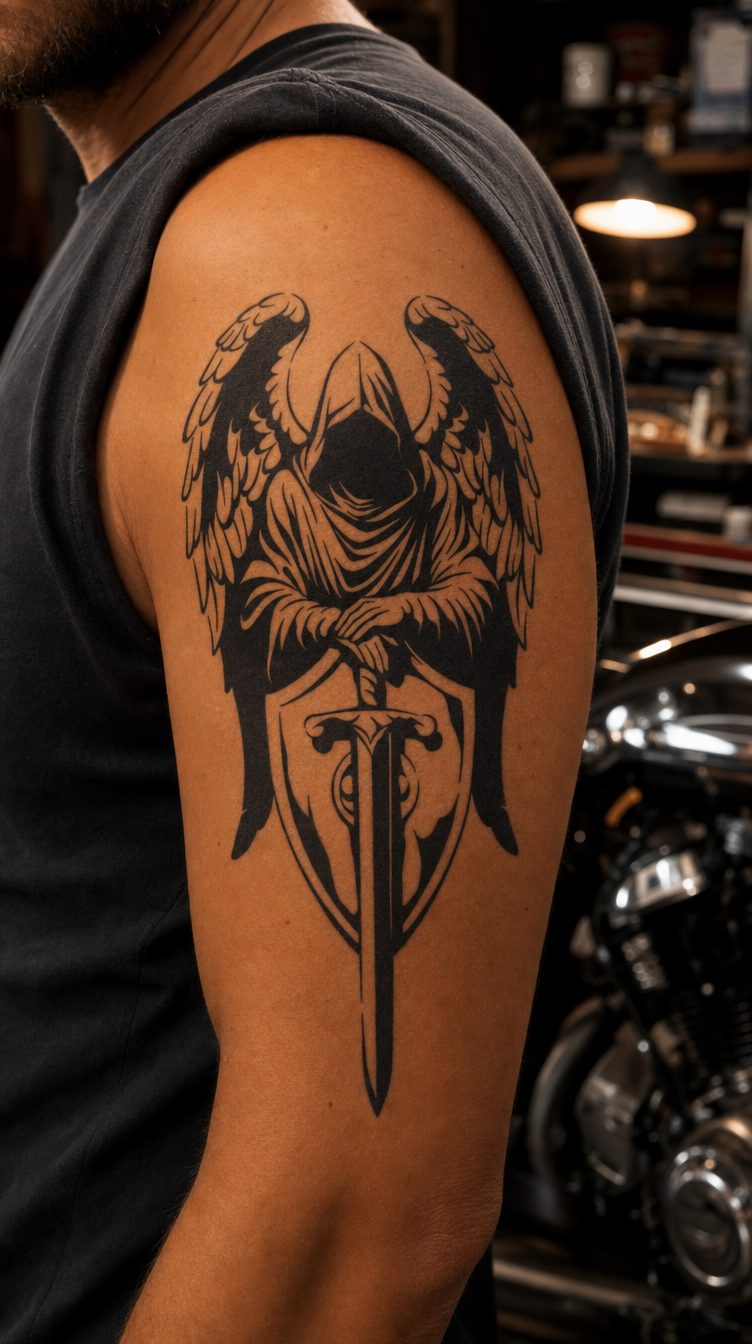
The Cross of Saint James is shaped like a sword with fleur-de-lis at its ends: the blade recalls the apostle’s martyrdom by beheading, while the three fleur-de-lis are traditionally read as “unblemished honor” (source: Cruz de Santiago - Wikipedia). Since the 12th century, it has been the emblem of the Order of Santiago, a religious and military organization founded in 1170 and confirmed by the Pope in 1175, which was responsible for protecting the roads to Compostela and went on to build hospitals to care for pilgrims (source: Orden de Santiago - Wikipedia). The cross was embroidered on the knights’ white capes and banners, alongside scallop shells as decoration (source: Cruz de Santiago - Wikipedia). Knowing its origins before getting it tattooed, even temporarily, helps you make an informed decision: it’s an emblem with centuries of meaning behind it and deserves the same consideration as any other religious symbol. If you’d like to explore this subject further, it’s also worth reading how crosses and other religious symbols are approached in temporary tattoos.
Other pilgrim elements: boots, a walking staff and the Compostela
Alongside the three main symbols, there are smaller elements that are often combined with them. Pilgrim boots and a walking staff serve as shorthand for the physical effort of the route: many kilometers walked, with no further explanation needed. The Compostela, in turn, is the official certificate confirming that the pilgrimage has been completed: to apply for one, you must travel at least the final 100 consecutive kilometers on foot or on horseback, or 200 km by bicycle, and have your pilgrim credential stamped along the way (source: The Compostela - Oficina del Peregrino). That’s why some pilgrims include a date or a specific distance in their design, as a reference to their own Compostela. The most traveled route is the French Way, which accounts for approximately two-thirds of today’s pilgrims, alongside others such as the Portuguese Way, the Northern Way and the Primitive Way (source: Camino de Santiago - Wikipedia); mentioning your own route alongside these elements helps personalize the design without compromising legibility. These smaller elements usually work better alongside the shell or arrow than on their own, because they rely on context to convey what they represent.
Where to place a Camino de Santiago tattoo
The wrist, ankle and forearm are the most common places for a single small symbol, because you can see it easily in everyday life without it dominating the overall look. When combining two or three elements, such as the shell with the arrow or the cross with a date, the shoulder blade or side of the torso offers more space without losing proportion. The choice depends above all on how visible you want it to be day to day: a piece on the wrist is constantly in view, while one on the shoulder blade is more discreet and shown when the person wearing it chooses. Before deciding on the final placement, it’s also worth reading how to choose the design and placement of your first tattoo, because many of the same questions apply here.
Minimalist designs: a single line or silhouette
For anyone looking for something discreet, a single line outlining the shell or arrow, with no fill or additional details, usually works best in small areas such as a finger or the inner wrist. It’s also the best option for a small Camino de Santiago tattoo: the simpler the line, the easier it is to keep the proportions in a limited space. The minimalist tattoo guide explores what type of line works best for the size you choose, and anyone who prefers a very fine-line finish can browse the fine line tattoo collection directly.
Why try the symbol before deciding on a permanent tattoo
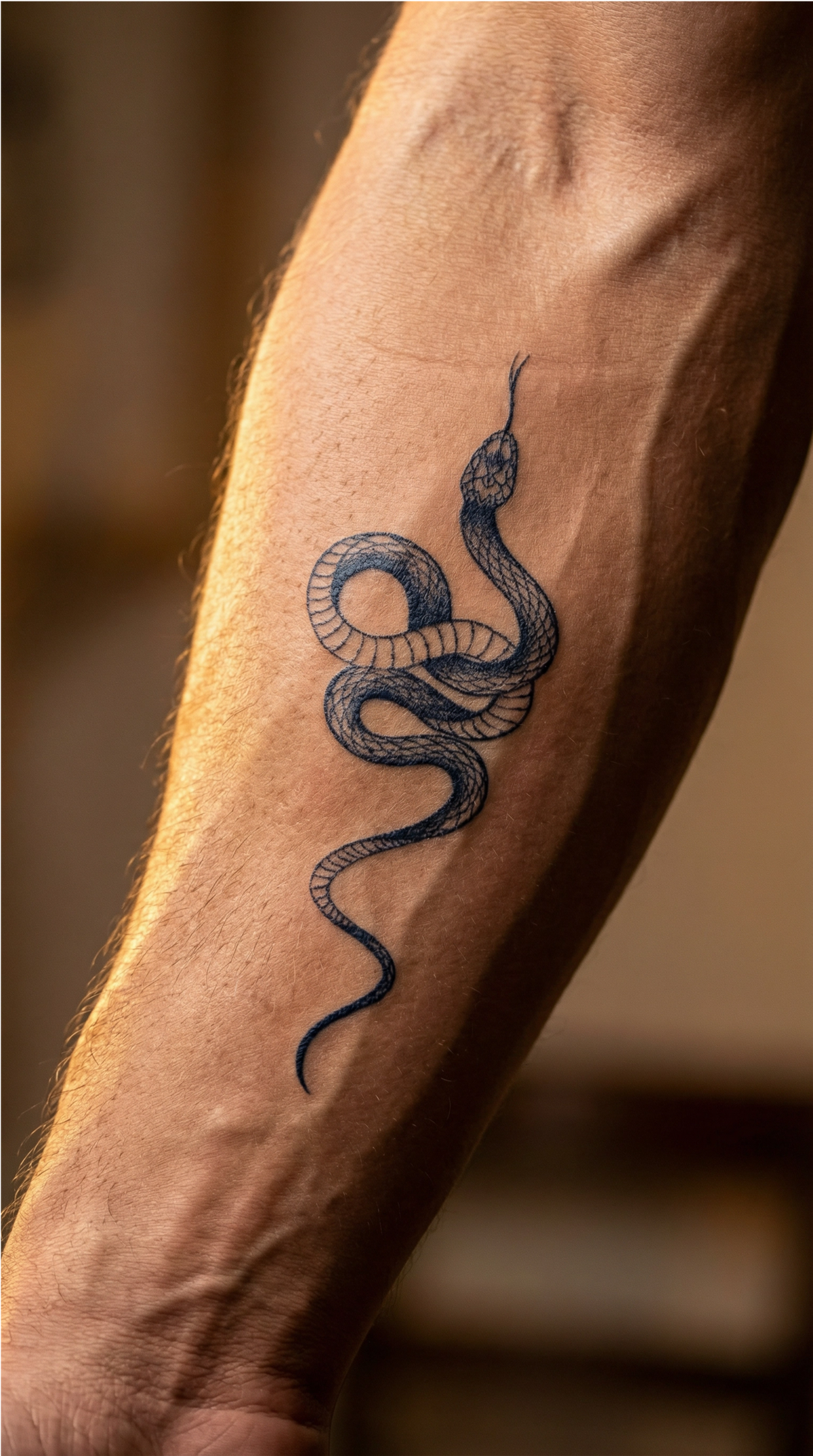
A temporary design lets you see the size, placement and how the symbol looks on your own skin before making any permanent decision. This includes trying, for example, a fine-line design inspired by orientation and direction, like the one shown below, which shares the yellow arrow’s idea of direction and progress from stage to stage.

You can see the full range in the Temporary Compass Tattoos collection, or take a closer look at the Orientation design if the cardinal points fit the story you want to tell. It’s worth being clear, though, about what a temporary design can and can’t show: it’s useful for evaluating size, placement and composition, while the skin’s reaction to the needle, the healing process and the final look of a permanent tattoo are things only that permanent tattoo itself can show. Combining several symbols, such as the shell with the arrow or a compass-inspired design alongside a Camino element, helps you find a personal composition before committing to a final version. If the idea of a travel-related tattoo also comes up while thinking about summer vacation, this guide to temporary tattoos on vacation covers practical considerations such as the sun, water and luggage. And to understand in more detail why it’s worth trying any design before taking the final step, this article explains the full reasoning.
Ultimately, choosing a Camino de Santiago tattoo means choosing which part of the experience you want to keep visible: the shell’s centuries-old tradition, the arrow’s practical gesture, the cross’s historical significance or your own combination of several elements. Knowing the origins of each symbol helps you make an informed choice, and trying the design before the final appointment gives you the time you need to decide calmly.