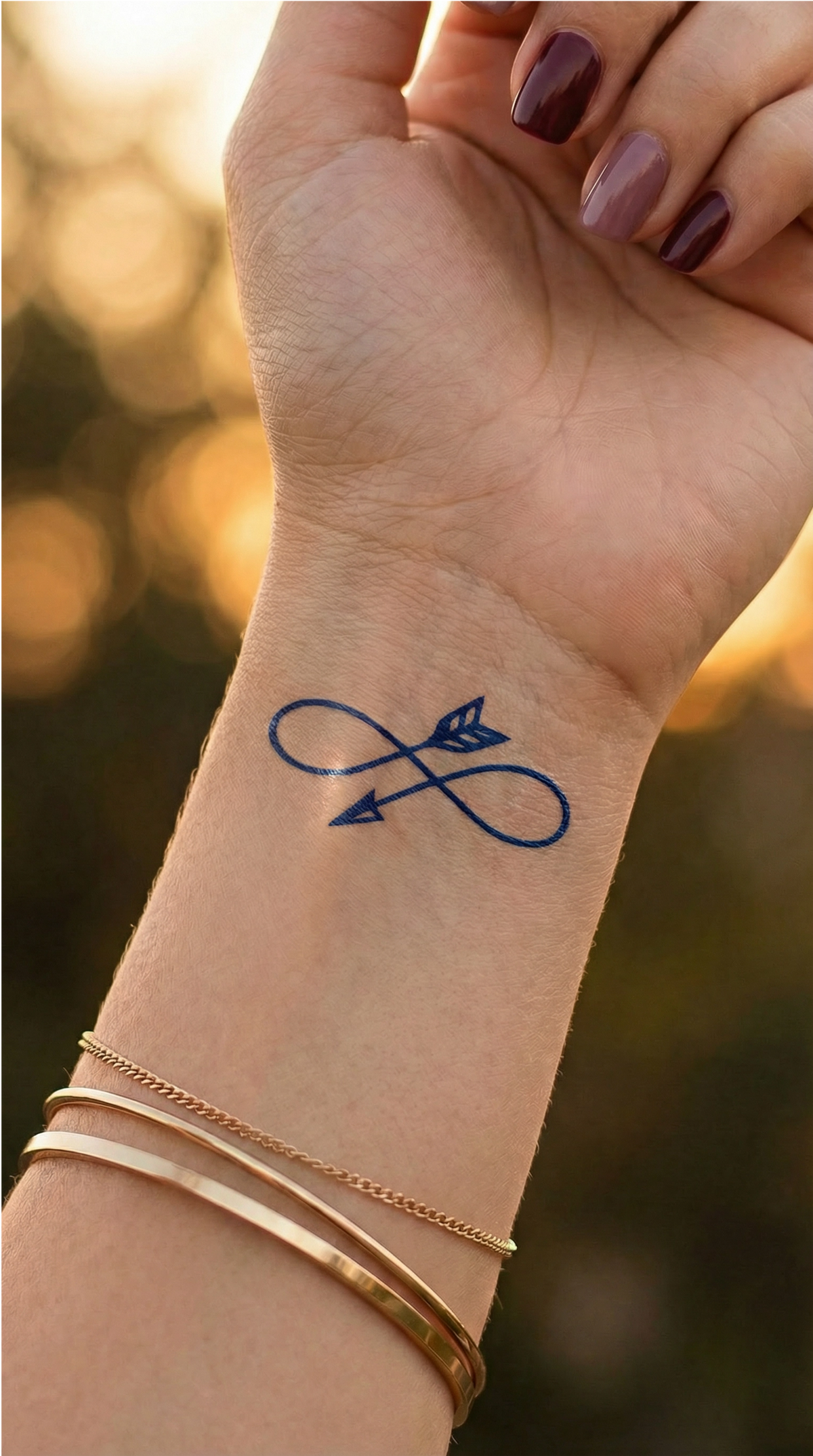


A bow tattoo is a small ribbon or bow motif done in fine lines. It has grown popular over the past two years as part of the “coquette” aesthetic, and most often appears on the back of the calf, along the spine or near the collarbone. The motif does not carry one fixed meaning in itself: most people associate it with femininity, the gesture of giving a gift or a nostalgic feeling reminiscent of childhood, while its specific meaning depends on who wears it and what stage of life they are in.
- Origins: The motif emerged from the “coquette” style wave that took off around 2024, bringing together pastel colors, lace and ribbons in a soft, nostalgic aesthetic.
- Meaning: It is most commonly associated with femininity, gift-giving and a feeling that evokes childhood, but there is no single official or required interpretation.
- Placement: The back of the calf, the spine, and the collarbone (or wrist) each show the motif differently because of the shape of the area and the thickness of the skin.
- Fine lines: The risk of blowout applies exclusively to permanent tattoos, and a temporary or semi-permanent bow only helps you decide on the size and placement, not on this.
What is a bow tattoo, and where did its popularity come from?
This motif did not take off on its own, but spread as part of a broader fashion phenomenon: the “coquette” aesthetic. The style combines a pastel color palette, lace, pearls and ribbons in a soft, romantic mood that evokes childhood and classic femininity, and it took off primarily on TikTok: the #coquette tag has amassed nearly 18 billion views and 1.2 million videos on the platform (source: BBC Newsbeat). These are self-reported platform figures, not independent measurements, but they give a good indication of the scale of the trend.
In the tattoo world, the bow has become the most immediately recognizable visual sign of this aesthetic. The trend really took off in 2024, when Hailey Bieber showed off a small, fine-line bow tattoo, making the motif popular almost instantly (source: Stories and Ink). This context matters because it shapes the kind of execution that suits the motif: bow tattoos are almost always kept small and fine-line, often combined with hearts, pearls or other small motifs, rather than made into large, high-contrast compositions.
What does a bow or ribbon motif symbolize?
In terms of meaning, it is most commonly associated with femininity, the gesture of giving a gift and a light, nostalgic feeling that hints at childhood or romance. Many people choose it simply because it fits aesthetically with the other elements of the coquette style, rather than because they want to convey a specific message that means the same thing to everyone.
It is worth knowing, though, that its meaning is personal and depends on the wearer; it is not a fixed symbol. This sets it apart from motifs rooted in cultural or religious traditions—such as Māori patterns or Buddhist symbols—which have specific meanings defined by the community and a context of use that must be respected. With a bow, the wearer decides what it represents to them: for some, it brings back a memory; others simply like the shape and style. If you are also drawn to the delicate patterns of lace, another common element of the coquette aesthetic, we explore the world of lace-pattern tattoos in a separate article.
Where does it fit best: calf, spine or collarbone?
The three most common placements—the back of the calf, the spine, and the collarbone or wrist—are not just a matter of style: the shape of the area and the thickness of the skin also affect how the motif looks there day to day.
Calf and back of the lower leg
The back of the calf is a relatively smooth, rounded surface that works well for a small bow placed vertically or at a slight angle. Since the lower leg is an area with thicker skin and less movement, fine lines here typically stay sharp for longer than they do near a joint that is constantly moving.
Spine
The spine is a long, narrow area that suits an elongated, vertical bow composition, perhaps with a longer ribbon added. The downside of this placement is that it is harder for the wearer to see on themselves, since they rarely catch sight of it without a mirror or a photo.
Collarbone and wrist
The collarbone and wrist are places where a small bow will remain almost constantly visible in everyday life, unlike the spine or calf, which are easy to cover with clothing. For this reason, it is especially worth thinking carefully about the size and how continuously visible you want the motif to be.
Fine lines over time: what to know before making it permanent
This motif is almost always done using fine-line technique, and for permanent tattoos this raises a technical issue worth knowing about, even though it does not directly affect a temporary or semi-permanent design that you can try out now. “Blowout” occurs when tattoo ink seeps beneath the top layer of skin, the dermis, into the fatty tissue, blurring the edges of the lines; this is a mechanical phenomenon that a tattoo artist’s experience can reduce, but never rule out completely (source: Healthline).
Areas with thinner skin, such as the inside of the wrist or the top of the foot, are generally more susceptible to this phenomenon, while areas with thicker skin, such as the thigh or calf, typically preserve the sharpness of the lines better (source: Healthline). It is important to be clear that this applies exclusively to permanent tattoos: a temporary or semi-permanent bow design does not predict or simulate how a permanent fine-line tattoo will age over the years. A test design only gives you the opportunity to try out the size and placement before making any permanent decision.
How to try out the motif before deciding
Since a bow is primarily a matter of size and placement, rather than a complex composition with lots of small details, a temporary or semi-permanent version is a good starting point: you can apply it to your calf, spine or collarbone and see how it looks in everyday life over a few days before trying out the motif before making it permanent.

If you are looking specifically for a bow or a similarly soft, feminine motif, take a look through the Minimalist collection, where you can choose from several small, fine-line designs. If you are unsure about placement, our guide to choosing a placement for your first tattoo offers further points to consider; if you are approaching it from a style perspective, our articles on minimalist tattoos and fine-line style show how the bow fits into this broader style family.
Overall, a bow tattoo is a visual imprint of a specific aesthetic movement. Its meaning depends on the wearer, while its placement depends on the characteristics of the skin and your preferences around visibility. If you are also interested in the broader trend landscape alongside the motif, our roundup of 2026 tattoo trends explores several similar styles.