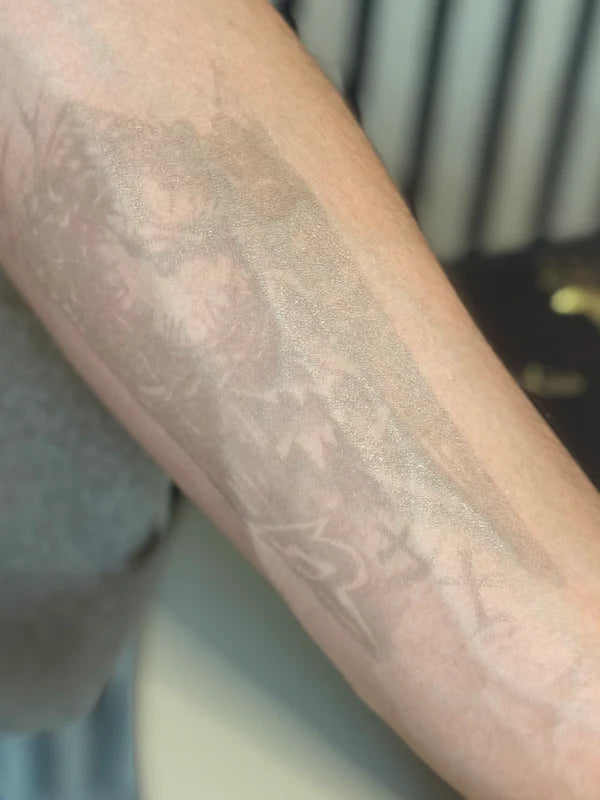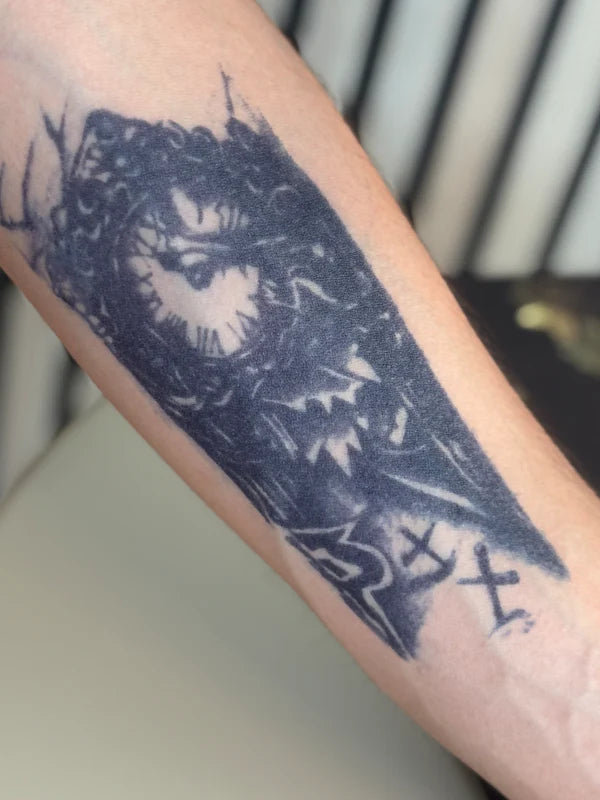


Henna and semi-permanent tattoos seem to solve the same problem - a tattoo without commitment - but they work in completely different ways, and the results look very different. If you are wondering which to choose, the temporary tattoos vs henna comparison below shows you the exact differences in look, color, duration, placement, and safety, so you can make the right choice for your style.

Temporary tattoos vs henna: what is henna and how does it work
Henna is a natural dye obtained from the plant Lawsonia inermis, applied as a paste that leaves a reddish-brown to orange design on the skin. The paste is applied in relief, left to dry for several hours, and then removed. Henna only stains the surface layer, and its characteristic color is brown/orange - not black. (Be cautious with "black henna", which often contains additives that can cause skin reactions.)
What is an InkLabs semi-permanent tattoo
An InkLabs semi-permanent tattoo uses a plant-based ink that is applied quickly, with water, via a transfer, and reacts with the keratin in the skin. Unlike henna, it takes on a blue/black shade similar to a real tattoo within 24-36 hours. The result is a precise, fine-line look rather than a hand-painted pattern. For details on the technology, see the guide what are semi-permanent tattoos.
Direct comparison
| Criterion | Henna | InkLabs semi-permanent |
|---|---|---|
| Color | brown / orange | blue / black, like a real tattoo |
| Look | painted, decorative | fine line, realistic |
| Application time | hours (drying + paste removal) | a few minutes |
| Duration | 1-2 weeks | up to 15 days |
| Design precision | depends on the artist's hand | exact design, created by artists |
| Waterproof | partially | yes |
| Available styles | traditional, floral | dozens of themes and styles |
The look: realistic vs decorative
This is the key difference. Henna has its own charm - traditional and ornamental - but its brown-orange color will never look like a tattoo with black ink. If you want to preview what a real tattoo would look like - with a deep shade and precise lines - a semi-permanent tattoo is far closer to the result. That is also why it is the preferred option for testing a design before a permanent tattoo.
Ease of application
Henna requires patience: you apply the paste, leave it to dry for several hours, remove it, and wait for the stain to develop. An InkLabs tattoo is applied in a few minutes with water, following three simple steps - see how to apply a temporary tattoo. For anyone who wants a quick, clean result, the difference is huge.
Safety
Natural henna is generally well tolerated, but "black henna" (with additives such as PPD) can cause skin reactions and should be avoided. InkLabs ink is plant-based, toxin-free, dermatologically tested, and suitable for all skin types. Regardless of which you choose, if you have sensitive skin, test on a small area first. More in the guide on the safety of semi-permanent tattoos.
Which should you choose?
Choose henna if you want a decorative, traditional, reddish-brown look that suits occasions where that style is appreciated. Choose a semi-permanent tattoo if you want the realistic look of a black tattoo, quick application, precise artist-designed patterns, and the ability to test a design before making it permanent.
Want the look of a real tattoo, without commitment? Explore InkLabs semi-permanent tattoos or start with the fine line designs. Free shipping over €30, 30-day guarantee.
Frequently asked questions
Does henna last longer than a semi-permanent tattoo?
Both generally last 1-2 weeks. The difference is not duration but look: henna is brown/orange and decorative, while a semi-permanent tattoo is blue/black and realistic.
Why is henna not black?
Natural henna stains the skin in reddish-brown shades. "Black" versions often contain additives that can irritate the skin, which is why they are discouraged.
Is a semi-permanent tattoo easier to apply than henna?
Yes, significantly. Henna requires hours of drying and paste removal, while an InkLabs tattoo is applied with water in a few minutes.
Which is better for testing a future permanent tattoo?
The semi-permanent tattoo, because it reproduces the deep shade and precise lines of a real tattoo, giving a far more faithful preview.