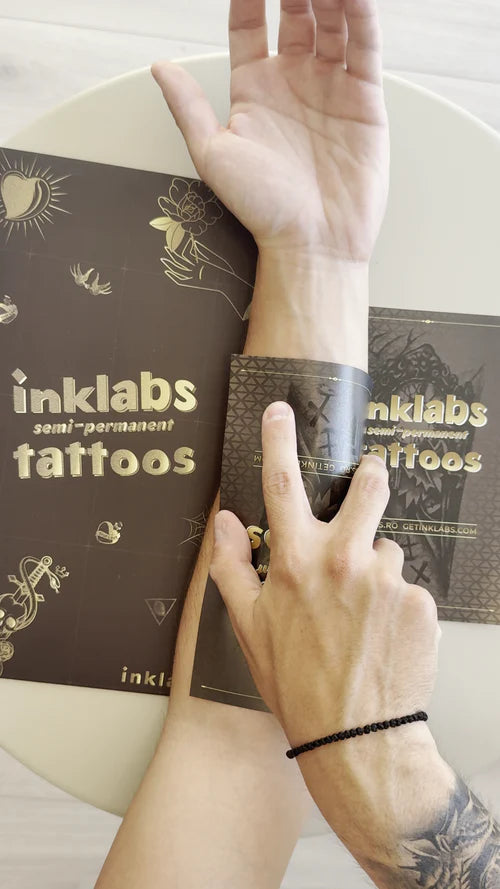


The question everyone asks before their first order: how long does a semi-permanent tattoo last? The short answer is up to 15 days. The accurate answer is "it depends" - because the actual duration is influenced by where you wear it, how much you wash and rub the skin, and your lifestyle. In this guide we explain where the duration comes from, what shortens it, and what you can do to keep your tattoo looking great for as long as possible.

How long a semi-permanent tattoo lasts, exactly
InkLabs tattoos normally last up to 15 days. Because the plant-based pigment penetrates the upper layer of the skin and develops there, the tattoo does not "peel off" suddenly - it fades gradually as the skin naturally regenerates. In the first few days it looks most intense, then slowly lightens - a gentle process, not an abrupt disappearance.
Keep in mind the initial phase too: right after application the color is light, and the final deep shade only appears after 24-36 hours. If you want to understand the full process, read what are semi-permanent tattoos.
Factors that influence the duration
| Factor | Effect on duration |
|---|---|
| Placement area | High-friction areas (hands, fingers, wrists) fade faster; the arm, ankle, and ribs last longer. |
| Friction | Tight clothing, jewelry, and rubbing with a towel speed up fading. |
| Skin hydration | Faster natural exfoliation on very hydrated or very dry skin can shorten duration; balanced hydration helps. |
| Showers and hot water | Very hot water and frequent, aggressive washing shorten the duration. |
| Sweating and exercise | Intense physical activity and heavy sweating can reduce the lifespan. |
| Skin type | Regeneration rate differs from person to person, so duration varies. |
Which areas last the longest
If you want maximum duration, choose an area with low friction and less exposed skin. The most "friendly" areas are the inner and outer arm, the ribs, the shoulder blade, and the ankle (below the shoe line). Hands and fingers - though striking - are where tattoos fade fastest, due to constant washing. Find placement ideas in the guides on ankle tattoos and wrist tattoos.
How to make your tattoo last longer
- Choose the placement wisely: for longevity, avoid palms and fingers.
- Let it develop: do not get it excessively wet or rub the area in the first 24-36 hours.
- Wash gently: lukewarm water, no rough sponge, no direct rubbing.
- Pat, do not rub: dry the area by patting with a towel.
- Avoid exfoliants and oils directly on the tattoo.
Detailed steps are in our complete temporary tattoo aftercare guide.
Why lasting "only" 1-2 weeks is actually an advantage
The limited lifespan is not a downside - it is the whole point of the product. It means you can change the design as often as you like, wear a "seasonal" tattoo for a vacation or festival, and test different designs without any regret. In practice, you get a new tattoo whenever you want one.
Ready for your next design? Choose from the complete InkLabs collection or from the best sellers. On orders over €40 you get 6 free tattoos, and free shipping over €30.
Frequently asked questions
How long exactly does an InkLabs tattoo last?
Up to 15 days, depending on placement, friction, hydration, and your lifestyle. It lasts longer on low-friction areas.
Why did my tattoo fade faster than expected?
Most likely you wore it on a high-friction area (hands/fingers), washed frequently with hot water, or sweated a lot. All of these speed up fading.
Can I make the tattoo last longer?
Yes: choose a low-friction area, wash gently with lukewarm water, pat instead of rub, and avoid exfoliants and oils directly on the design.
Does the tattoo fade evenly?
Yes, it fades gradually and relatively evenly as the skin regenerates - it does not peel off suddenly.