

A wolf tattoo can convey two very different messages, depending on how you design the motif: A lone wolf reads as independence and self-reliance, while a pack or two wolves side by side stands for solidarity and family. Before deciding on a pose, style, or placement, it’s worth consciously distinguishing between these two directions and considering which of the two stories actually fits your reason for getting the tattoo.
- A lone wolf and a pack motif send different messages, which you can clearly define before making a choice.
- The popular image of a wolf howling at the moon makes more sense when you know why wolves actually howl.
- Fine-line and geometric designs change how calm or striking a wolf motif looks, regardless of the theme you choose.
- The shape of the motif, not just its level of detail, also determines which body placement works well.
Lone wolf or pack animal: what a wolf tattoo really says
Before choosing a specific motif, it’s worth asking a fundamental question: Should your tattoo primarily tell a story about you, or about a connection with other people? A wolf can represent either, but these two interpretations draw on different images of the same animal, and it helps to know both more closely before making your decision.
When the wolf stands for independence
A lone wolf, standing on its own with no pack in the image, is usually read as a symbol of self-reliance and the ability to make your own decisions, even against the current. The popular image of the “lone wolf” is more of a cultural association than a biological fact: In the wild, a wolf traveling alone is usually an animal that has left its birth pack to find its own territory and a mate, not an animal that has chosen solitude as a way of life (source: International Wolf Center). That doesn’t change the fact that the symbolism can ring true for you, but it makes the image more honest: With this motif, you’re not showing isolation for its own sake, but a willingness to go your own way, even if it temporarily takes you away from the group.
When the wolf stands for pack and solidarity
A motif with two wolves or a small group shifts the message toward family and loyalty. Here, too, it’s worth looking at the actual structure of a wolf pack: It is generally a family made up of a stable pair of parents and their offspring from the past few years, not a hierarchy of competitors (source: Wolf Center). For a tattoo, this means a pack motif works well if you want to express a specific bond, such as one with siblings, children, or close friends, and less so if what you really mean is status or a claim to leadership.
So the practical question to ask before deciding on a design is: Does your tattoo tell a story about your own independence, or about a specific bond with certain people? The answer determines whether you should look for a lone wolf or a motif with several animals, which in turn also affects placement, as explained further below.
The wolf howling at the moon: symbolism without the myth
The image of a wolf raising its head to howl at the moon is one of the best-known motifs of all and is usually associated with instinct, night, and a certain inscrutability. To make sure the motif feels like more than decoration, it helps to take a closer look at actual wolf behavior: Wolves howl to communicate over distance, for example, to find pack members, gather the group, or mark a territory. The moon itself has no effect on this; wolves howl more often at night mainly because they are generally more active and vocal at that time (source: Wolf Center).
This correction doesn’t weaken the symbolism; it makes it more specific: A howl is itself a form of pack communication, and a wolf-and-moon motif can therefore also be read as an image of reaching out and staying connected across distance, rather than simply as an atmospheric night scene. If the pack meaning from the previous section matters to you, the howling motif gives you an additional, fact-based way to express exactly that. If you’re looking for other moon motifs beyond wolves, you’ll find ideas in the article about moon, sun, and space tattoos.
Geometric and fine-line wolves: a modern approach to style
Along with the message, the technique also determines how a wolf motif looks. Two styles work particularly well for wolf tattoos, and they can also be combined.
Fine-line tattoos use thin, precise lines without extensive shading, making the result look more like a sketch than a fully rendered image (source: The Honorable Society). This style works well for a single, pared-down wolf outline—that is, for the message of independence from the first section—because the simple lines bring the silhouette to the foreground rather than overwhelming it with detail.

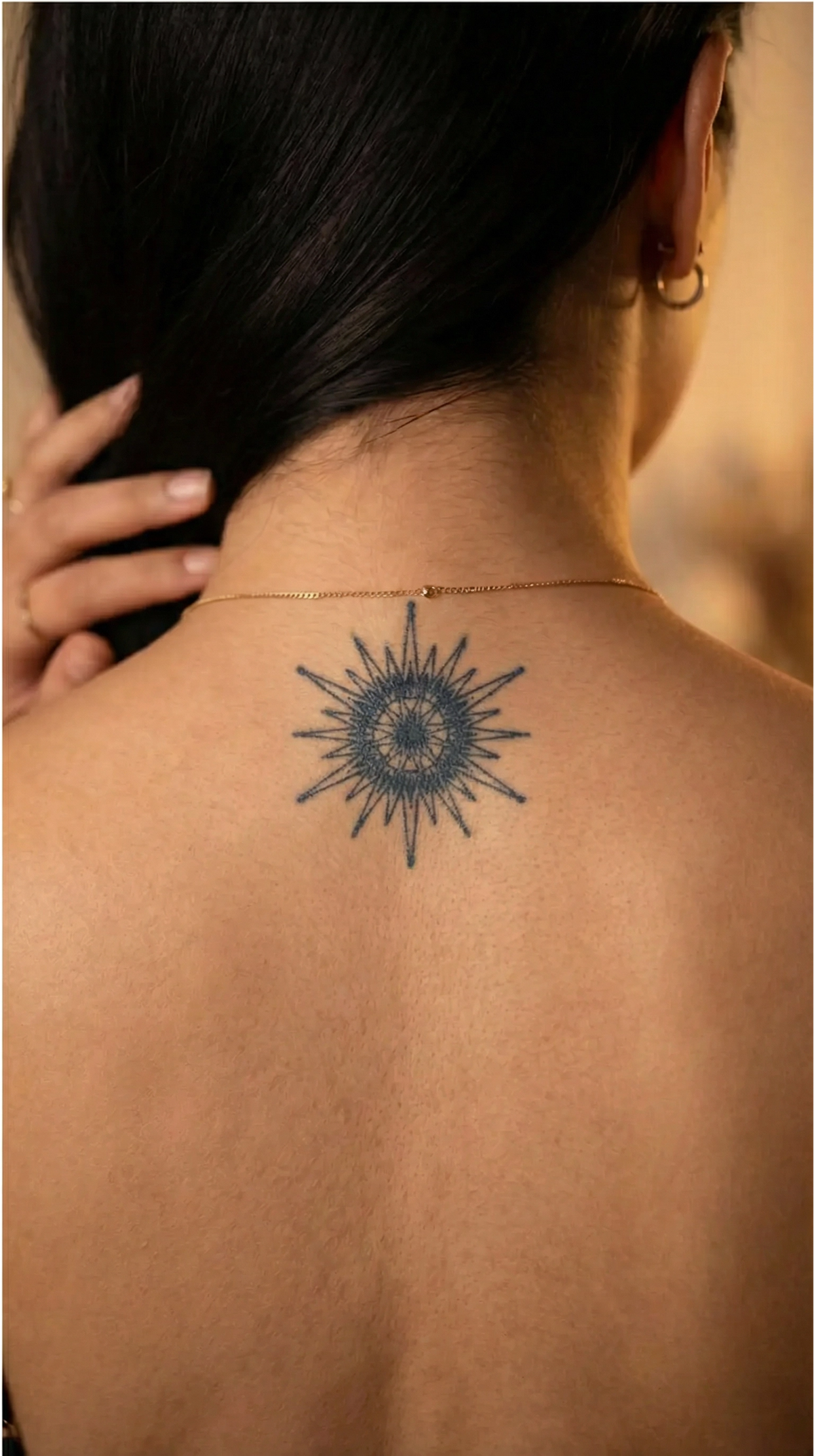
Geometric tattoos, by contrast, rely on symmetrical shapes and precise angles, such as those inspired by mandalas or clearly structured areas, rather than freehand illustration (source: Tatu Tatu Ink Club). This approach works well for a stylized pack motif or for the wolf-and-moon combination from the previous section, because the geometric structure holds several elements together in a clear, orderly composition.

The two styles are not mutually exclusive: A geometric fine-line design keeps a pack motif or moon combination visually light instead of weighing it down with dense shading, while still making it clearly recognizable as a wolf.
Fenrir and the Dacian wolf: two cultural side notes
If you also want your wolf tattoo to allude to mythology or heritage, there are two points of reference worth a brief, respectful mention, without making either one a subject in its own right.
In Norse mythology, Fenrir is a monstrous wolf and son of Loki, destined to break free during Ragnarök, the end of the world, and kill Odin before being slain by Odin’s son (source: World History Encyclopedia). Fenrir is a good reference for a tattoo if you’re interested in Norse motifs; if you’d like to explore the mythology further, you can find more in the article about fantasy and mythology tattoos.
The Dacian wolf-dragon, known as the Draco, was a military standard used by Dacian warriors. It combined a wolf-like head with a dragon-like body and was used to intimidate opponents in battle; the wolf was the Dacians’ own symbolic animal (source: Wikipedia). Anyone choosing this reference should understand it as an allusion to a specific historical symbol, not as an arbitrary fantasy element.
Placement based on shape: forearm, shoulder, or thigh
Once you’ve chosen a direction—independence or pack—a take on the howling motif, and a style, it helps to choose placement based on the shape of the motif rather than its level of detail.
An upright, single silhouette—that is, the message of independence—works particularly well on a long, vertical area such as the forearm, because the wolf’s upright line follows the shape of the arm. A wider pack motif or two wolves side by side, by contrast, need more horizontal space and therefore work well on the shoulder or upper back, where the composition can open up without looking compressed. A more detailed, illustrative wolf portrait, perhaps with the moon combination from the second section, needs the largest uninterrupted area and is therefore best suited to the thigh.
If you’re still unsure about the shape or size, you can easily find out by trying a temporary or semi-permanent copy of the motif: It shows you how the design actually looks at the chosen size and placement, but it is not a test of how a permanent tattoo will hurt, heal, react with your skin, or look in the end at the same spot. This very idea of comparing size and placement in advance is also central to the first tattoo guide. The collection of temporary wolf designs offers twenty different motifs for this purpose, from a single silhouette to a pack scene, so you can take your time trying out the ideas of independence, pack, howling motif, and placement.
If you’re generally interested in animal motifs, you’ll find a broader overview in the article about animal tattoos, while the existing article about wolf tattoos covers general symbolism, folklore, and more placement ideas based on level of detail in greater depth. For style questions beyond wolves, the article about geometric tattoos and the article about fine-line tattoos can help.
In the end, the decision comes down to three questions: Does the tattoo tell a story about you alone or about a connection with other people, which version of the howling motif fits that message, and what shape needs enough space to work at the chosen placement? With these three answers, you can choose a wolf motif that fits what you actually want to express.