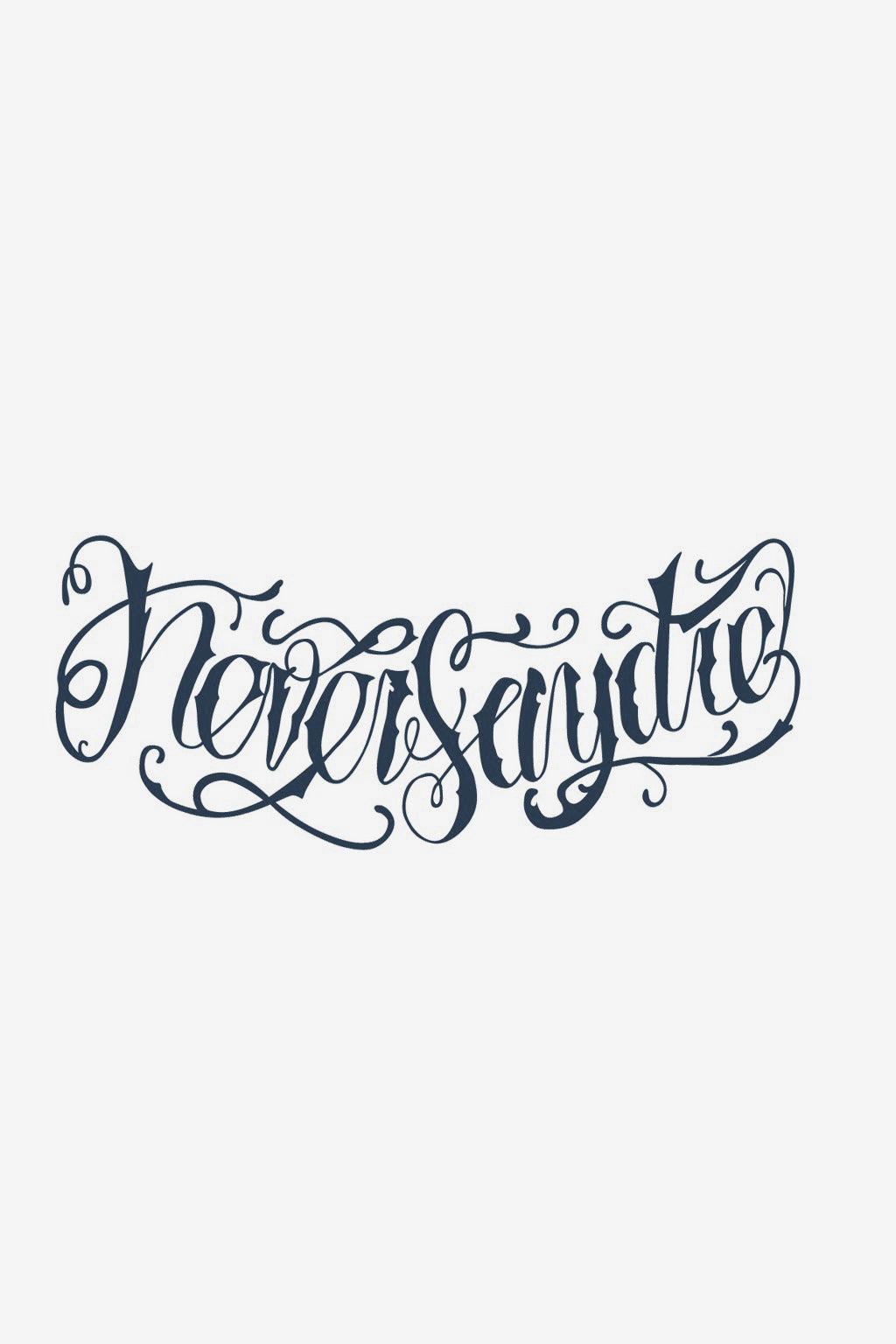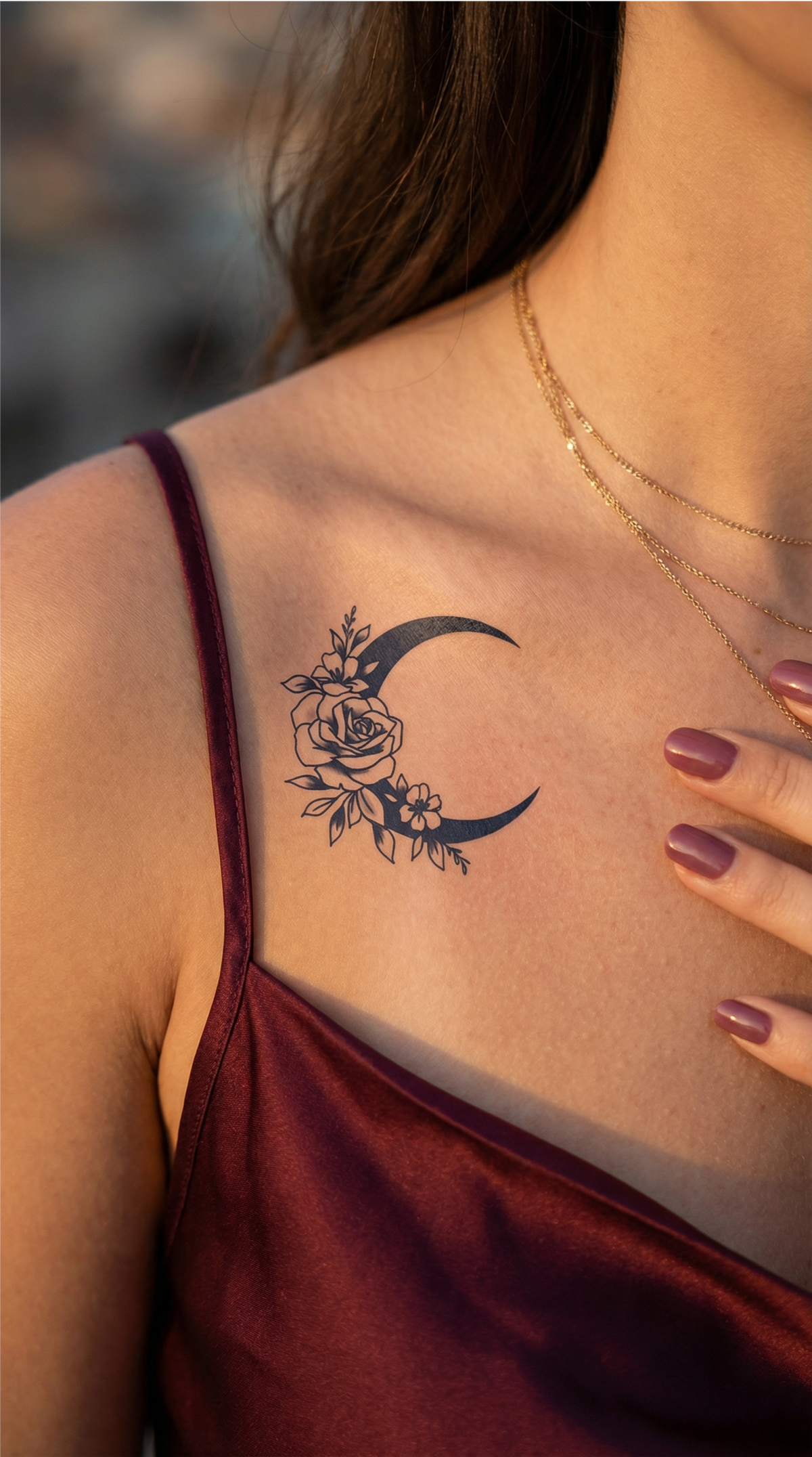


A lettering tattoo looks simple, but a short phrase in Latin or English carries a risk that a symbol or image does not: if the translation or grammar is wrong, the mistake will stay on your skin even when the lettering itself looks great. This article will show you the literal meanings of the best-known short quotes, explain how a literal or machine translation can subtly shift the meaning of a sentence, and give you specific steps for checking the lettering before it becomes a permanent decision. At the end, you’ll also find out how to try out the look, size, and placement of your chosen lettering using a temporary tattoo.
- A word-for-word literal translation and an idiomatic (commonly used) translation are not always the same thing – short quotes usually come with both, because the difference between them changes what the phrase actually says.
- In Latin, a word’s ending changes its grammatical role in a sentence, so even a “correctly translated” word with the wrong ending can mean something other than what you intended.
- Checking one source or one app is not enough – two independent checks and, if possible, a person who genuinely knows the language will catch mistakes that a translator alone overlooks.
- A temporary or semi-permanent version of the lettering will test only its look, size, and placement on your skin, not whether the text is translated correctly – that needs to be resolved beforehand.
What does a lettering tattoo mean, and why is an accurate translation important?
With a tattoo of a symbol or an animal, the main considerations are what the design looks like and where it works. With lettering, there’s another layer: the text has to be not only beautifully written, but also linguistically correct and mean exactly what you thought it meant. A wrong ending, a missing accent mark, or a poorly chosen word isn’t just a matter of style – it changes the meaning of the sentence.
The basic distinction worth knowing in advance is between a literal (word-for-word) and an idiomatic translation. A literal translation shows what the individual words actually mean, while an idiomatic translation is a more natural phrasing that is commonly used in that language. Both have their place: a literal translation tells you whether the grammar and words are right, while an idiomatic one tells you how native speakers actually understand the phrase. If you know only one version, it’s easy to miss the difference between what the text literally says and what someone tried to sell you as a “beautiful quote.”
This article focuses specifically on checking the meaning and grammar of a particular phrase and on how to try out its look beforehand. It isn’t about how much a tattoo hurts or how it heals – other articles cover that, such as this overview of tattoo ideas, if you’re still looking for a general theme, or this gallery of quote and word tattoos, if you want inspiration beyond the specific phrase you’re checking.
Best-known short Latin and English quotes and their literal meanings
The following selection of six phrases serves as a reference point: if you’re considering a similar quote, compare it with what’s verified and supported by sources here. This isn’t a complete catalogue of all well-known mottos, but an example of what properly researched verification should look like – use the same process for the phrase you’ve chosen.
Carpe diem
Literally, it means “pluck the day” – the verb carpere means “to pluck, gather” – while the more common, loose translation “seize the opportunity” comes from later usage. The phrase was first used by the Roman poet Horace in his Odes around 23 BC, in the fuller line “carpe diem, quam minimum credula postero,” roughly meaning “enjoy the day and trust as little as possible in tomorrow” (source: Grammarist).
Memento mori
The literal translation is “remember that you will die,” or, more loosely, “remember death.” Memento is the imperative form of the verb “to remember,” and mori is the infinitive of the verb “to die.” The idea has roots in both antiquity and Christian tradition, and serves as a reminder that life is fleeting (source: Wikipedia).
Veni, vidi, vici
It literally means “I came, I saw, I conquered” and is attributed to Julius Caesar, who is said to have used it in a message to the Senate around 47 BC after his victory at the Battle of Zela (source: Wikipedia).
Per aspera ad astra
The phrase “per aspera ad astra” (often also in the reverse order, “ad astra per aspera”) means “through hardships to the stars.” It is made up of the words aspera (“hardships, difficulties”) and astra (“stars”) (source: Simple Wikipedia).
Amor fati
It translates as “love of fate.” The philosopher Friedrich Nietzsche popularized the concept, which describes an attitude in which a person actively embraces everything that happens to them in life, rather than merely enduring it passively (source: Wikipedia).
Nihil sine Deo
It means “nothing without God.” Prince Carol I introduced it as the motto of the Romanian Principality in 1866, and the phrase remained the motto of the Kingdom of Romania until the monarchy ended in 1947 (source: Wikipedia). If you’re choosing a phrase that is also the historical motto of a particular dynasty or state, it’s worth knowing this background too – it changes how people who recognize it may perceive it.
Why a literal or machine translation can change the meaning of lettering
In Latin, a word’s ending, not its position in the sentence, conveys the role it plays. Nouns, pronouns, and adjectives are declined and change form depending on their case – nominative for the subject, accusative for the object, genitive for possession, and so on (source: Wikipedia). This means that with the wrong ending, one and the same word can stop being the subject and become the object, or change its relationship to the other words in the sentence – even though it is still a “correct” Latin word, just in the wrong form.
A well-known case from 2019 shows how individually correct translations of words can combine to create something completely different. The singer Ariana Grande had two Japanese characters tattooed on her that were supposed to mean “7 rings.” The character for “seven” and the character for “ring” were each translated correctly on their own, but together they formed the word “shichirin” – the name for a small charcoal grill (source: CBS News). This is Japanese, not Latin, but the principle applies equally to any language: checking the individual words isn’t enough if you don’t also check how they work together.
Translation apps and quote websites also usually don’t say whether a phrase is idiomatic, archaic, or grammatically altered so it will fit nicely into a tattoo layout. As a result, it can look finished and certain even when it still needs to be checked by someone who understands the language.
How to check the meaning and grammar of lettering before getting a tattoo
Before you decide on the exact wording, go through these four steps – it takes considerably less time than correcting a finished tattoo.
- Compare the phrase in at least two independent, reliable sources. A dictionary, academic website, or encyclopedic entry about the phrase will give you a different level of confidence than the first result from a translation app or a website listing “tattoo quotes.”
- Have someone who genuinely knows the language read the exact wording. A teacher, a student of classical languages, or a native speaker can tell you in their own words what the sentence means – and, most importantly, point out nuances a dictionary won’t catch.
- Check the word order and grammatical endings separately from the overall meaning. A phrase can look right at first glance while using the wrong case, tense, or word form, changing who or what is doing the action in the sentence.
- Be cautious with phrases made up of two words or characters translated separately. As the case above shows, combining two individually correct elements can produce a completely different meaning from what you expected.
How to try out the look and placement of lettering with a temporary version
Once you’ve checked the wording and grammar, there’s a second question: exactly how will the text look on your skin? Font, letter spacing, and overall size are harder to judge in an online photo than on an actual forearm or wrist, and a temporary version before your first permanent tattoo gives you a realistic idea before you make the final decision.

A short, single, commonly used English word like “Hope” carries less risk than a whole sentence – there’s no word order or declension to get wrong. Even so, it’s worth checking that the word fits the context you’re giving it (for example, whether you’re combining it with another symbol whose meaning could shift the overall impression).

A longer, sentence-like phrase paired with a symbol logically has more words, verb forms, and conjunctions – and therefore more places where a grammatical or semantic error can creep in. Before you have such a phrase tattooed permanently, the combination of steps from the previous section (two independent sources and a check by someone who knows the language) is all the more worthwhile.
There’s one thing you need to be clear about, though: a temporary or semi-permanent tattoo tests only how the lettering looks, how large it is, and where it works on your body. It doesn’t test or simulate how much a permanent tattoo would hurt, how it would heal, whether it could cause an allergic reaction, or exactly how it would look years later – these are questions a temporary version of the design doesn’t address, and they need to be discussed separately when the time comes to make a permanent decision.
Once you’ve checked both the wording and the look, you can browse temporary and semi-permanent lettering and quote tattoos and compare sizes and placements on specific designs, or find out how to apply a temporary tattoo at home once you’ve chosen your phrase.
Frequently asked questions about tattoo lettering
Is the result from one translation app enough?
No, treat it as a starting point, not a final answer. An app usually doesn’t distinguish between literal and idiomatic meaning, and won’t alert you to grammatical errors in the form you enter – so it’s worth comparing the phrase with another source and, ideally, with someone who knows the language.
Does the lettering have to be in a language I know myself?
No, many people choose Latin or foreign-language mottos precisely because they don’t speak that language fluently. What matters is having someone who understands the language check the phrase before you get the tattoo – not that the person getting the tattoo knows the language.
What if two sources disagree about the translation?
Take it as a sign that you need to ask a qualified person directly – a teacher, translator, or native speaker – rather than choosing the version you like better. A disagreement between sources usually means that the phrase has several possible interpretations or that one of the sources is simplifying it.