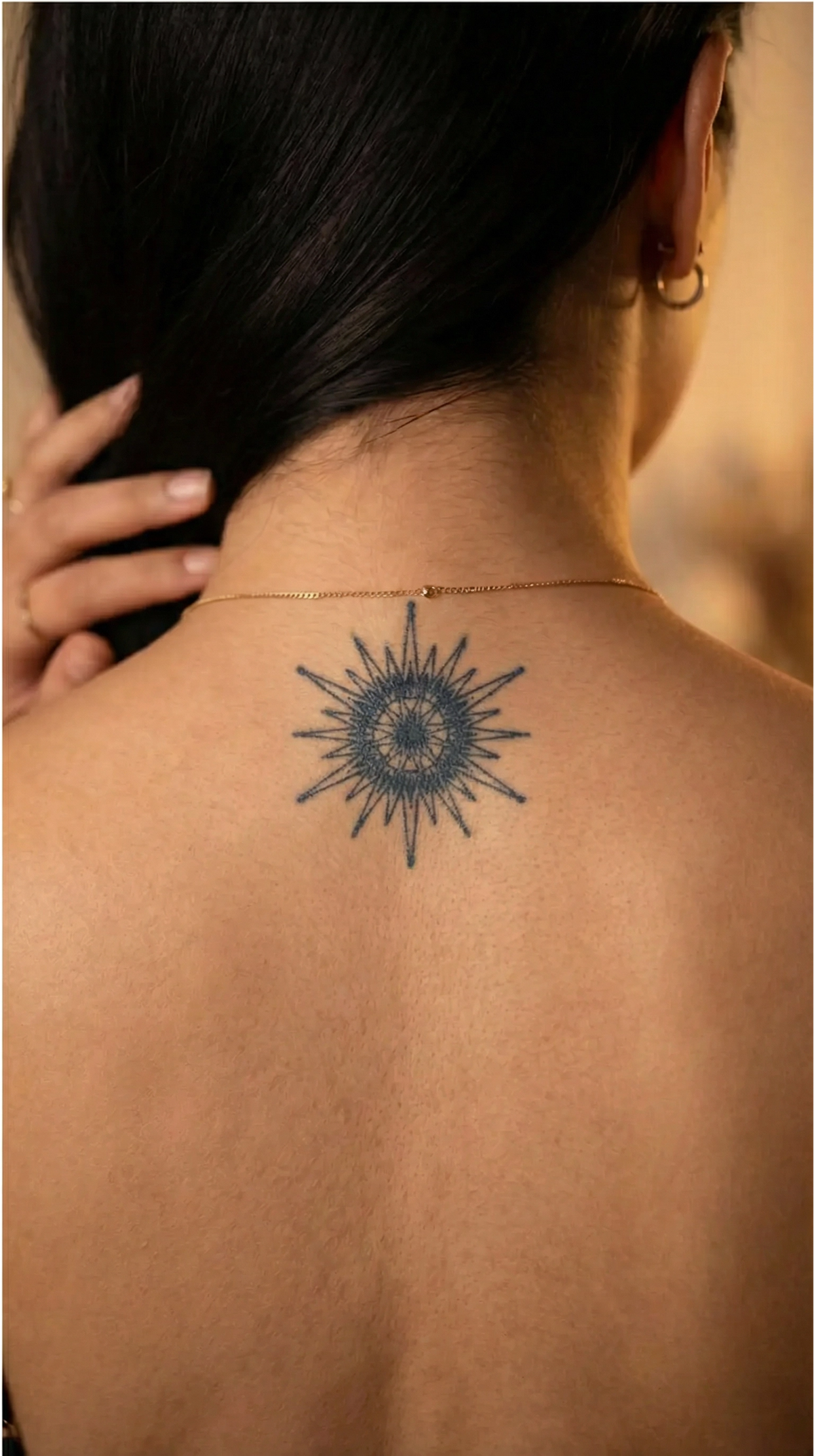


A sea-themed tattoo almost always starts with a specific symbol: a wave, an anchor, a shell, a seahorse or a mermaid, and each of these motifs communicates something different about the person who chooses it. Before deciding on the design, size and whether to place it on your ankle or wrist, it helps to know how a temporary or semi-permanent tattoo behaves when you wear it around the sea, pool and sun: the product instructions explain what to expect, so you can make a more informed choice before considering something permanent.
- Each marine symbol tells a different story: waves and anchors remain the most popular motifs, while shells, seahorses and mermaids lend themselves to a more personal meaning.
- Small designs work well on the ankle and wrist for line-art motifs such as a wave or a mini anchor, while shells and starfish need a little more space for their details to remain clear.
- Heat, water and friction speed up the design’s natural fading, so smooth, flat areas of skin hold up better than wrists or joints during a day at the beach.
- Trying a temporary or semi-permanent version first helps you assess the size and placement on your skin, without previewing the pain, healing or final appearance of a permanent tattoo.
What marine symbols really mean
It’s possible to choose a sea-themed tattoo based solely on its appearance, but knowing the most common meaning of each symbol helps explain why certain motifs appear so often in requests and guides you towards the one that truly reflects your personal reason for wanting it.
Waves and anchors: the two most popular symbols
The wave is traditionally associated with emotion, the unconscious and the sea’s constant motion, which is never quite the same twice—an image many people choose to represent a transition or a phase in their life (source: Bigodino, Sea Tattoos). The anchor, on the other hand, comes from the tradition of old-school nautical tattoos, where it represented the strength and stability of someone who always returned home; today it retains the same meaning of stability and security beyond that specific context (source: PourFemme, Nautical Tattoos).
Shells, seahorses and mermaids: for those looking for something different
Shells and starfish are commonly seen as symbols of protection, guidance and intuition, and are often paired with a mermaid tail design to complete the composition (source: Bigodino, Sea Tattoos). The seahorse carries meanings related to patience, protection and friendship, and is often associated with fatherhood too, because the male carries the young (source: Inkme, The Meaning of a Seahorse Tattoo). Because of its half-human, half-fish nature, the mermaid is associated with beauty, transformation and the boundary between instinct and reason; in nautical tradition, it also represented the idea of a safe return home (source: Vivalife, Mermaid Tattoo: Meaning and Styles).
Small designs for the ankle and wrist
People looking for a small sea tattoo usually choose a simple wave or anchor, because a single-line design remains clear even at a reduced size: simple double waves and small anchors are among the motifs most often suggested for the nape, wrist or ankle (source: Bigodino, Sea Tattoos).

One example is Haiku, a tattoo designed as a minimalist depiction of the beauty and power of the sea, with an aesthetic inspired by Japan: its simple line makes it suitable both as a small design on the wrist and as a slightly larger one on the ankle. It’s worth knowing, though, that the wrist is washed often throughout the day, so the ink tends to fade a little sooner than on smoother, less exposed areas, according to the product’s care instructions. Shells and starfish, by contrast, work better at a slightly larger size, because their details need more space to remain recognisable as the skin moves.
To explore placement on each area in more detail, you can read the dedicated ideas for the ankle and the wrist, or consult the general size guide if you’re still comparing mini, medium or full-body designs.
Sea-themed ideas for her
Among the most popular choices for women’s sea tattoos are minimalist single-line waves, which remain elegant even in a small version: the Haiku design shown above is one example, combining a marine subject with a clean style inspired by Japanese aesthetics.
Those who prefer a more elaborate subject can opt for a mermaid or a seahorse, both of which tell a more personal story than a wave or anchor and lend themselves to a more detailed composition on an area with a little more space, such as the forearm or side. In either case, the meanings discussed in the first section remain the best starting point for choosing: a motif that reflects your reason for wanting it holds its appeal better over time than a choice made purely for fashion.
How a temporary or semi-permanent tattoo holds up in the sea and pool
Before going to the beach or pool with a freshly applied tattoo, InkLabs instructions say to avoid getting the area wet for the first 6 hours after application and to keep it covered with clothing on the first night to prevent smudging or transfer onto fabric.
In the days that follow, heat, water and friction speed up the skin’s natural exfoliation process, which is also why the design fades over time: smooth, flat areas of the body hold up better than joints, hairier areas or spots that are washed frequently, such as wrists and hands. For semi-permanent designs, the colour also isn’t final immediately after application: it changes gradually over 24-36 hours, with the final shade also depending on each person’s skin chemistry, so it’s best to wait that long before judging the result. The overall duration, up to 15 days for these designs, depends on daily activities, the area of the body chosen and how well the skin is kept hydrated: a week at the beach and pool will therefore make it fade before it reaches that maximum duration.
If you want to understand in more detail how water affects a temporary tattoo’s staying power, the guide to water resistance explores the topic with specific designs and tips.
How to choose your first sea-themed tattoo
With the meanings and sizing guidance covered so far, the choice comes down to three practical steps: match the meaning of the motif to your personal reason for wanting it, choose a size that suits the area where you want to wear it this summer, and try a temporary or semi-permanent version first to see how the size and placement really work on your skin.

Those looking for an idea connected with summer as a whole, beyond a strictly marine subject, can also consider a design such as Serenity, a minimalist tattoo with a palm tree and sun, described as a metaphor for escape and inner peace found by taking a moment to reconnect with nature: a subject distinct from waves, anchors or shells, but in keeping with the same season.
This is still a way to test size and placement, not a preview of the pain, healing or final appearance of a permanent tattoo: a temporary or semi-permanent design only lets you assess how your chosen motif behaves on your skin during the summer. If you want to compare other marine subjects beyond the ones discussed here, the Temporary Ocean Tattoos collection brings together the catalogue’s other sea-themed designs, while the section on festivals and summer offers other style combinations for the warmer season.