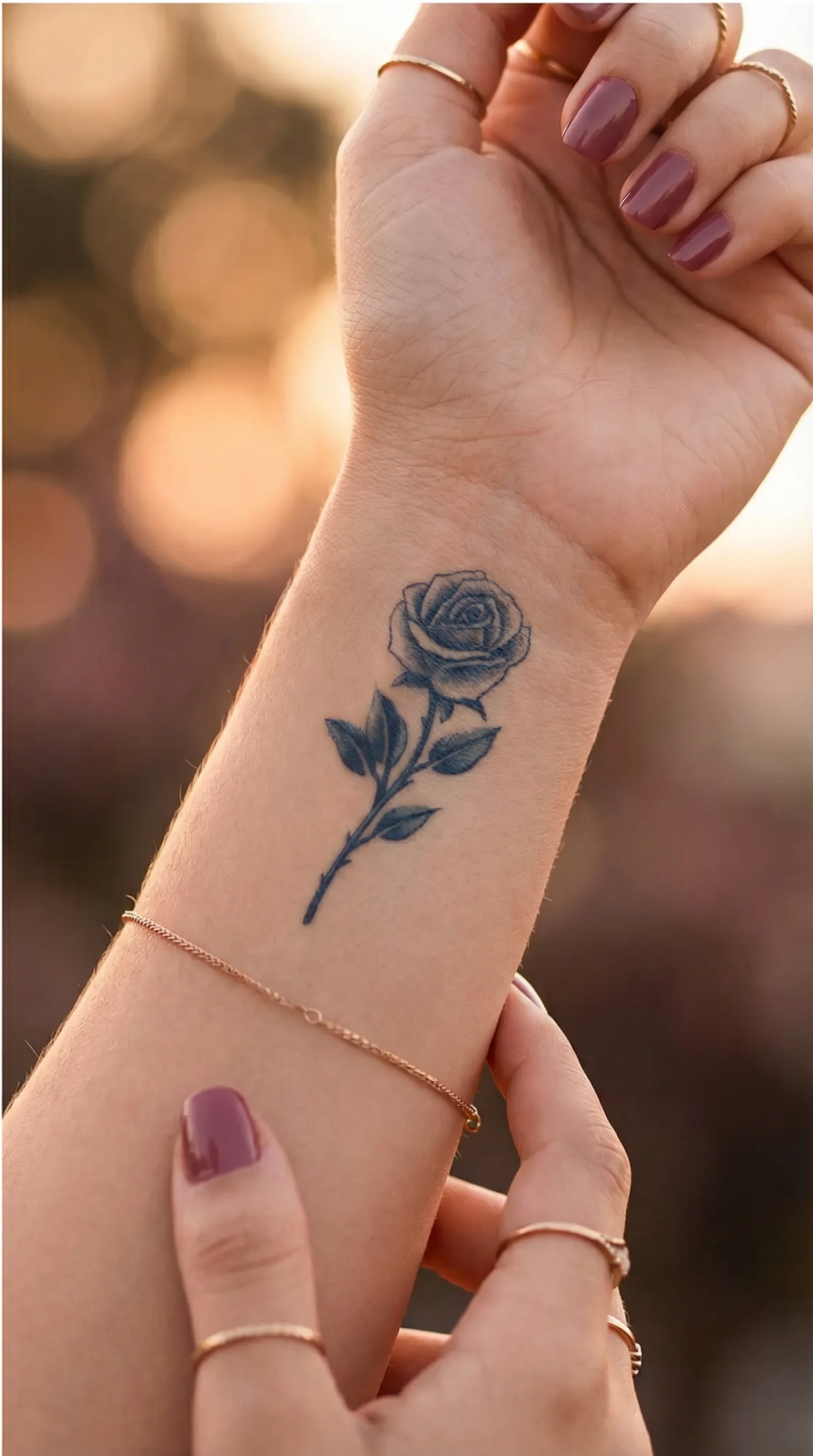


An organ donation tattoo is a visible, personal design that someone uses to show their decision about organ donation—usually a heart or pulse line on the wrist, forearm, or ribs. Legally, however, the tattoo itself changes nothing: in Germany, neither a temporary, semi-permanent, nor permanent design counts as proof of a decision about organ donation. What counts is a written declaration, an organ donor card, or an entry in the online register—and we explain these three options in the next section before looking at symbols and placement.
- A tattoo with an organ donation design is a personal statement and a possible conversation starter, not legal proof.
- Only a written declaration, an organ donor card, and an entry in the online register under § 2a TPG have equal legal standing.
- A temporary design is a good way to try out a motif and placement at your leisure before even considering a permanent tattoo.
Many people interested in this kind of tattoo primarily want to carry a visible reminder of their own decision or create an easy opportunity to talk about it with family and friends. That motivation is exactly why it is important to consciously separate the design from the actual legal declaration: a tattoo does not appear in any register, and in an emergency, no one who needs to act will first look for a symbol on your skin. The next section explains how to record your decision so that it can also be found in an emergency.
How to make your organ donation decision legally valid
Under Section 2 of the Transplantation Act (TPG), you can record your decision about organ and tissue donation—whether to consent or object—in three legally equivalent ways: in writing, on an organ donor card, or in the register under Section 2a. None of these options takes precedence over the others; if there are multiple declarations, the most recent one simply applies (source: Transplantation Act, Section 2). In practice, this means you decide which option or combination to choose, as long as the information is clear and up to date.
The organ donor card: why you need to carry it with you
The credit-card-sized organ donor card is still the best-known option. It is not centrally stored or registered with any official body (source: organspende-info.de, organ donor card). In practical terms, this means the card only works if it is actually found in an emergency—that is, in your wallet or with your ID documents. If you leave it at home in a drawer, you have made a decision, but it will not be accessible at the crucial moment.
The online register since 2024: digital, editable, and revocable at any time
Since March 18, 2024, the Federal Institute for Drugs and Medical Devices (BfArM) has operated the central online organ donation register. People aged 16 and over can register using an electronic ID card (AusweisApp) or their health insurer’s GesundheitsID and record the same decision options available on the organ donor card (source: organspende-info.de, organ donation register). After registering, you receive a seven-digit declaration ID that you can use to view, change, or delete your information at any time—a clear advantage over the paper card, which you would have to fill out again whenever you make a change. Several hundred thousand people have already registered since it launched, with more than 630,000 at the latest checked count; as the number continues to grow, it is likely to be higher by the time you read this.
These regulations apply to Germany. Austria has its own related, but not identical, organ donation system; if you live there, it is best to get information directly from the relevant authorities there rather than apply the German details.
Symbol ideas for an organ donation tattoo: heart, pulse, and more
Once the legal side is clear, the main design question remains: which motif suits this decision? A heart or pulse line is quite clearly associated with vitality and the idea of giving, even though no single symbol is officially recognized as an organ donation symbol. A tattoo is therefore always a personal statement, not a certificate.

The “Heartbeats” design translates the idea of a pulse into a series of four pixel hearts, ranging from completely filled to empty. This sequence works well for a discreet wrist or forearm design because the individual hearts remain easy to make out, even up close.

If you are looking for a softer, more classic heart image instead, the “Love” design features heart-shaped balloons with ribbons rather than a geometric pulse line. Both designs express the same basic idea in different ways, and neither claims to be anything more than a personal choice. If you would like to see more options, you can find a wider selection of heart designs in different styles in the shop.
Simpler geometric or line-based shapes also work well for this theme, especially if you want a design that is as discreet as possible. The exact symbol matters less than whether it remains clearly meaningful to you and the people around you.
Placement: visible as a conversation starter or discreet as a reminder
The wrist and forearm are obvious choices for an organ donation design because they are often visible in everyday life and can naturally prompt a conversation—for example, when someone asks about the design. This can be especially helpful if you already intend to tell family or friends about your decision.
The ankle, ribs, or area behind the ear, on the other hand, suit anyone who would rather wear the design as a private reminder without it constantly catching the eye in everyday life. Our guide to your first tattoo goes into more detail about how visibility and clothing influence the choice of placement.
With small designs such as pulse lines or sequences of multiple hearts, a smaller version on an area of smooth skin often looks clearer than a large version on a strongly curved part of the body. If you are generally interested in small, clearly legible designs, our guide to small tattoo designs shows more examples of how details can remain recognizable up close.
Why a temporary design is a sensible first step
A temporary or semi-permanent design lets you see the size, motif, and placement directly on your own skin before considering anything permanent. This applies expressly only to this design decision: a temporary motif says nothing about how a permanent tattoo in the same spot would feel, heal, or look in a few years. It is a test of the design and placement, not a preview of a permanent tattoo.
In practice, this means wearing the design for a while, seeing whether you still like the size and placement, and only then deciding whether you want to make it permanent or stick with the temporary design. If you want to live with the design for longer before making a decision, it is worth taking a look at how long a semi-permanent tattoo lasts; for your first application, the guide to applying a temporary tattoo at home will help.
Whichever design and placement you ultimately choose, they do not replace the actual decision. The tattoo remains a visible, personal reminder and a possible conversation starter—the decision that counts legally is still the one you make through a written declaration, an organ donor card, or the online register, as described in the second section.