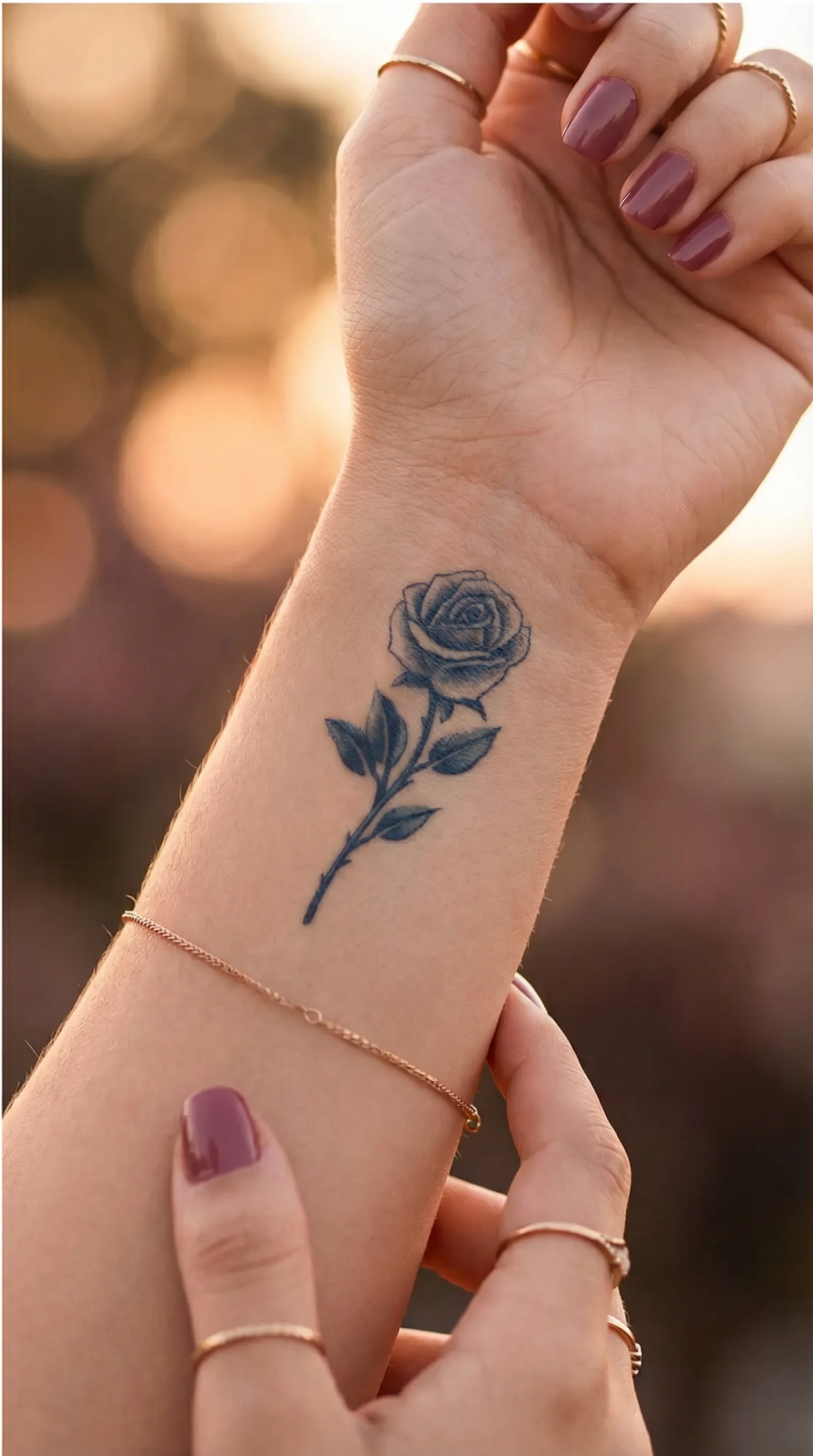


When someone you love dies, many people want to carry something lasting on their own body to remember them by. At the same time, grief itself can make the decision difficult: Which symbol really feels right, and where should it go when you are still in the midst of loss? A small memorial tattoo for someone who has died works best when you first get clear on the symbol and placement, and take the time a permanent decision deserves.
- Which symbol—angel wings, forget-me-nots, a fingerprint, a heart, initials or a date—best expresses what you would like to say to that person.
- How to weigh a visible spot on your body against one that is more private.
- What a temporary or semi-permanent design can actually show you before you make a permanent decision—and what it cannot.
Why a memorial tattoo deserves time
Grief changes how quickly and confidently people make decisions. Some want to have a visible symbol as soon as possible, while others hesitate for months because they are afraid of choosing the wrong design or placement. Both reactions are understandable, and neither is wrong. If you find yourself going back and forth between several symbols without settling on one, that is a normal sign that the decision can still take shape. There is no point at which a memorial tattoo would be “too late”—some people decide to get one years after their loss, others soon afterward, and both are equally valid.
A temporary or semi-permanent design gives you an in-between step: you can see a design such as angel wings on your own skin for a few days, in the size you have in mind and in the spot you are considering, before a permanent tattoo is even on the table. Why it’s worth testing a design before getting the permanent version explains this idea in more detail.
It is important to remember the limitation that applies to every test design: it shows you the design, size and placement on your skin. It does not tell you how a permanent tattoo in the same spot will heal, feel or look in a few years. If you later decide to get a permanent memorial tattoo, you should make that decision separately and without rushing, ideally in consultation with an experienced tattoo artist.
Symbols for a memorial tattoo: meaning and selection
The following symbols have been established as memorial designs over generations. That does not mean they have one single, fixed meaning—they are culturally developed associations from which you can choose what suits your relationship with the person. A design for a parent does not have to be the same as one for a sibling or a close friend; what matters is what feels right to you personally, not which symbol is chosen most often.
Angel wings: protection and the soul’s journey
In several religious and cultural traditions, angels are considered protective beings assigned to a particular person. In Jewish tradition, for example, the angel Lailah accompanies the soul as it passes into the afterlife (source: Guardian angel – Wikipedia). This explains why angel wings are such a popular memorial design: they bring together the idea of protection and the image of a soul moving on. Depending on your taste, the design can range from a single, simple pair of wings to a more detailed composition with other elements, such as an eye or light in the background.

Forget-me-nots: a symbol of remembrance across cultures
Forget-me-nots have symbolized remembrance and faithfulness since the Middle Ages and have appeared in mourning art ever since, as a way of preserving someone’s memory (source: Forget-me-not – Wikipedia). As a tattoo, the flower is usually small and delicate, which makes it easy to combine with other elements, such as a date on the stem or initials right beside it, without making the overall design look cluttered.
Fingerprint: what makes a person unique
Every person’s fingerprint is unique and changes very little over a lifetime, making it a lasting personal feature (source: Fingerprint – Wikipedia). As a tattoo, this very quality carries over into its symbolism: no one else has the same pattern, making a fingerprint one of the most personal ways to remember someone. If you want to use the deceased person’s actual fingerprint, you will generally need a well-preserved copy, such as one from an official document or an impression taken before they died.
Heart, initials and date: the personal touch
Where angel wings, forget-me-nots and fingerprints speak through an image, a heart, initials or a birth or death date names the person directly. Many people combine these elements with one of the symbols above, such as small initials beneath a pair of wings or a date beside a forget-me-not, so the design remains both visual and specific.
Placement: where a memorial tattoo feels most grounding
Placement affects how often you see the design in your daily life and who else sees it. The wrist or forearm keeps the memory close to everyday life and is constantly visible to you. The ribs, chest or spot behind the ear, on the other hand, are more private and only show when you want them to.
The size of the design should suit the placement: a detailed pair of wings with feather texture needs more space to keep its lines from getting lost, while a small fingerprint or two initials can remain legible even in narrow spots such as the wrist. The tattoo design size guide takes a closer look at the differences between small, medium and larger designs.
If you are still unsure whether you want the design to be visible, you can answer that question directly with a temporary or semi-permanent design: try wearing it on your wrist and observe for a few days how often you notice it in your daily life or how others react to it. While this tells you nothing about a permanent tattoo in the same spot, it does help you very concretely decide whether you are comfortable with how visible it is.
From design to trial: how a temporary or semi-permanent design works
Once you have a design and a spot in mind, it helps to know what actually happens after application. The semi-permanent Aripi design is a good example: the color does not appear at full strength right away, but develops over the first 24 hours or so, getting darker as it does. The design then usually remains visible for up to about 15 days, depending on your skincare, friction at the spot and placement—enough time to live with the idea before a permanent decision is even on the table. Other semi-permanent designs in the collection may differ slightly in how they develop and how long they last; you can find the exact details on the product page for the design you choose.
If even almost two weeks seems too long, there are also simpler temporary designs that last for less time and are better suited to a very short trial. In most cases, however, the longer-lasting semi-permanent option is enough for an initial sense of how it feels, because you can experience the design in different everyday situations, such as showering, exercising or wearing certain clothes.
For the specific application steps, it is worth taking a look at the guide to applying a temporary tattoo at home. How long the design ultimately stays visible also depends heavily on how you care for it; the care instructions for temporary tattoos explain what to keep in mind.
When and how to take the next step
There is no deadline by which a memorial design has to become a permanent tattoo—for some people, it never does, and that is a complete decision too. Once you have found a symbol and a spot that feel right, you can take your time to browse the angel wing designs and see how a design looks on your own skin.
If you are also thinking about a design for another meaningful occasion, such as a wedding anniversary, you will find a similar approach in our article on anniversary tattoos: try it first, then decide without rushing.
In the end, the same limitation applies as at the beginning: a temporary or semi-permanent design shows you the design, size and placement. It does not tell you how a permanent tattoo in the same spot will feel, heal or change over the years. That is exactly why it is a good first step if you are still unsure, but not the last one.