

An airbrush tattoo usually lasts about a week, and according to general sources, modern inks can last up to two weeks, because the spray ink sits only on the very top layer of skin and is therefore quickly worn away by water, friction and sweat. A classic transfer tattoo usually lasts between one day and a week, while a Jagua tattoo, like our semi-permanent designs, develops in the skin over around 24 hours and then lasts 10 to 15 days, depending on the design and aftercare. The right option for you depends above all on how many days you really need the design to last and how much the chosen area of skin is affected by everyday activities.
- Airbrush tattoo: sprayed on in minutes, with no color development; usually lasts around a week, and up to two weeks with modern inks.
- Transfer tattoo: ready immediately after the water transfer; generally lasts about one to seven days.
- Jagua tattoo: darkens over around 24 hours, then lasts 10 to 15 days with our example designs.
- For all three options, the placement, contact with water and friction determine how long the design actually remains visible.
Airbrush tattoo: spray ink applied through a stencil
With an airbrush tattoo, a stencil is placed on the skin and the ink is sprayed through it, rather than being transferred as with a transfer tattoo or allowed to develop in the skin as with Jagua. We don't sell this method at Inklabs, so we'll give you a general overview here before comparing it with the options available from us. With older inks, an airbrush tattoo often lasted only about a week, while more modern inks can last up to two weeks or a little longer, according to general sources (Source: Airbrush, Wikipedia). The reason it doesn't last as long is the method itself: the ink stays on the skin's surface, so contact with water, friction from clothing or heavy sweating wears it away faster than ink that penetrates deeper into the skin.
Transfer tattoo: the classic water-transfer option
A transfer tattoo works differently from the other two options: the design is printed in advance on a backing sheet and transferred to the skin with a little water. The result is ready as soon as the sheet is peeled away, unlike a Jagua tattoo, which darkens over several hours. General estimates for how long this type of transfer tattoo lasts range from about one day to a week or a little longer, depending on the body area and how much it is exposed to wear (Source: Temporary Tattoos, Henna/Mehndi, and Black Henna Fact Sheet, U.S. FDA). Because the layer of ink sits especially thinly on the skin with this technique, bathing, showering or friction from tight clothing wears it away relatively quickly, often well before the upper end of that range.
Jagua tattoo (semi-permanent): why the color develops over several days
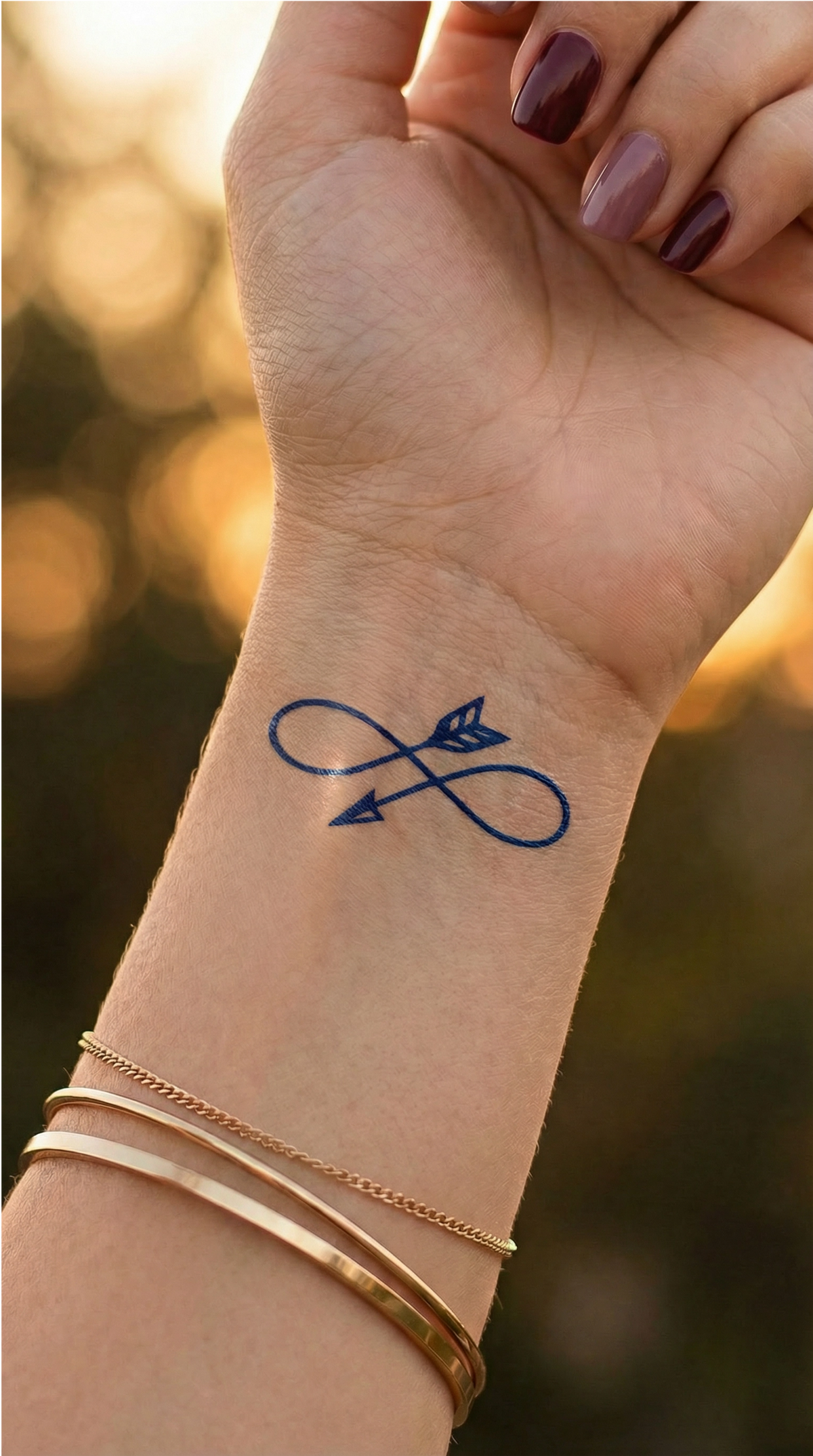
A Jagua tattoo works on a completely different principle from an airbrush or transfer tattoo: the liquid penetrates the top layers of skin instead of simply sitting on top, and darkens in the first few hours after application before reaching its final, dark color (Source: Jagua tattoo, Wikipedia). With our design Infinite, a delicate fine-line design, the color darkens over around 24 hours, according to the product page, and lasts up to 15 days.

According to the product page, the Freedom design lasts 10 to 15 days, depending on how active you are, where on your body the design is placed and how well you keep your skin moisturized. This gradual fading follows the natural shedding of the top layer of skin, as is generally described for Jagua ink; typical overall wear times are around one to two weeks (Source: Jagua tattoo, Wikipedia). If you'd like to know more about the individual factors that can shift this range for a semi-permanent tattoo, you'll find a detailed breakdown in our article about what affects how long a semi-permanent tattoo lasts. If you're also wondering how this technique differs from henna, we explain that in our comparison of temporary tattoos and henna.
What affects how long a tattoo lasts in practice
Regardless of which of the three options you choose, the same everyday factors determine whether your tattoo lasts closer to the lower or upper end of the relevant range. Areas where the skin naturally sheds more quickly, such as the hands or soles of the feet, noticeably shorten the wear time for all three options, because the color sits in or on that very top layer of skin. Frequent bathing, swimming or long, hot showers also soften the layer of ink, while friction from tight clothing, exercise or constant touching wears it away faster than if the area is mostly left alone. With a Jagua tattoo, regular skin care can extend its wear time within the ranges mentioned above, according to the aftercare instructions on the product page: this includes keeping the area dry for the first few hours after application, keeping the skin moisturized afterwards and avoiding vigorous rubbing when showering.
Direct comparison: airbrush, transfer and Jagua tattoos
When you compare the three options side by side, the difference comes down above all to the technique behind the ink. An airbrush tattoo is sprayed on in minutes, doesn't develop further and usually lasts around a week, or up to two weeks with modern inks. A transfer tattoo is ready immediately after the water transfer, also has no development phase and generally lasts about one to seven days. A Jagua tattoo, on the other hand, darkens over around 24 hours and then lasts 10 to 15 days, as the Infinite and Freedom examples show. So the longer wear time isn't a matter of how much ink is applied, but of how deeply the ink penetrates the skin.
Which option is right for each occasion?
One-day occasions
If you only need a design for a single afternoon or evening, for example for a party or photo shoot, both a transfer tattoo and an airbrush tattoo are reliable options. Both are quick to apply, and since you'll only be wearing them for a short time anyway, the longer wear time of a Jagua design isn't a deciding factor here.
Multi-day festivals and trips
If you're planning a multi-day festival or a longer vacation, a Jagua tattoo will generally last the whole time without needing to be reapplied in between. A larger, highly visible design like Freedom with its flying birds is especially well suited, because it remains clearly visible even after several active days. We'll show you how to choose and style a design specifically for festival days in our guide to temporary tattoos for festivals and summer.

Before getting a permanent tattoo
If you want to see how the size and placement of a permanent tattoo will actually look on your skin first, you'll also benefit from the longer wear time of a Jagua design, because you can see it in your everyday life for several days instead of just a few hours. One important point: a test run like this only shows you how the design, size and placement look on your skin. It doesn't tell you how much a permanent tattoo in the same spot would hurt, how it would heal, whether an allergic reaction could occur or exactly what the final result would look like. Find out why this kind of trial is still worthwhile and what it's good for in our article about why you should test a tattoo before making it permanent.
In the end, the length of your occasion is what mainly determines which option is right for you: a transfer or airbrush tattoo for a few hours, and a Jagua tattoo for anything lasting longer than a single day. If you've decided on the longer-lasting option, you can take your time looking for a design that suits you in our Temporary Tattoos collection.