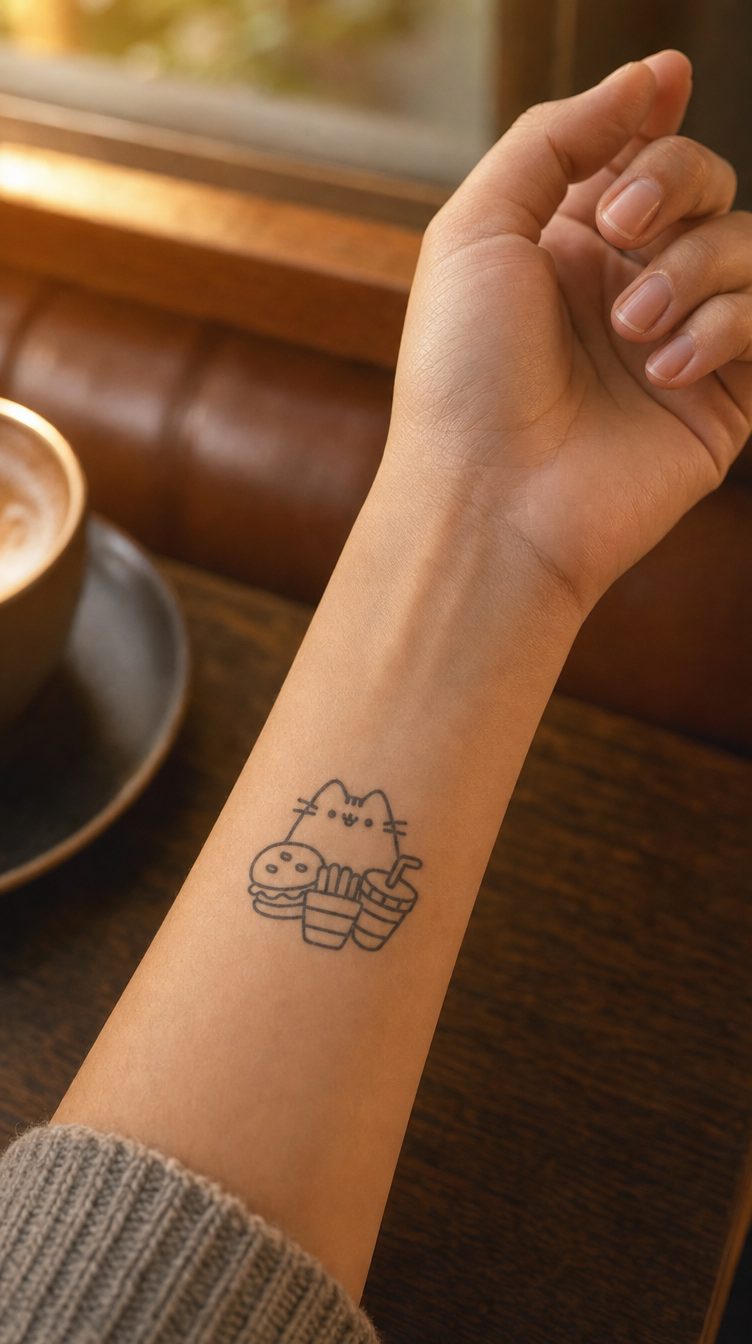


A gaming- or cartoon-themed tattoo turns a character, a retro symbol or an object from childhood into a design worn on your skin, from a single large figure to a sheet of several small icons. In the InkLabs collection, these designs are original illustrations inspired by the recognizable style of popular games and cartoons, not pieces officially licensed by the studios that own the characters in question. That means you can freely combine a fantasy character, a retro arcade symbol or a Y2K reference, as long as you like the design—not a brand label.
- Fantasy and RPG figures — large characters with a story of their own, such as Tyrael from the Diablo universe, suited to a statement piece.
- Pokémon-style characters and retro arcade icons — compact, easily recognizable designs, from a character like Gengar to the symbol of an invincibility star.
- Y2K nostalgia — pixelated hearts, chrome shapes and other digital motifs associated with the early 2000s.
- Toy and construction nostalgia — technical-drawing-style sketches inspired by the construction toys you grew up with.
What a gaming- or cartoon-themed tattoo actually means
The category includes specific game characters, recognizable symbols from retro games, and cartoon or toy motifs that tap into a similar nostalgia—not just logos or gaming-related text. You can choose a single detailed figure to wear as a centerpiece, or a sheet of several small icons, designed for someone who prefers several smaller references over one large design. None of the designs in the collection is officially licensed by the company that owns the character or toy—they are original illustrations, created in the recognizable style of their inspiration, making them suitable for temporary wear without claiming any official association with a particular game or brand.
Fantasy and RPG characters as tattoo subjects
A character like Tyrael comes with a story that changes how you view the design. In Diablo III, Tyrael is the Archangel of Justice, a figure who gives up his own divinity to become mortal and warn humanity, usually associated with a shattered angelic sword (source: Diablo III – Wikipedia). That’s why a tattoo of this character reads more as a symbol of protection and deliberate sacrifice than as generic fantasy art, and people who choose this design are usually looking for exactly that meaning, not just an imposing silhouette.
Why a character’s story changes what the design conveys
A design based on a character with a clear story communicates something different from an unidentified fantasy figure: those who recognize the character immediately understand the theme, while everyone else sees a strong, well-crafted silhouette. A tall, detailed figure like this generally needs a larger area of skin so the fine lines and shading remain legible, which directly affects the choice of placement—a point we return to below.

Classic game characters and retro arcade icons
Gengar is a Ghost/Poison-type Pokémon from the original generation, known for its wide grin and shadow-like body, which lets it hide in the dark (source: Gengar (Pokémon) – Bulbapedia). That’s exactly what makes a linework version of the character look playful rather than menacing—the silhouette remains recognizable in just a few lines, making it suitable for a smaller area of skin too, unlike a large fantasy figure.
For anyone who prefers a symbol instead of a whole character, a star with a mischievous expression points straight to the invincibility power-up in classic platform games: in the Super Mario series, the Star grants temporary invulnerability, allowing the character to defeat enemies simply by touching them, rather than by jumping (source: Power-up – Wikipedia). It’s the kind of symbol most players recognize instantly, even without the full character alongside it.


Beyond video games: Y2K nostalgia and childhood toys
The theme doesn’t stop at game characters. Y2K aesthetics revisit visual motifs from the late ’90s and early 2000s—bright colors, chrome surfaces, pixelated hearts—and their renewed popularity in recent years is largely due to an entire generation’s nostalgia, especially among those who were children at the time, not because the original objects have become new again (source: Y2K (aesthetic) – Wikipedia). A sheet of several small icons in this style works well for someone who wants a few nostalgic references rather than a single large piece.
Another kind of nostalgia comes from construction toys: a technical-drawing-style sketch, with numbering, depicting a construction piece with stud connections, points to a real design, patented in Denmark on January 28, 1958 (source: Lego – Wikipedia). It’s exactly this technical detail—the numbering, the look of a patent drawing—that gives it the feel of an engineering sketch, different from an ordinary cartoon, even though the underlying feeling is still the same childhood nostalgia.


How to choose the size and placement for a gaming or cartoon design
A compact icon—a star, a pixelated heart—works on the wrist, finger or ankle, where the limited space doesn’t affect the legibility of a simple design. A detailed character, such as Tyrael or Gengar, needs more skin—on the forearm or upper arm—so its expression and shading remain clear up close. A sheet of several icons is easiest to place on a larger, flatter area, such as the forearm or thigh, so the elements don’t overlap awkwardly.
How the level of detail fits the available skin area
The practical rule is simple: the more small details a design has—fine lines, shading, text—the larger the area it needs so they remain visible after application. A simple symbol with few lines stays clear even on a small area, while a complex character squeezed into a limited space risks losing clarity. If this is your first choice from this kind of collection, start with the size of the area you want to use, then choose a design with a suitable level of complexity for that space—not the other way around.
Why it’s worth trying the design before making any permanent decision
A temporary or semi-permanent tattoo from this collection shows you exactly what the character or symbol you’ve chosen looks like at the size and in the place you’ve decided on, before you make any other decision. You can wear Tyrael on your forearm for a week, move a sheet of Y2K icons from your ankle to your arm the next time you apply it, and simply see how the design feels in everyday life. However, this kind of trial says nothing about how the same design would look as a permanent tattoo after healing, how it would fade over time or how your skin would react to permanent tattoo ink—information only a permanent tattoo applied by a professional can provide. You can find more reasons why it’s worth trying a design before making it permanent in the guide dedicated to this topic.
If you’re still deciding between a large figure and a sheet of several icons, the guide to choosing a design and placement for your first tattoo will help you set the framework before browsing the collection. For visual jokes intended to be funny, not fandom-related, funny tattoos cover a different area, while if you want the full meaning of other symbols, not just those from gaming and cartoons, the general guide to tattoo meanings covers everything from A to Z. To see all the designs currently available, the Temporary Gaming Tattoos collection is where you can choose the right character or symbol to try before anything else.