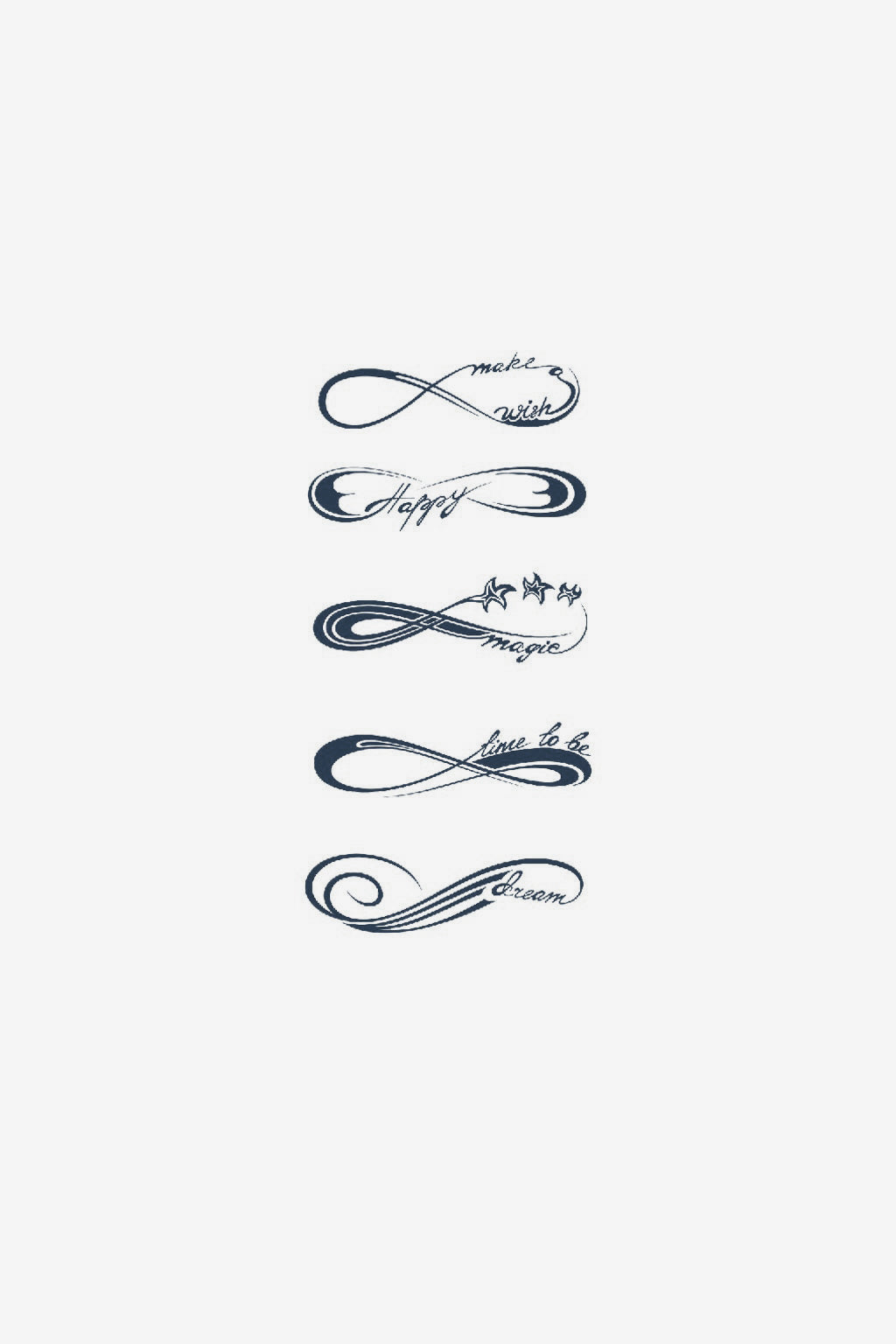


A fine-line tattoo builds a design from evenly thin lines and deliberately avoids shading or filled-in areas, leaving plenty of bare skin visible around it as negative space (a more detailed introductory article on fine-line tattoos). This very simplicity makes the style the most searched for in our network, but it also raises the question of how it differs from related styles such as minimalist, outline, or illustrative tattoos, and which designs keep their fine lines clearly recognizable even at a smaller size.
- Fine line differs from minimalist style mainly in the detail within the line, not in the number of elements on the skin.
- Botanical designs, lettering, animal designs, and celestial and geometric symbols retain their shape most reliably when rendered in thin lines.
- The smaller the available area, the more important it is to reduce a design to a few clear lines rather than many fine, parallel strokes.
- A semi-permanent preview in the actual size shows you the design, size, and placement before you decide on something permanent.
What is a fine-line tattoo?
In the fine-line style, a design is made up of lines that remain roughly the same width along their entire length, combined with deliberately empty areas around them rather than shading or solid fill. This makes even a playful design look understated, because the line itself carries the entire expression. In our catalog, we group temporary tattoos into five style categories: Fine line, Outline, Illustrative, Minimalist, and Full coverage (the Fine line collection with all fine-line designs). This classification is a helpful guide, even though the boundaries between styles can overlap in practice.
Fine line vs. minimalist: few elements vs. delicate detail
A minimalist tattoo relies on reducing a design to a few elements, with plenty of empty space around a simplified symbol or single outline (the complete guide to minimalist tattoos). A fine-line design, by contrast, can include several lines and small internal details, as long as each line remains thin and even. The two styles therefore often overlap: a highly pared-back fine-line design reads almost as minimalist, while a more detailed minimalist symbol rendered in thin lines starts to move toward fine line. In the end, the label matters less than whether you prefer the restraint of a single symbol or the delicate density of lines in a more complex design.
Fine line vs. outline and illustrative: a single outline vs. fine internal drawing
A pure outline tattoo traces a design with a single continuous outline and completely avoids internal lines; a heart or leaf is reduced to its outer shape, without any internal drawing. An illustrative tattoo goes in the opposite direction and uses denser linework, often combined with shading, to give a design a drawn, three-dimensional look. Fine line sits between the two: it uses several thin lines to show structure and small details within a design, while staying with linework alone and not moving into fill or shading. This distinction is helpful if you are looking for a design with recognizable internal structure that still does not look as dense as an illustrative design, and it also explains why the very same animal design can look completely different depending on the style.
Which designs suit the fine-line style?
Not every design retains its impact when made only from thin lines with no fill: a design that relies on a large, continuous area, such as a fully filled-in crest, loses exactly the elements that make it readable when rendered in linework alone. Designs whose shapes are naturally clear and line-based, rather than dependent on fill or contrast, work most reliably. Four categories are particularly common in our catalog.
Botanical designs such as a cherry blossom branch retain their recognizable shape because the branch and individual blossoms already work as lines, without the petals needing to be individually shaded.

Lettering and short phrases read clearly in a single fine line as long as the wording and spacing between letters stay simple; too many words or a heavily ornate font, on the other hand, quickly become hard to read.

For animal designs, the silhouette usually carries the design, not dense internal drawing. A snake, for example, is recognizable from its curved line alone, without every scale needing to be worked out individually.

Celestial and geometric symbols such as a compass or a star are particularly well suited because their structure is already based on lines before anything is drawn.

A star design with mandala-like linework works on the same principle and offers a second option within the symbol group if a compass feels too nautical to you.
Line thickness and level of detail: what stays visible at a small size
How much of a fine-line design remains recognizable in the end depends greatly on the area it is meant to fit. Our own size guide points out that a design chosen too large for a narrow spot looks crowded and loses detail (the complete size guide); the same relationship applies in reverse to line density: if a design has too many fine, closely spaced strokes for a small area, those very strokes blur together when the area does not grow to accommodate them.
The same guide specifically identifies Minimalist and Fine line as the styles best suited to the smallest tattoo category, because both already use reduced linework by nature. Within fine line, this means that a design based on one or two clear lines, such as a single compass needle or a single stem, handles a smaller size much better than a design made up of many fine, parallel strokes.
An example makes the difference clear: a compass design with four to six clearly drawn main lines remains easy to read even on a narrow area such as the wrist, because each line has enough space around it. A dense mandala with twenty or more intersecting fine lines, by contrast, needs considerably more space for the individual lines to remain distinguishable when viewed from a normal distance. This example is deliberately simplified, but it shows the rule of thumb: the less space available, the more worthwhile it is to reduce a design to its most important lines beforehand, rather than trying to fit in every detail.
How to test a delicate design in its actual size beforehand
The most reliable way to judge whether a delicate design looks the way you imagine it will in the spot you want is to see it directly on your skin, not in a screen mockup. To do that, apply a semi-permanent version of exactly the design you are considering, in the size and on the spot you have in mind (the detailed guide to testing before going permanent).
Live with it for a few days before you decide: look at the design in different lighting, from different angles, and with the clothes you usually wear. If you are undecided between two spots, such as the wrist and forearm, you can also try the two placements one after the other to see where the fine lines stand out more.
This preview shows you the design, size, and placement. How a permanent tattoo in the same spot would heal, feel, or change over time is a separate consideration for the moment when you actually decide on a permanent design.
Fine line works best when the delicate line itself matters more to you than reducing a design to the bare minimum, and you are willing to check the design and placement beforehand at actual size. If you want to try out how delicate lines look on your skin, you will find a growing selection of designs in the Fine line collection, from botanical designs to geometric symbols, each ready for a semi-permanent preview before you commit to something permanent.