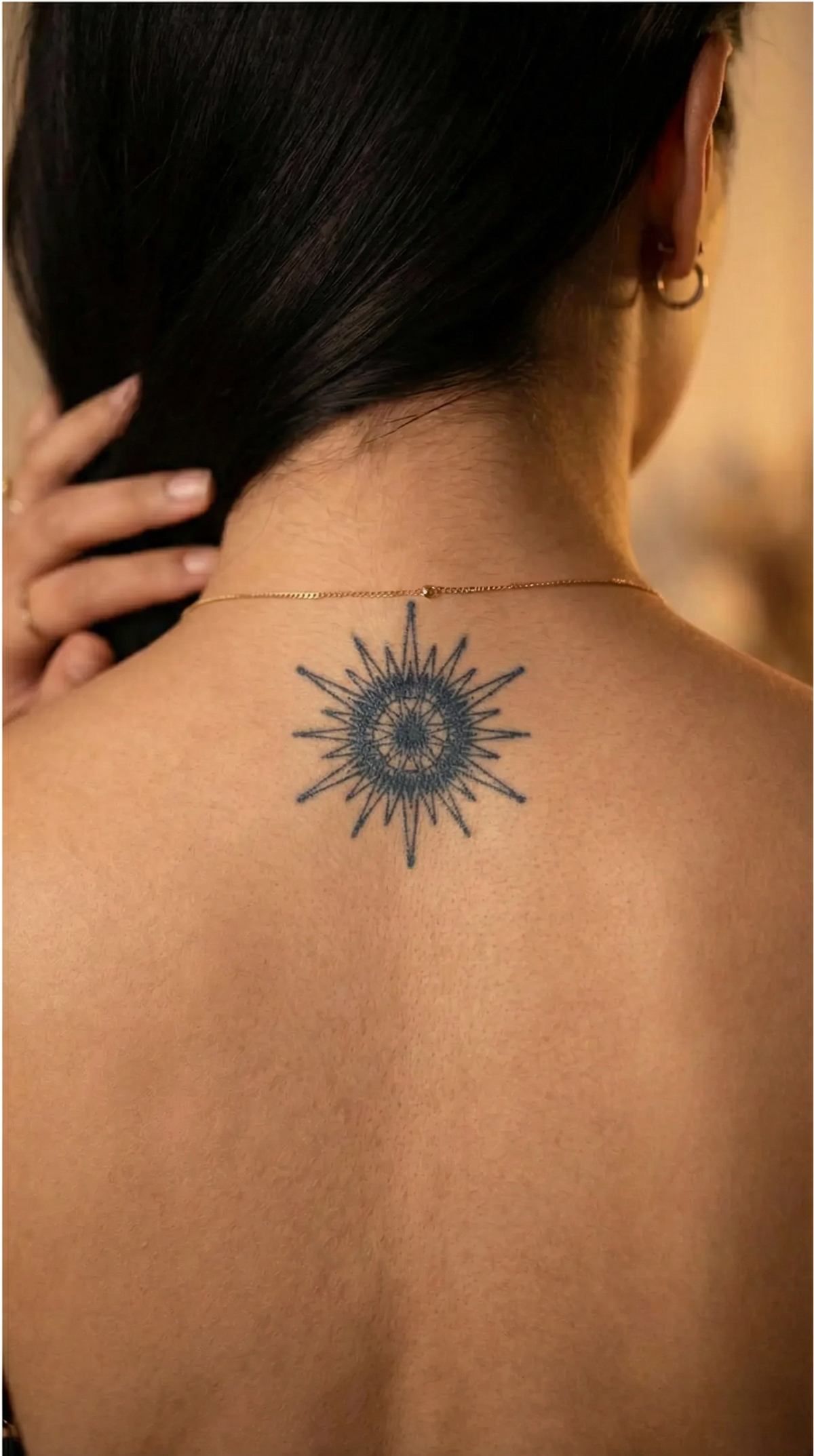



Getting a tattoo on your face is different from getting one on your arm or leg: the skin in that area is more sensitive, the result is visible every day, and you can't cover it with clothing if you change your mind later. At InkLabs, we don't sell temporary or semi-permanent tattoos designed for the face—the products' own instructions explicitly exclude it—so if you're considering a facial design, the most practical place to start is elsewhere: try out the linework and size on an area where application is allowed, such as your forearm or wrist, and bring that real-life reference to your consultation with a professional tattoo artist.
- Facial skin is thinner and has more nerve endings than common tattoo areas like the arm, which usually means more discomfort during the session.
- InkLabs product pages explicitly exclude the face, lips, eyes, neck, upper chest, and other sensitive areas.
- You can try the same design on your forearm or wrist to assess the linework, size, and tone before talking to a tattoo artist about getting it on your face.
- An allergic reaction to tattoo ink or a tendency to develop keloids are medical history worth taking into account before any permanent tattoo.
- Laser tattoo removal can require several sessions and doesn't always remove the color completely, which matters in an area you can't cover with clothing.
Why a face tattoo is a different decision
A tattoo on your forearm or back can be covered with a sleeve or kept out of sight at a job interview; one on your face can't. It's one of the most visible areas of the body and, at the same time, one of the hardest to conceal in everyday life—something to weigh before even thinking about the design or size. To choose a design and placement for a first permanent tattoo anywhere on your body, you can read our guide to choosing the right design and placement.
Facial skin also behaves differently from the rest of the body's skin: it's thinner and has a higher concentration of nerve endings than typical tattoo areas like the arm or leg, which in practice many people describe as more discomfort during the session. And because it's an area you see and others see every day, any redness, swelling, or change in healing is much more noticeable while it's happening, even when it's part of a normal process.
If you're looking for visibility without going straight for the face, areas like behind the ear or the neck offer a middle ground; we cover them in more detail in our guide to discreet and visible tattoos.
Why InkLabs temporary tattoos aren't applied to the face
Before thinking about how to try out a design, it's important to be clear about a real product restriction. The product pages for our fine line designs, such as Lotus and Metamorphosis, state that they aren't designed for application to the face, lips, eyes, neck, upper chest, intimate areas, irritated or damaged skin, areas with excess hair, scars, moles, or stretch marks. This isn't an exception for just one product: the same instruction appears on both product pages, confirming that it's a consistent policy across the range. If you first want to understand what an InkLabs semi-permanent tattoo is and how it works, you can read this introductory guide.
This means a temporary design can serve as a reference for style and size, but not as a way to simulate on your own face the final result, the healing process, or how your skin will react to a permanent tattoo in that area; only a tattoo artist can assess that and, if necessary, a dermatologist. Our guide to ink safety and patch testing also recommends avoiding the eye area and mucous membranes, and not applying the product to wounded, irritated, or sunburned skin—these instructions are intended for areas of the body where the product can be used, not the face.
How to preview the design and size without applying it to your face
If the area restriction rules out trying it directly on your face, the most useful alternative is to apply the same design to a part of the skin where the instructions allow it, such as your forearm or wrist. There, you can take your time assessing the line thickness, the level of detail you can actually see, and how the color looks once the design has settled—24 to 36 hours after application—and remains visible for up to about 15 days.
Once applied, photograph the result from different distances: up close, and also as it would look when you pass someone on the street. The level of detail you can make out from a distance is usually lower than what you see in a close-up photo, and that's exactly the perspective that matters most in such an exposed area as the face.


What to ask at your tattoo consultation
Bring that real-life reference—the size and linework tried on skin, not just a digital sketch—to a consultation with a tattoo artist who specializes in facial tattoos. Ask how they would adapt the design to the curves and movement of your face, what specific care they recommend during healing in that area, and what options you would have later if you wanted to alter or cover it.
Skin reactions and care to keep in mind
An allergic reaction to the ink in a permanent tattoo can appear at any time, even years after you get it, and red is one of the pigments most commonly associated with this type of reaction, according to the American Academy of Dermatology. If you know your skin tends to form keloids—scars that grow larger than expected over a wound—that's something to discuss with your tattoo artist and, if you have any doubts, with a dermatologist before choosing any area, especially one as visible as the face.
During healing, any sign that something is wrong—pain that gets worse instead of better, fever, pus, or redness that spreads—is a reason to see a doctor, not to wait for it to clear up on its own.
What to consider if you regret a face tattoo
It's worth thinking about the way out, not just the way in. According to WebMD, laser tattoo removal usually requires between four and 15 sessions or more, spaced at least a month apart, and not all colors respond equally: yellow, red, and white are harder to remove than blue or black. In addition, the process can leave permanent patches that are lighter or darker than the surrounding skin, something that's less noticeable on the forearm than in an area you see in the mirror every day.
None of this says whether a face tattoo is a good or bad idea in your particular case; it says that before deciding, it's worth knowing how much time, how many sessions, and what possible aftereffects changing your mind later would involve.
A temporary design can't tell you how a permanent tattoo on your face will feel, heal, or age, but it can help you decide on the style and size you want to take to your consultation. If you want to start with a small fine line design for this test, browse the Small Temporary Tattoos collection and apply it to your forearm or wrist—areas where application is allowed by the instructions—before talking to a professional about your face.