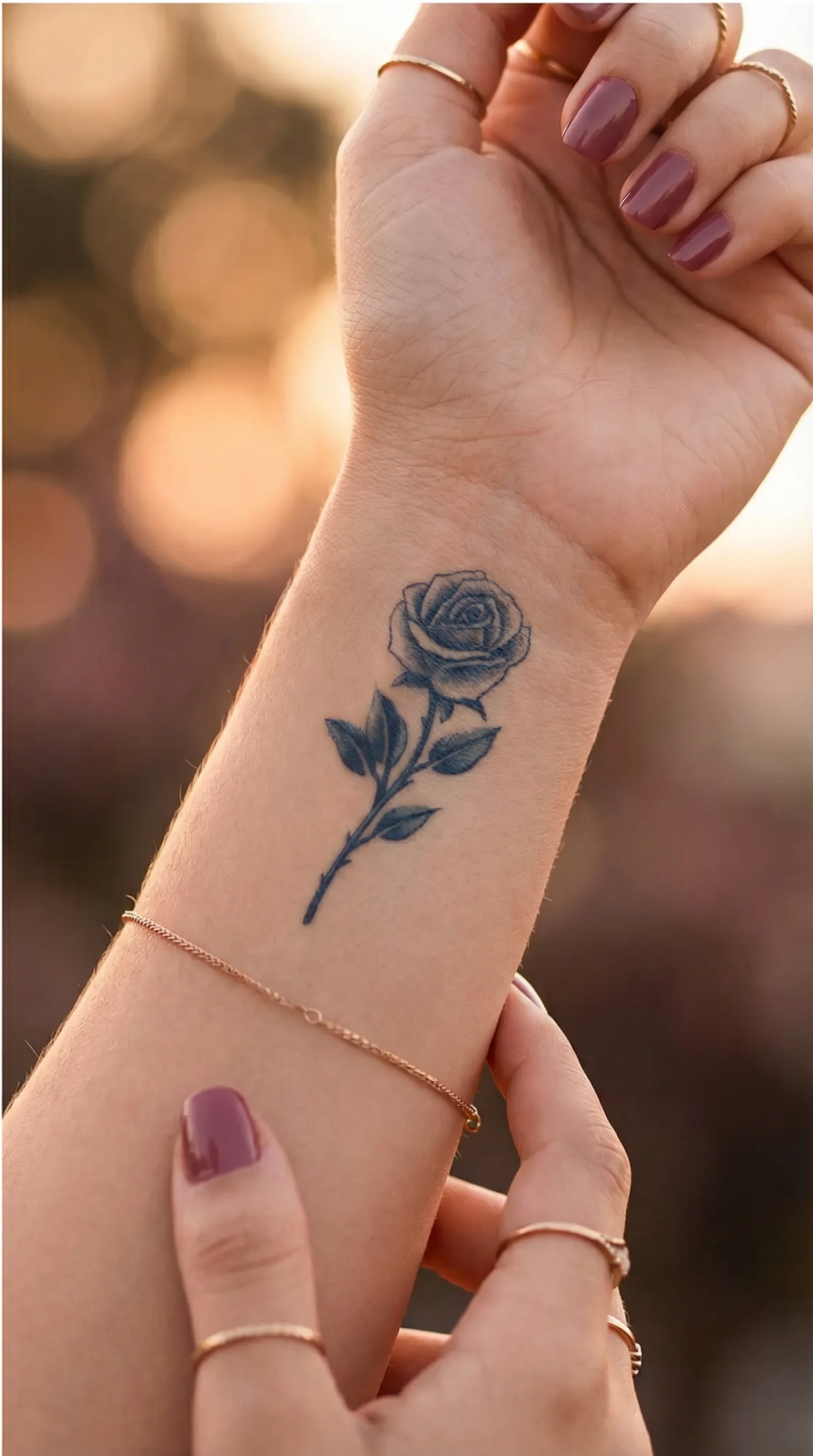


Yes, tattoos usually hurt a little—the needle punctures the skin repeatedly, so some level of discomfort is unavoidable. How intense it feels, however, depends mainly on where the tattoo is placed, not on chance or luck. Areas with many nerve endings, thin skin and bone just beneath the surface, with no layer of fat or muscle to absorb the tattoo machine’s vibrations, usually hurt more than areas with thicker, better-padded skin. Below, we explain how this works step by step and apply it to specific areas of the body, including the ones you ask about most often: the neck, forearm, area behind the ear, hand, wrist and back.
Before you get into the details, here are the key takeaways from the whole article:
- Pain intensity is determined by three factors working together: the density of nerves in a given area, how close the bone is beneath the skin, and the thickness of the layer of fat or muscle that cushions the needle.
- The neck, area behind the ear, wrist, hand and ribs are more often described as more sensitive than other areas.
- The forearm, outer upper arm, calf and back usually hurt less—these are also areas InkLabs recommends as a good starting point for a first tattoo.
- Getting enough sleep, staying hydrated, avoiding alcohol before your session and asking your tattoo artist about numbing cream all make a real difference to how well you handle sitting in the chair for a longer session.
- A temporary or semi-permanent tattoo lets you try out the design’s size and placement on the area you have in mind, but it tells you nothing about how much a real tattoo will hurt, how it will heal or exactly what it will look like.
Why pain depends on where the tattoo is placed
The skin is not equally sensitive in every area of the body. Where there are more sensory nerve endings—for example, near the skull, along the spine or on the hands and feet—the brain registers more signals from each needle puncture, so the sensation is more intense. The second factor is how close the bone is to the skin: where bone lies just beneath the skin and there is little fatty or muscle tissue, the tattoo machine’s vibrations travel almost directly to the periosteum, which most people experience as sharper pain. The third factor is the thickness and elasticity of the skin itself—thinner skin reacts more intensely than thicker, well-vascularized skin. Fat and muscle act like a natural cushion: the more of this layer there is beneath the needle, the less noticeable the punctures are (sources: Healthline, medically reviewed article and Saniderm, knowledge base).
This is a general pattern, not a guarantee for any particular person. Your individual pain threshold, the tattoo artist’s technique, the length of the session and whether the area has been irritated before—for example, by sunburn or hair removal—also affect how you remember a particular appointment.
Areas that usually hurt more
The neck and area behind the ear
The neck and the skin just behind the ear are close to the skull and mastoid process, and the skin in this area is thin and densely innervated, so tattoos here are often rated as more painful than those on most parts of the body. In one of the studies cited, the area behind the ear was rated an average of around 5–5.3 on a scale of 10, closer to the middle than the top of the scale. The sensation itself was more often described as “irritating and bothersome” than sharply painful, partly because of how close the sound of the tattoo machine is to the ear (source: Healthline, medically reviewed article). Redness and tenderness in this area usually subside within about a week.
The wrist and hand
On the wrist, hand and fingers, bone and tendons lie just beneath the skin, with practically no fatty tissue, making these some of the areas most often identified as more painful on the body. If you’re thinking about getting a tattoo here, it’s also worth finding out how the area holds up over time—we cover the longevity of hand and finger tattoos separately in our article on tattoos fading on the hand and fingers.
The ribs compared with the back
The ribs are one of the areas most often mentioned as painful because the skin lies almost directly over the bone, and the chest moves with every breath, which intensifies the sensation further. The back is quite different: the skin is thicker, and there is more muscle and fatty tissue beneath it, so tattoos here are usually easier to tolerate, even though the back is also a large, continuous area. This contrast shows clearly that pain depends on the specific area, not the general part of the body.
Areas that usually hurt less
The forearm
The forearm regularly appears on lists of easier places to get a first tattoo—it has thicker skin and plenty of muscle beneath it, so the needle punctures are less noticeable there than on the hand or ribs. This is one reason tattoo artists often recommend it to people getting tattooed for the first time who are worried about pain. If you’re wondering whether to choose the inner or outer forearm, that decision has more to do with visibility and the style of the design than with pain—we cover this in our article on the inner and outer forearm.
The outer upper arm, calf and area around the collarbone are similarly easier to tolerate—all have enough soft tissue to cushion the needle. This is consistent with what InkLabs recommends in our guide to choosing your first design and placement, where the outer upper arm, calf, collarbone and forearm are listed as good starting points, while fingers and ribs are areas to consider only for a subsequent tattoo.
How to prepare so you can handle the whole session more easily
A few simple things affect how well you handle sitting in the chair for a longer session, whatever area you choose. Get a good night’s sleep the day before—a tired body copes less well with pain signals. Drink water in the days leading up to your session and limit coffee that day, because dehydration and too much caffeine can make pain feel more intense. Eat a proper meal before your appointment, because you’re more likely to feel dizzy during a longer session on an empty stomach. It’s best to avoid alcohol not only because of the pain, but also because it thins the blood and makes healing more difficult.
During the session itself, distractions can help—music, talking to your tattoo artist or a podcast—and for larger projects, it’s worth planning short breaks. If you know that the area you’ve chosen is more sensitive, ask your tattoo artist about numbing cream in advance rather than assuming it isn’t allowed—some studios use it, and modern creams can genuinely reduce the pain you feel. It’s also worth remembering that stress and anxiety before your appointment make pain feel more intense in themselves, so a calmer approach to the day of your appointment matters too. You’ll find a general list of what to prepare and bring to your appointment in our complete checklist for your first tattoo, and more about what happens on the day in our article on what to expect and what to wear.
What a temporary or semi-permanent tattoo can and can’t show you
Before deciding on a real tattoo in the area you have in mind, you can see how the design and its size look on your skin by trying a temporary or semi-permanent tattoo in the style of jagua. You apply this design at home in just a few minutes, and the color develops gradually over about 24–36 hours until it reaches its full shade. This is enough to assess how a particular shape and size look on your forearm, wrist or another area you’re considering before booking a real tattoo session.

What this kind of trial won’t show you: how the area will feel under a real needle, how the healing process will go or exactly what the finished permanent tattoo will look like—that depends on the tattoo artist’s technique, the ink used and the individual characteristics of your skin. We cover in more detail what a temporary tattoo can and can’t tell you before you decide on a permanent design in a separate article devoted to this very question. If you’d like to see more small designs to try out on the area you have in mind, take a look at the Small Temporary Tattoos collection.
Summary
Ultimately, pain intensity comes down to three recurring factors: how many sensory nerves are in a particular area, how close the bone lies beneath the skin and how much fatty or muscle tissue cushions the needle—not chance or bad luck. Instead of choosing a placement based on whether it will hurt, it’s worth deciding first where the design matters most to you and where it will look best, and only then preparing practically for the sensation itself: get enough sleep, stay hydrated, limit caffeine and alcohol, and talk to your tattoo artist about numbing if the area you’ve chosen is more sensitive. If you’re still worried about a particular area, ask about it directly during your consultation—the tattoo artist who regularly works there is best placed to tell you what to expect.