

Whether a tattoo is vegan cannot be answered with a simple yes or no, because two different products are involved: the tattoo ink itself and the aftercare products applied to the skin afterward. Tattoo ink generally consists of a pigment, a carrier liquid (often ethyl alcohol or distilled water, sometimes supplemented with propylene glycol or glycerin) and various additives such as preservatives or thickeners (source: Tattoo ink, Wikipedia). Whether these ingredients are of animal or plant origin depends on the specific manufacturer and ink, and cannot be determined from the color name alone. This article explains where animal-derived ingredients typically occur, what distinguishes a certified vegan label from a simple claim by the manufacturer, and what questions you can ask at the studio to get clarity about your specific choice.
- Tattoo ink consists of pigment, carrier liquid and additives, and each of these components can be of animal or plant origin depending on the manufacturer.
- Bone char, gelatin, shellac and animal-derived glycerin are the ingredients that vegan assessments of tattoo ink focus on most often.
- Aftercare products such as creams or ointments can also contain lanolin, beeswax or collagen, regardless of how the ink itself is formulated.
- An independently certified vegan label is different from a manufacturer’s claim such as “plant-based,” and you should distinguish between the two before making your decision.
What is tattoo ink actually made of?
Any tattoo ink can be broadly broken down into three components: the pigment, which gives the ink its color; the carrier liquid, which makes the pigment easy to transport and apply; and the additives, which help with durability, consistency or hygiene. Ethyl alcohol or distilled water are often used as carrier liquids, sometimes supplemented with methanol, propylene glycol or glycerin (source: Tattoo ink, Wikipedia). The exact composition of these three components varies considerably from one manufacturer to another, and even from one shade to another within the same brand. That is precisely why the question of whether “tattoo ink” is vegan cannot be answered in general; it can only be answered for a specific product with a known composition.
Where animal-derived ingredients can be found in tattoo ink
When animal-derived ingredients are found in tattoo ink, they are usually in one of two groups: additives that improve consistency or application, or the carrier liquid itself. Some tattoo inks contain animal by-products such as bone char, glycerin, gelatin or shellac, while other manufacturers now deliberately offer vegan formulas that do not contain these substances (source: Tattoo ink, Wikipedia).
Bone char and gelatin
Bone char is sometimes used to produce certain shades of black because it gives the pigment a particular depth. Gelatin and shellac, in turn, are more likely to appear as binding or thickening agents—in other words, in a role that has little to do with the color itself, but can still involve ingredients of animal origin. None of these substances is automatically identifiable as “animal-derived” from an ingredients list, if a complete list is even available.
Glycerin: plant-based or animal-derived?
Glycerin is a good example of why a single word on a label is not enough to determine an ingredient’s origin. Glycerin can be derived from both animal fat and plant sources such as soy or palm oil, and the word “glycerin” alone does not reveal which source was used in a particular case (source: Glycerol, Wikipedia). If you want to know, you need either information from the manufacturer about the source of the raw material or a certification that has already verified it.
Aftercare products: where lanolin & co. can be hidden
The question of whether a tattoo is vegan does not end with the ink itself. After getting a tattoo or applying a design, aftercare products are usually used, and these have their own composition, independent of the ink. Lanolin, for example, is wool wax obtained from sheep’s wool and is therefore clearly of animal origin; it is often used in cosmetics, lip care and ointments, and may be listed inconspicuously among the ingredients (source: Lanolin, Wikipedia). Beeswax or collagen can also appear in some aftercare creams or ointments. There is no general statement that applies to “the” aftercare cream, because products are formulated differently from one brand to another; for specific aftercare steps, take a look at our guide to caring for a temporary tattoo, which explains what matters in the first few days.
How can you identify vegan tattoo ink? What labels really mean
The key difference is between a manufacturer’s claim and an independently certified label. A claim such as “plant-based” or “free from harmful substances” on a product page comes from the manufacturer itself and describes what the manufacturer says about its product; it is not a substitute for external verification. An independent vegan or vegetarian label such as the V-Label, on the other hand, is not awarded by the manufacturer, but is assessed and certified by member organizations against a defined standard (source: V-Label, Wikipedia). Without such verification or a complete, verifiable ingredients list, the vegan status of a specific ink remains unclear, however plausible the manufacturer’s claim may sound.
How strictly ingredient disclosure is regulated also depends on the country and the type of tattoo, and the regulatory side is complex enough to warrant its own article; if you want to know what the EU rules for tattoo inks specifically require, you can find the legal overview there. For now, the key point is this: the absence of a legal requirement to disclose ingredients does not automatically mean that a product contains animal-derived ingredients, but it also means you cannot rely on an ingredients list’s silence alone.
Questions to ask at the tattoo studio
The most reliable way to get clarity about a specific design is to talk directly with the studio before making your decision. These questions can help you get concrete answers rather than vague assurances:
- What is the exact brand name of the ink being used, not just the color family or shade?
- Is there a complete ingredients list or an independent vegan certificate for this ink that you can review?
- Which products are recommended for aftercare, and what ingredients do they specifically contain?
- What material is the stencil being used made of, if that matters to your decision?
A studio that knows the subject should be able to give you concrete answers to these questions, or at least know where to find them. If the answer remains vague, that is useful information for your decision in itself.
Try out the design and placement first: what InkLabs says about its own formula
InkLabs describes our own semi-permanent Jagua-style ink as plant-based and tested to meet cosmetic regulatory requirements. As explained above, this is a manufacturer’s claim, not an independent vegan certification; if you want to know more about the composition and safety aspects of our ink, you can find more background in our article about how safe semi-permanent tattoos are. Regardless of the formula, for aftercare you should avoid applying creams, oils or exfoliants directly to the design during the first 24 to 36 hours, so the color can develop undisturbed.
A temporary or semi-permanent design can show you the motif, size and placement on your own skin at your leisure before you make a permanent decision. However, it does not tell you how painful a permanent tattoo would be, how healing would go or what the allergy risk would be; nor does it tell you what the final design will look like permanently. For that, you would need a separate conversation with a tattoo artist. If this is where you are in the process, our guide to choosing a design and placement for your first tattoo offers more guidance.
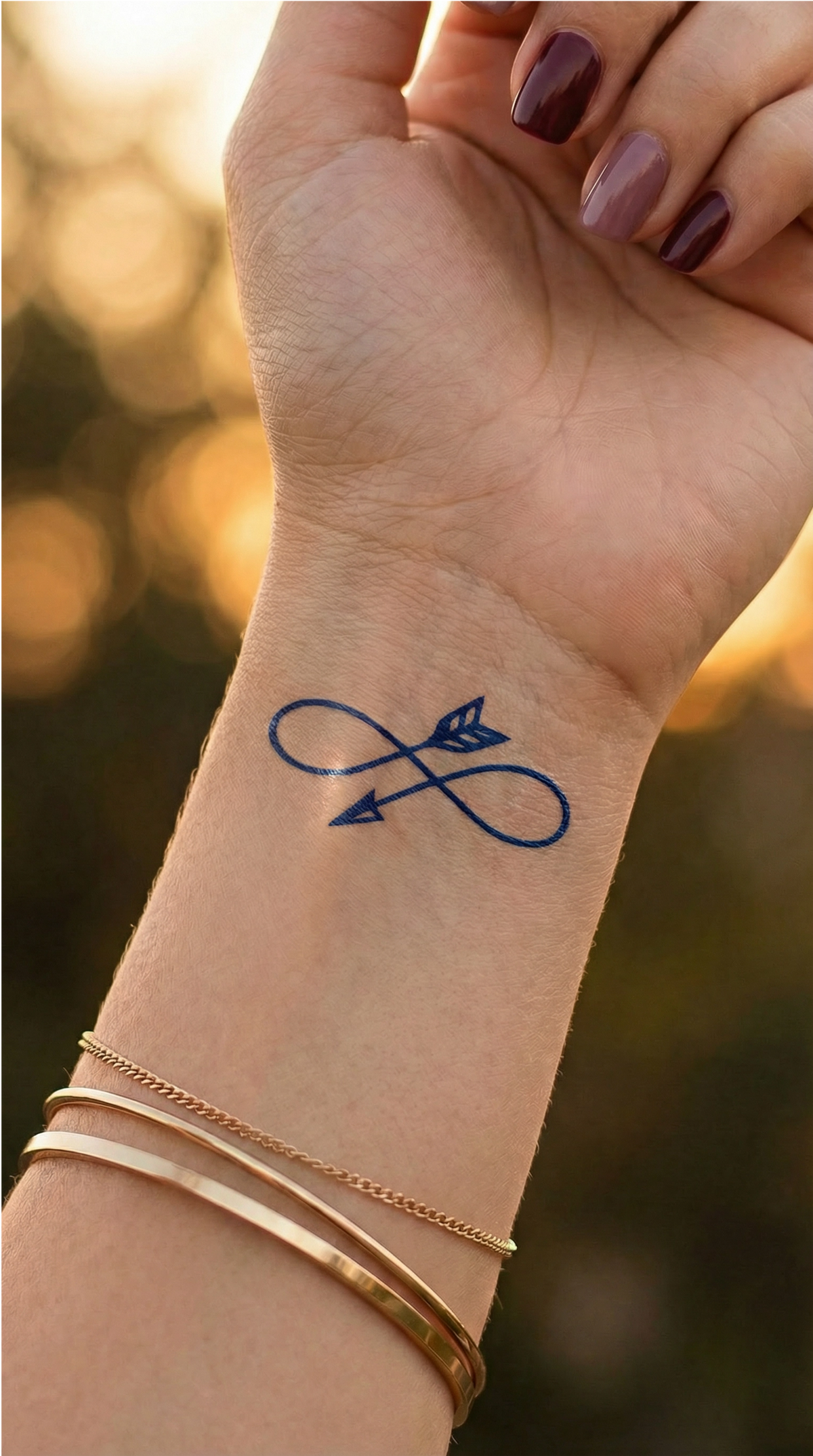
Here we show two different designs as examples of semi-permanent designs in this formula, so the choice does not seem limited to a single motif.


Both designs are from our Semi-permanent tattoos collection, where you can compare more designs in different styles.
Ultimately, whether a tattoo is vegan is not determined by a single factor, but by the specific ink, the specific aftercare products, and whether a claim is backed by independent verification or only by the manufacturer itself. The questions in this article can help you clarify this in a conversation with the studio, and if you want to refine your design or placement beforehand, you can use a semi-permanent design for that, regardless of the vegan question. You can find more guides on the safety and composition of tattoo ink in our news blog.